REVIEW · BUDAPEST
Private Budapest Hammer & Sickle Communist Times Tour
Book on Viator →Operated by Absolute Tours · Bookable on Viator
History has a darker side here. This private, small-group walking tour strings together Nazi occupation and Communist rule through real street-level landmarks, with stops tied to moments like the Prague Spring and the Velvet Revolution. I especially like how the guide keeps it personal—on walks with guides such as Honza or Martina, you get room for questions and human context, not just dates.
I also like the sweep of places you cover in just a few hours: from Bartolomejska Street’s WWII prison story to the big political stage of Wenceslas Square, then out to Letna Park for the Stalin statue. One thing to weigh before you book: this is a lot of continuous walking (high curbs, stairs, and slippery surfaces), so it’s not a great fit if you have limited mobility.
In This Review
- Key Things You’ll Notice on This Walk
- Prague or Budapest? First Sanity-Check
- Small-Group Private Format: How the Tour Actually Feels
- Price and Value: Paying for a Human Guide (Not a Bus)
- Bartolomejska Street to National Avenue: When the City Taught Fear
- Wenceslas Square: Prague Spring 1968 and the Moment Tanks Changed Everything
- Republic Square: Independence, Secret Broadcasts, and the Irony of Takeover
- Old Town Footsteps: Gottwald’s Balcony and Einstein’s Prague Days
- SS and KGB Landmarks, Then Letna Park’s Stalin Statue
- Tips to Get More From the Walk (And Avoid Common Friction)
- Should You Book This Hammer & Sickle Communist Times Tour?
- FAQ
- How long is the tour?
- Is pickup included?
- Is this a private tour?
- What’s included in the price?
- Is the tour family-friendly?
- Is the tour suitable for people with limited mobility?
- Can I cancel for free?
- Is the tour in English?
Key Things You’ll Notice on This Walk
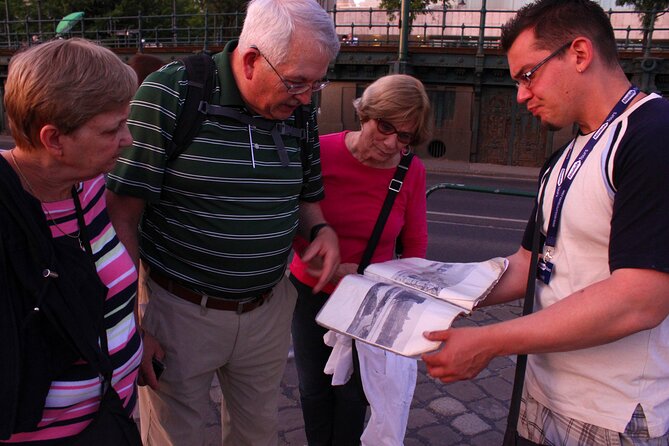
- Small-group feel (capped at 15) means the guide can slow down for your questions
- Bartolomejska Street prison site connects WWII fear to postwar secret-police methods
- National Avenue protests track resistance against Nazis in 1939 and Soviet rule in 1989
- Wenceslas Square, staged by history from the Prague Spring crash to the road toward 1989
- Republic Square’s change of meaning from Czechoslovakia independence to Communist Party control
- Letna Park’s Stalin statue story ties Cold War policy to how cities rewrite memory
Prague or Budapest? First Sanity-Check
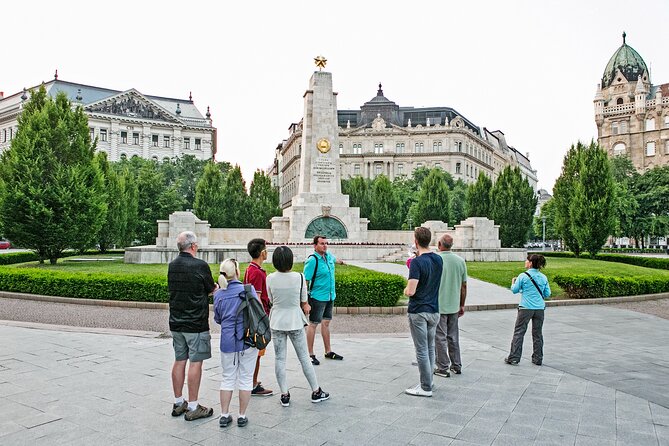
This tour title includes Budapest, but the sights described (Wenceslas Square, Republic Square, Letna Park on the Vltava) point clearly to Prague. Before you head out, double-check the city and meeting point on your confirmation so you don’t end up in the wrong capital.
If it is the Prague version, you’re in for a very specific kind of sightseeing: not museums first, but the streets and buildings where power, surveillance, and protest played out. It’s a walk that helps you read the city like a timeline, even when you’re just passing by on your own later.
You can also read our reviews of more private tours in Budapest
Small-Group Private Format: How the Tour Actually Feels
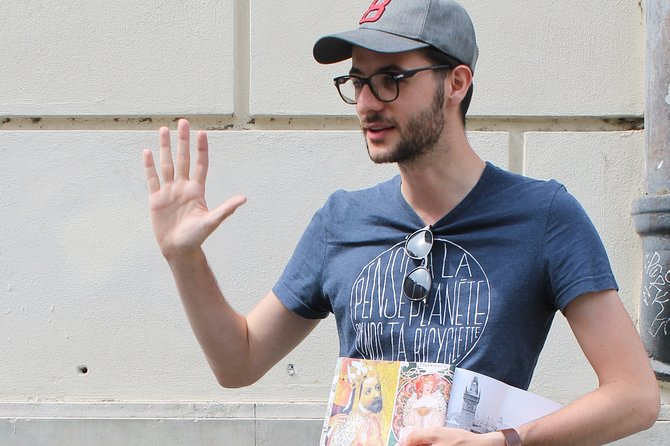
The format matters here. You’re not stuck with a huge pack. The group is limited to 15, and it’s run as a private tour for your group only. That combination is what turns “history talk” into something more useful: you can ask follow-ups, and your guide can adjust to what you care about most.
You should expect a true guide-led route, not a DIY audio tour. A few guides mentioned in the provided experiences—like Yonas, Mikel, Mike, and Martin—were praised for bringing the story to life with extra materials (one example was using old photos and articles on a tablet). In practice, that can make a big difference when you’re trying to connect slogans, buildings, and real events.
There’s also a refreshment stop with a beverage, which is welcome on a walking tour with a darker theme. And it’s offered with pickup, but drop-off isn’t included, so plan to finish back in central Prague.
Price and Value: Paying for a Human Guide (Not a Bus)
At $133.67 per person for roughly 3 hours (about 3 to 3.5), this is not a “cheap and cheerful” stroll. But it is good value if you want expert context and a route that actually ties events together.
Here’s what your money is buying:
- A licensed English-speaking guide who stays with your group the whole time
- Pickup so you’re not hunting your way into the story
- A structured route across major political sites, not random stops
- The small-group cap, which usually means more interaction and fewer distractions
If your ideal vacation is chatting with locals and asking “why does this building matter?” this tour matches that style. If you only want broad overviews and don’t like lots of walking, you may prefer a shorter stop on your own—this one is built for momentum.
Bartolomejska Street to National Avenue: When the City Taught Fear
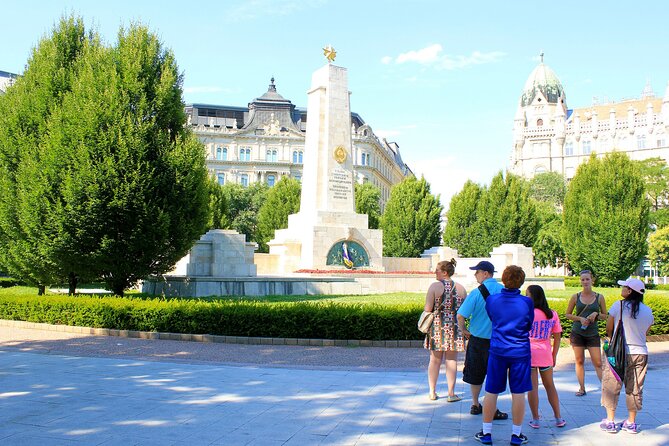
The tour starts with a heavy note: Bartolomejska Street, tied to a former WWII prison used by secret police to torture prisoners. Even if you don’t know the details yet, standing near sites like this changes how you see everything else on the walk. It’s the kind of opening that turns “history” into something you can feel in your body—because you’re physically moving through the setting.
Next you head to National Avenue, a grand thoroughfare that divides Old and New Town. This is where you start connecting power to public space. Your guide explains student protests staged here against:
- the occupying Nazis in 1939
- Soviet rule in 1989
That’s a strong way to understand resistance. You’re not just hearing about rebellions as isolated events; you see a pattern: pressure changes, but the street becomes the stage again and again.
Practical note: National Avenue is big and open. Depending on weather, it can be windy and exposed. Bring layers, even in mild seasons.
Wenceslas Square: Prague Spring 1968 and the Moment Tanks Changed Everything
Then comes Wenceslas Square, one of Prague’s most recognizable stages. Your guide sets up why it mattered: this is where the Czech struggle against foreign occupation took shape, and it remains a focal point because of that history.
You’ll also do the most useful kind of imagination on a tour like this—your guide asks you to picture the square during 1968 and early 1969, when Soviet tanks rolled in to crush the Prague Spring. The big takeaway isn’t just that an event happened. It’s that a brief liberalization effort faced brutal limits, and that lesson echoes into later years.
If you like political history, Wenceslas Square is the moment where everything on your walk starts to “click” into a timeline. If you prefer lighter sightseeing, this is where you’ll feel the tone shift. It’s not gloomy for its own sake—it’s how the city learned to live with external control.


Republic Square: Independence, Secret Broadcasts, and the Irony of Takeover
From Wenceslas Square you move to Republic Square. The name alone points you to the idea of new beginnings: it’s tied to the 1918 proclamation of an independent Czechoslovakia. But this stop refuses to stay in a single mood.
During WWII, your guide explains how the Czech resistance used secret broadcast stations, and how that fed into the 1945 Prague Uprising. Then comes the twist you can’t miss: only three years later, the square became home to the Communist Party.
That contrast is the point of the tour. It’s not just about who won in the short term—it’s about how quickly symbols, institutions, and public space can flip their meaning.
If you’re the type who wants to understand why monuments and buildings seem to “change sides” over time, you’ll get your money’s worth here.
Old Town Footsteps: Gottwald’s Balcony and Einstein’s Prague Days
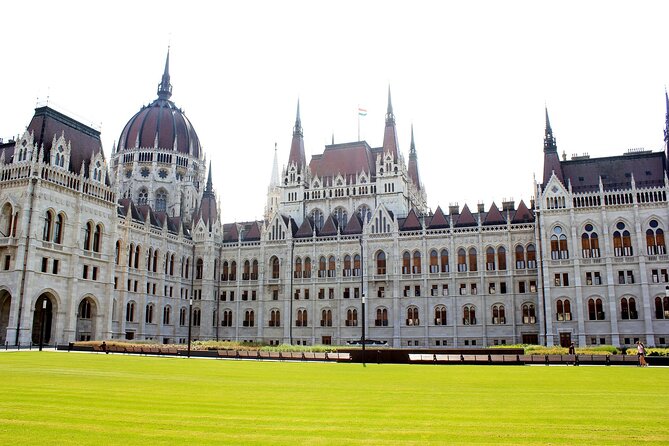
After the big political squares, you head into Old Town for a mix of iconic and less-obvious landmarks.
One of the most memorable stops is the balcony where Klement Gottwald declared the government takeover in 1948. That’s a key moment in Communist consolidation—standing near the spot helps you connect speeches to real shifts in authority.
You’ll also hear about Albert Einstein, including where he lived during his work at Charles University, and how his theories led to work associated with the atom bomb. This part can feel like a detour until you see it as part of the wider story: WWII wasn’t only about borders and armies; it also reshaped the world through science and weapons.
Then the walk reaches the Old Jewish Cemetery and other landmarks tied to Nazi and Communist-era power structures. Even if you’ve read about the events before, this is where the tour helps you place those stories inside the actual city geography.
SS and KGB Landmarks, Then Letna Park’s Stalin Statue
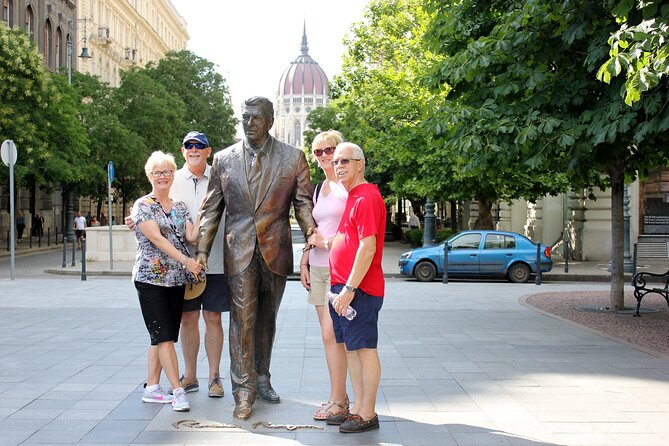
As you keep walking, your guide points out sites linked to the former headquarters of the Nazi SS and the communist-era KGB. This is where the Nazi-to-Communist through-line becomes tangible. You start seeing how surveillance, intimidation, and control don’t vanish—they change names, uniforms, and systems.
Finally, the tour caps at Letna Park on the Vltava River. This is a wide-open finale, which helps after several intense political stops. Your guide explains the story of Stalin’s statue, including that it was built in 1955 and then destroyed in 1962.
It’s a powerful ending because it’s literally about how power tries to fix itself in stone—and then how societies break that spell when the political era ends. It also gives you a great photo view over the river while your mind is still processing what you just learned.
Tips to Get More From the Walk (And Avoid Common Friction)
A walk focused on WWII and Communist-era control is not a “stand and smile” experience. It can be emotionally heavy, and it moves fast. A few practical tips will help you enjoy it more:
- Wear good shoes. The tour includes stairs, high curbs, and slippery surfaces, and there are about two hours of continuous walking.
- Dress for weather. The tour runs in all weather, and you’ll spend a lot of time outside. Bring a hat or hood if it’s cold or raining.
- Ask early about pacing and order. Some tours can feel like they follow a route pattern rather than strict chronology. If you want dates in order, ask your guide to keep it that way.
- If you have a preferred focus, say so. One experience described how a guide tailored the walk to focus more on the Cold War through Nazi era and beyond. That’s a great way to make the tour match your interests.
- Give yourself extra time at the meeting point. One experience noted directions weren’t specific enough, so arrive early and confirm the exact location.
Also, this topic is not recommended for children under 14, which makes sense given the subject matter.
Should You Book This Hammer & Sickle Communist Times Tour?
Book it if you want a guided walk that connects WWII occupation and Communist rule through the actual places where protests, power, and repression happened. It’s especially good for history buffs who like structure and context, and for first-timers who want a mental map of central Prague beyond postcard sights.
Skip it (or rethink) if any of these are true:
- you don’t handle lots of walking and uneven ground well
- the idea of dark political sites makes you miserable instead of curious
- you want only a light orientation tour with minimal seriousness
If you’re on the fence, I’d decide based on one question: do you want to understand why Prague looks the way it does today? If yes, this tour gives you a strong explanation—one street, one square, and one hard-to-forget story at a time.
FAQ
How long is the tour?
It runs for about 3 hours, and the tour description places it at around 3.5 hours.
Is pickup included?
Yes. Pickup is offered, and it’s included. Drop-off isn’t included.
Is this a private tour?
Yes. It’s a private tour/activity, and only your group participates. The group size is also limited to keep the experience personalized.
What’s included in the price?
You get a licensed English-speaking expert guide, a refreshment stop with a beverage, and pickup. The tour data also notes admission ticket free.
Is the tour family-friendly?
It’s not recommended for children under age 14 due to the topic.
Is the tour suitable for people with limited mobility?
No. The tour involves about two hours of continuous walking on high curbs, stairs, and slippery surfaces, so it’s unsuitable for limited mobility.
Can I cancel for free?
Yes, free cancellation is available if you cancel at least 24 hours in advance of the experience start time for a full refund.
Is the tour in English?
Yes. The guide is licensed English speaking.