REVIEW · BUDAPEST
Budapest: Sightseeing Tour by Electric Tuktuk
Book on GetYourGuide →Operated by Daniel Herczeg · Bookable on GetYourGuide
Silent electric tuktuks make Budapest feel brand-new. This eco-friendly ride covers both sides of the river in about 2 hours, so you get the big-picture layout without the usual traffic-and-walking hassle.
I especially love how quiet the electric tuk-tuk is, so your live English guide is easy to hear at every stop. I also like that Daniel Herczeg mixes main monuments with smaller details, plus he shares practical restaurant and pub ideas you can actually use after the tour.
The main catch is time: it’s a fast introduction. You’ll see a lot of Budapest, but most famous places are quick “look and photo” moments rather than long museum-style hangs—so plan a second visit if you want deeper time inside.
In This Review
- Key highlights I’d prioritize
- Why Budapest Looks Different From a Silent Electric Tuk-Tuk
- Meeting at Oktogon 2 and How the Private Format Works
- Heroes’ Square, Vajdahunyad Castle, and Andrassy Avenue in One Ride
- House of Terror and the Opera House: What’s Under the Glamour
- St. Stephen’s Basilica and the Parliament: Two Power Symbols, One View Plan
- Jewish Quarter Circuit: Dohány Street Synagogue and Narrow-Street Atmosphere
- Rudas Thermal Bath, Gellért Hotel Area, and the Path Toward Buda Castle
- Buda Castle Area: Matthias Church, Fisherman’s Bastion, and Palace Views
- What Daniel Herczeg Teaches You Between the Sights
- Price and Value for a 2-Hour Private Budapest Loop
- Should You Book This Budapest Electric Tuk-Tuk Tour?
- FAQ
- How long is the Budapest sightseeing tour by electric tuk-tuk?
- Is the tour private or shared?
- What language is the live guide?
- Where do we meet the guide and tuk-tuk?
- What major places does the tour cover?
- Do you get time for photos during the tour?
- What should I bring?
- What happens if it rains?
- What’s included in the price?
Key highlights I’d prioritize

- A truly silent ride that makes narration and photo stops more enjoyable
- Pest-to-Buda loop with major landmarks on both sides of the Danube
- Time to get out and wander at several key viewpoints for photos
- Daniel Herczeg’s local pointers, including food and drink recommendations
- Flexible routing depending on weather and traffic conditions
Why Budapest Looks Different From a Silent Electric Tuk-Tuk
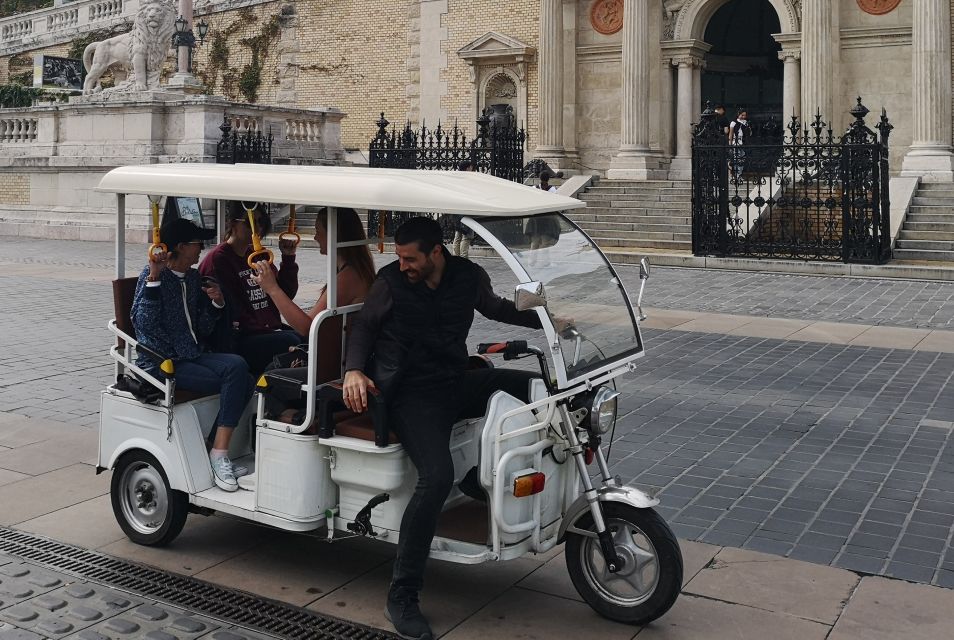
Budapest is spread out in a way that can mess with your plans. Heroes’ Square feels like a world away from the Parliament. And then you still have to get up to Castle Hill. A walking-first day can turn into an endurance test before you even get the views.
That’s why I like this format. The electric tuktuk is designed for sightseeing, not rushing. Because it’s quiet, the experience doesn’t turn into shouting over engines. You’ll follow Daniel Herczeg’s stories while you glide past landmarks—so you get context while things are still in motion, not just after you read a plaque.
There’s also a practical eco angle. You’re using an electric vehicle instead of the louder traffic chaos around you. And you can often travel in a way that feels more direct than bus or taxi routes, which matters when you’re trying to see both Pest and Buda in one go.
Expect open-air views and easy angles for photos, especially around the river viewpoints and broad avenues. On a hot day, that can be great. On a cold day, it can be chilly—so bring weather-appropriate clothing, and know that the guide has handled cold conditions with extra warmth on some tours.
You can also read our reviews of more tours and experiences in Budapest.



Meeting at Oktogon 2 and How the Private Format Works
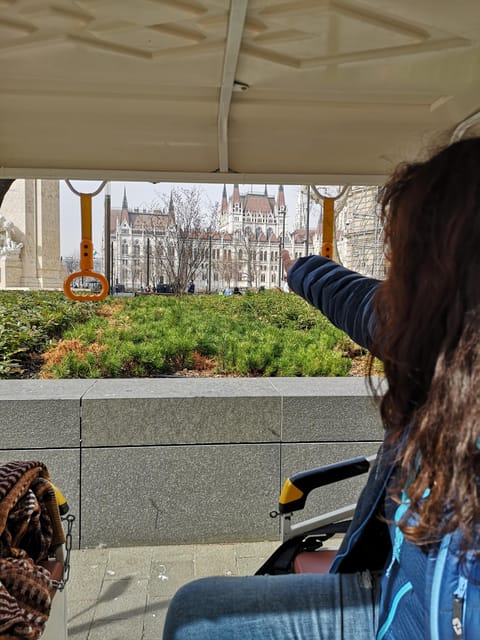
The tour starts at Oktogon 2, with the guide standing by the parking spots in front of the K&H Bank next to the tuk-tuk. That matters because Budapest can be busy, and you don’t want to waste your sightseeing time hunting for a vehicle.
This is a private group setup, so the pace is not forced around a large crowd. In a big group, you often get one-photo-and-go. In this format, you can usually slow down where you care most—especially if you ask for specific photo angles or extra time at a viewpoint.
It also helps that the narration is in English. Daniel Herczeg leads the tour live, and the quiet vehicle makes his commentary easier to follow than you’d expect. If you like your sightseeing to feel like a conversation with someone who actually lives here, this setup fits well.
Duration is about 2 hours, so you’ll want to treat it as a first-day orientation or a “best-of both sides” reset before you commit to longer, ticketed activities on your own.
One more practical note: the itinerary can change due to traffic and weather. That doesn’t mean it’s chaotic. It means you’re adapting in real time, which is often what you want in a city where schedules get knocked around by road conditions and crowds.
Heroes’ Square, Vajdahunyad Castle, and Andrassy Avenue in One Ride
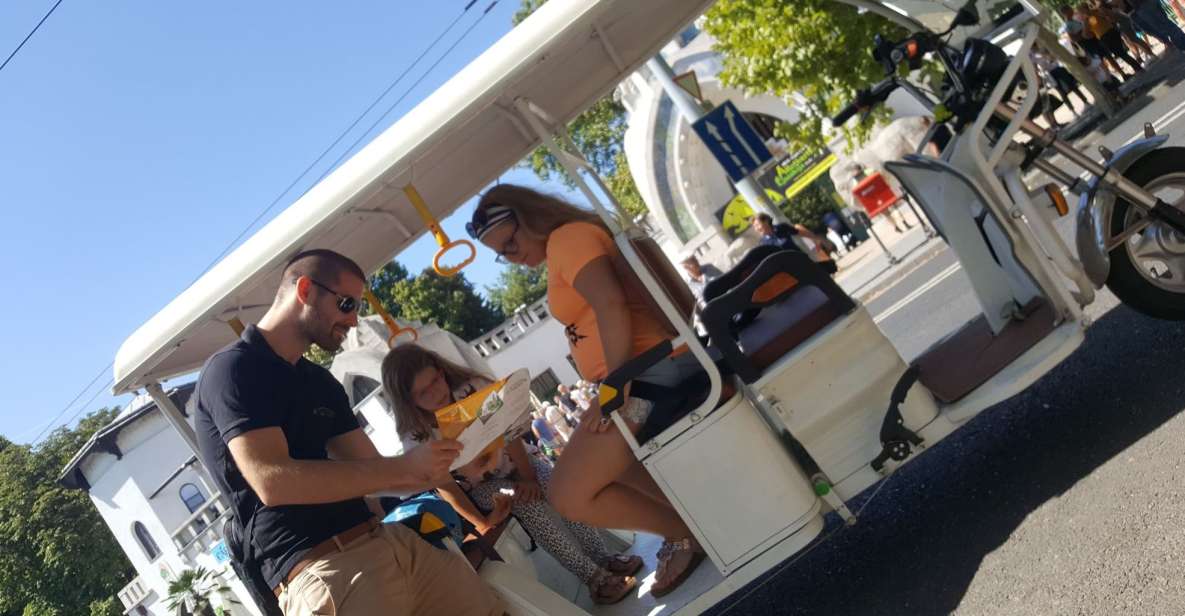
The first major stop sets the tone: Heroes’ Square. It’s one of Budapest’s biggest postcard moments, with wide space for photos and a strong “welcome to the capital” feeling. Even if you’ve seen pictures online, being there in person helps you understand the city’s scale.
From there, you’ll move through the area around the Fine Art Museum and Hall of Art, then toward Vajdahunyad Castle. This is one of those spots where Budapest shows off its storybook side. You get a castle-like scene without needing to climb a mountain for it. It’s also a nice contrast after the open grandeur of Heroes’ Square.
Then comes Andrassy Avenue, one of the city’s signature boulevards. This is where the tuk-tuk shines. The boulevard can be full of traffic and pedestrians at peak times, and walking the whole stretch would take more time than it sounds like. Riding lets you keep moving while still seeing the details along the way.
What makes this section feel good is the balance of “big architecture” and “camera-ready moments.” You’ll get the monuments that define Budapest, but you’ll also get the visual rhythm of how the city flows from grand squares to elegant avenues.
If you’re the kind of traveler who likes to understand the map—where Pest’s main cultural spine leads to the river—this part of the ride helps you build that mental model fast.
House of Terror and the Opera House: What’s Under the Glamour
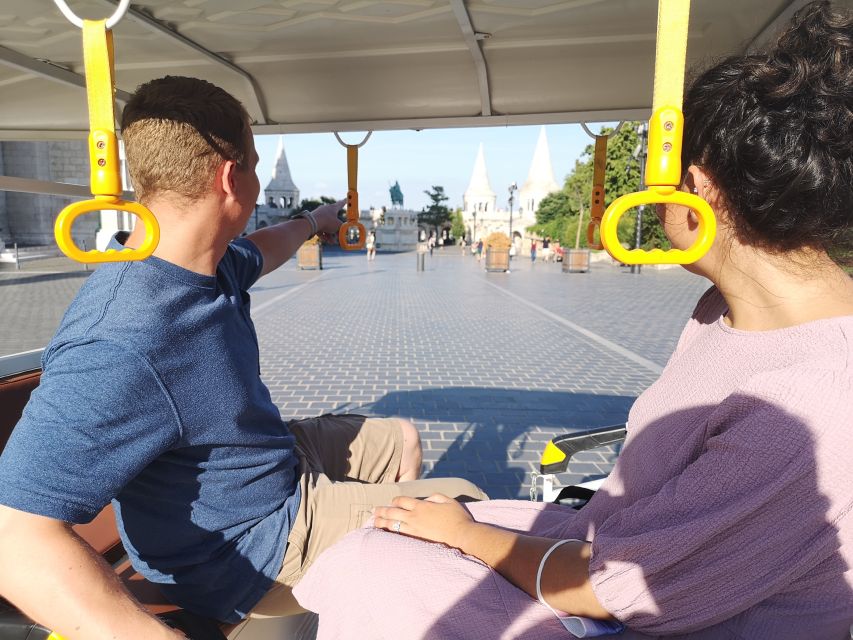
Next you’ll pass the House of Terror and the Hungarian State Opera House along Andrassy Avenue. These stops work well together because they show two sides of Budapest at once.
The Opera House area gives you the elegant, old-world look that visitors expect. It’s a symbol of culture and ceremony. But the House of Terror is a reminder of Hungary’s 20th-century scars—history that’s hard, heavy, and impossible to ignore once you learn what happened here.
Even if you don’t go inside every building, seeing them in sequence adds meaning. Daniel Herczeg’s storytelling ties the architecture to the people and events behind it, and that’s where the tour feels more than just a photo run.
One practical benefit of the tuk-tuk route: you’re not trapped in long walking detours to connect between major streets. That’s especially useful if it’s hot, windy, or raining lightly and you don’t want your day to degrade into wet shoes and subway transfers.
Take this section as an information boost. Later, when you choose what to ticket and what to skip, you’ll know which parts of Budapest hit you hardest.
St. Stephen’s Basilica and the Parliament: Two Power Symbols, One View Plan
Then you’ll head to St. Stephen’s Basilica. It’s one of the city’s most recognizable spiritual landmarks, and it gives you a strong sense of Budapest’s central identity. Even from outside, you can feel how much this church dominates its surroundings.
After that comes the Hungarian Parliament Building. The Parliament is the kind of place where just standing nearby helps you understand why people insist on seeing it at least once. It’s dramatic, it’s instantly readable in skyline photos, and it anchors the riverfront story.
Here’s why this stop sequence works on a short tour. You get both a religious center and a political center within the same day loop. Most first-timers only focus on one side of that equation. This tour makes you notice both, which helps you understand how Budapest presents itself: faith, power, and national identity all in one place.
Also, the tuk-tuk timing can save you from the crowds that build around the most popular river viewpoints. You may still encounter people on the sidewalks, but you won’t spend your time inching through them the way you would if you walked every transfer segment.
Photo-wise, aim to grab your angles during the short stops. Don’t wait until the end. Light changes quickly near the Danube, and you’ll want your best shots before the day shifts.


Jewish Quarter Circuit: Dohány Street Synagogue and Narrow-Street Atmosphere
One of the most enjoyable parts of the tour is the circle around the Jewish Quarter, where you’ll feel the city vibe in the tight streets. Budapest’s older neighborhoods are more than just architecture—they’re about how people move, where the shops sit, and how the streets compress the atmosphere.
You’ll see the Dohány Street Synagogue as part of this loop. It’s a striking landmark, and it helps you connect Budapest’s modern identity to the communities that shaped it.
This section is also a good “style contrast.” After broad avenues and big monuments, you’re suddenly in narrower streets with a different rhythm. The tuk-tuk keeps things efficient, but you still get that neighborhood-scale feeling.
If you’re into street-level wandering, this is where the tour’s short walking windows matter. Even a brief chance to step out for a few minutes gives your eyes a reset. It breaks the day into chapters instead of a single long ride.
It’s also a smart way to start planning your own follow-up day. Once you’ve seen the area, you’ll know where you want to slow down later—whether you’re drawn to the synagogue area, cafés, or just the street atmosphere.
Rudas Thermal Bath, Gellért Hotel Area, and the Path Toward Buda Castle
Now the tour transitions to the Buda side. You’ll pass Gellért Hotel, then head toward Rudas Thermal Bath. This isn’t just a sightseeing detour. It’s a clue about how Budapest’s thermal bath culture fits into the city’s geography and daily life.
Rudas is a famous name, and even when your stop time is brief, it gives you a “this is Budapest” moment. Baths here are not just tourist attractions; they’re part of the city’s identity. Seeing the area early makes it much easier to decide later if you want to book a longer soak or just enjoy the vibe from the street.
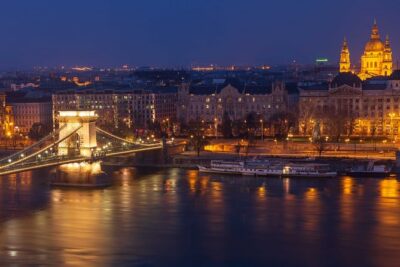
Then you go back toward the river story with stops that include Chain Bridge. Chain Bridge is one of those places where the view lines click immediately. It links both halves of the city, and it often becomes your reference point for the rest of your trip.
From there, you’re on your way to Castle Hill, the district where the city looks like it’s been arranged for drama—especially around the viewpoints. It’s also where many visitors get tired from stairs and walking. The tuk-tuk helps you arrive with energy left.
On busy days, the route also helps you avoid some of the worst bottlenecks. Instead of losing time to traffic and foot congestion, you keep your momentum.
Buda Castle Area: Matthias Church, Fisherman’s Bastion, and Palace Views
Once you reach the Buda Castle area, you’re in the heart of Budapest’s most famous skyline angles. The key stops here are Buda Castle, Matthias Church, and Fisherman’s Bastion.
The tour typically includes brief walk-and-photo windows around these areas. That’s the right choice for a 2-hour day. These viewpoints are best when you pause, look out, and let the perspective land. The tuk-tuk gets you there; the walk gives you the angles.
Matthias Church brings detail into focus—ornate architecture and that unmistakable historic look. Even a short stop can help you see why this area is so photographed.
Then comes Fisherman’s Bastion, where the views are the main event. Standing here gives you a wider look across the Danube and back toward Pest. It’s also a great place to photograph the city as a whole, because the layout is easier to understand when you can see river lines and rooftops at once.
You may also pass Buda Palace during this segment. If you want to feel the scale of Castle Hill, this is where you notice it. It’s not a single building—it’s a whole area with a royal-era feel.
One practical note: Castle Hill can be uneven and crowded. Short walking windows work fine, but you’ll still want comfortable shoes. If you’re visiting in peak summer heat or winter wind, dress for it. The tour is outdoors, and the views are worth it, but your comfort matters.
What Daniel Herczeg Teaches You Between the Sights
The best part of tours like this is what happens between landmarks: the stories that help buildings make sense. Daniel Herczeg is a big reason this works. He ties together the why, not just the what.
You’ll hear about history, legends, and interesting background behind the places you’re passing. That matters because Budapest is layered. Without a guide, it’s easy to treat each monument as a standalone photo opportunity. With Daniel, it becomes a chain of meaning.
I also like that the pacing is flexible. Several stops include time for photos, and the guide can adjust the order or timing based on your interests and the real-world conditions on the ground.
Another strong value-add: food and drink recommendations. Daniel has been known to give personal lists of places to eat and drink, and some guests have even received a follow-up email after the tour. Even if you only use one or two tips, that’s worth a lot in a city where menus and options can feel overwhelming.
And yes, the quiet vehicle is a quality-of-life upgrade. On cold or windy days, the guide has also handled weather by bringing extra warmth like blankets and hot tea, plus heat patches on some tours. That kind of small care can make the difference between a “fine” day and a memorable one.
Price and Value for a 2-Hour Private Budapest Loop
At $108 per person for a 2-hour private tour, this isn’t the cheapest way to see Budapest. But it’s also not trying to be. You’re paying for time saved, for a quiet eco vehicle, and for a guide who turns sightseeing into understanding.
Here’s where the value makes sense:
- You cover major landmarks across Pest and Buda without walking the long connections.
- You get photo windows at multiple key spots rather than one quick pass.
- You’re not stuck in an engine-noise cloud, since the tuk-tuk stays quiet.
- You also walk away with restaurant and bar ideas that help the rest of your trip.
If you’re short on time, this is a smart “first taste” of the city. It helps you decide what to prioritize later. If you’re in Budapest for multiple days, it works as a fast orientation day, especially if you want to hit museums, baths, or churches after you know what stands out most to you.
If you hate guided narration or prefer total freedom with no structure at all, this might feel slightly scripted. But if you want a guided route that still leaves you time to stop and look, it fits well.
Should You Book This Budapest Electric Tuk-Tuk Tour?
Book it if you want to:
- Get your bearings fast across Pest and Buda
- See big monuments like Heroes’ Square, Parliament, and Fisherman’s Bastion without spending your whole day walking
- Enjoy history stories in English while riding a quiet, electric vehicle
- Want practical food and drink recommendations from someone who actually knows the city
Skip or rethink it if you’re expecting long museum visits, deep indoor time, or a slow, wandering day with hours at one site. This tour is designed for an efficient highlights loop.
My take: for first-timers, couples, families, or anyone who wants a comfortable way to cover the major views in a short window, this is one of the most satisfying “intro days” Budapest offers.
FAQ
How long is the Budapest sightseeing tour by electric tuk-tuk?
It runs for about 2 hours.
Is the tour private or shared?
It’s a private group tour.
What language is the live guide?
The live tour guide provides commentary in English.
Where do we meet the guide and tuk-tuk?
The meeting point is Oktogon 2, and the guide stands next to the tuk-tuk by the parking spots in front of the K&H Bank.
What major places does the tour cover?
You’ll see highlights including Heroes’ Square, House of Terror, Hungarian State Opera House, St. Stephen’s Basilica, the Hungarian Parliament Building, the Dohány Street Synagogue, Rudas Thermal Bath, Chain Bridge, Buda Castle, Matthias Church, and Fisherman’s Bastion (plus other stops along the route).
Do you get time for photos during the tour?
Yes. There is time to take photos during the tour, with opportunities to stop and view sights.
What should I bring?
Bring weather-appropriate clothing, since the tour is outdoors.
What happens if it rains?
In rainy weather, the tour can be postponed to another time or day.
What’s included in the price?
You get to see all the main attractions, hear history, stories, and legends, receive a bottle of water, and enjoy a private tour.