
REVIEW · BUDAPEST
Buda+Pest Panoramic views & Iconic Landmarks City Segway Tours
Book on Viator →Operated by ABC Segway Tours Budapest · Bookable on Viator
Gliding through Budapest beats walking pace. This Segway tour lines up big icons with live guide commentary and short stops designed for quick, clear views—then you get photo and video help so you leave with more than just memories. It’s built around a simple lesson first, so most people can get moving fast.
The main thing to watch is time: stops are brief, so you’ll see the highlights from the outside and from the right angles, but you shouldn’t expect long entry visits (especially at places like the bath complex). If you want a slow, in-depth museum day, this format may feel like a whistle-stop tour.
In This Review
- Key things I’d plan around
- Why this Segway loop works for Budapest
- The 15–20 minute Segway lesson before you roll
- Ferris Wheel of Budapest: the quick-view warm-up
- The Hungarian State Opera House and Andrássy Street angles
- Heroes’ Square: statuary, power, and 20th-century memory
- House of Terror and Oktogon: history and nightlife in the same ride
- Vajdahunyad Castle: a whole-country style collection
- Széchenyi Baths and Pool: thermal icon in a photo-friendly window
- Price and what you really get for $54.31
- Who should book this Segway tour (and who should not)
- Timing and weather tips that actually matter
- Should you book this Budapest Segway tour or plan something else?
- FAQ
- How long is the Segway tour in Budapest?
- What’s the price per person?
- Is the tour offered in English?
- How much Segway training do you get?
- What’s included in the tour?
- Are there admission tickets required for the listed stops?
- What are the age and weight requirements for children?
- What are the Segway weight limits?
- Does the tour run in bad weather?
- Is it a private tour?
Key things I’d plan around
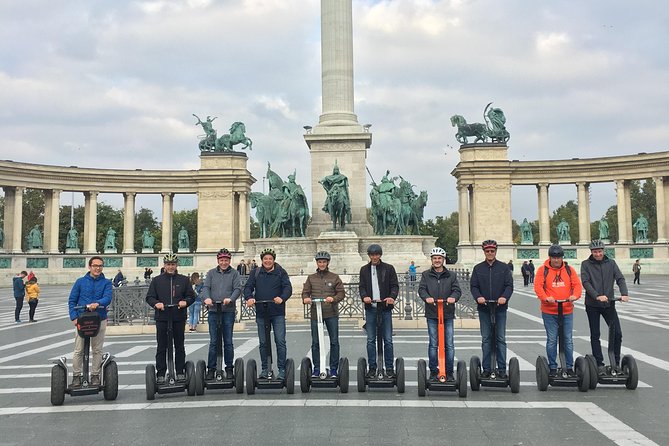
- A short Segway practice (15–20 minutes): you learn the basics before you roll through the sightseeing loop.
- Live narration from your guide: you get real-time stories while you’re moving, not after the fact.
- Icon stops packed into 90 minutes: Ferris Wheel views, the Opera House, Heroes’ Square, Vajdahunyad Castle, and Széchenyi area.
- GoPro-style photo and video support: you’re guided to the best spots while your gear captures the moment.
- Rain-ready touring: a raincoat is included and the tour runs in all weather.
- Private tour feel: it’s listed as private, so it’s just your group on the route.
Why this Segway loop works for Budapest
Budapest rewards you for moving. From street level, the city’s big buildings and sweeping avenues can feel dramatic all at once, and a Segway lets you cover more of that “wow” without tiring out your legs.
You’re also not stuck staring at your own shoes. The guide gives live commentary, so the ride turns into a moving city lecture: what you’re looking at, why it matters, and how to read the architecture as you pass it. That’s the difference between a quick scenic outing and a tour you can actually remember later.
One practical advantage is pacing. With a 1 hour 30 minutes format, you get a concentrated hit of the postcard sights, plus a few in-between story stops along major streets. If your schedule is tight, this is a very efficient way to get your bearings and still feel like you saw the right landmarks.
You can also read our reviews of more city tours in Budapest



The 15–20 minute Segway lesson before you roll
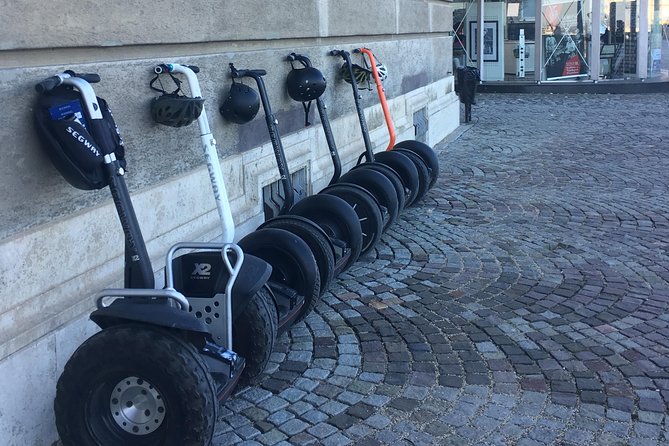
Before you hit the landmarks, you’ll do instruction for about 15–20 minutes. This is where first-time riders usually feel the most nervous, and that’s also where good guides earn their tips by making the gear feel predictable.
The tour includes a Segway plus a helmet and raincoat. You’re also given photo/video help and GoPro use, so you aren’t just learning to balance—you’re learning how to ride with your focus up, not down. That matters because Budapest streets have turns, curb cuts, and the occasional tight spot, and the lesson is meant to prepare you for it.
Safety-wise, the rules are pretty clear. You need the ability to make motions like climbing and descending stairs without assistance, and the Segway isn’t appropriate if you’re over 130kg or under 30kg. Pregnant women aren’t allowed, and children must be at least 8 years old and weigh at least 30 kg.
Ferris Wheel of Budapest: the quick-view warm-up
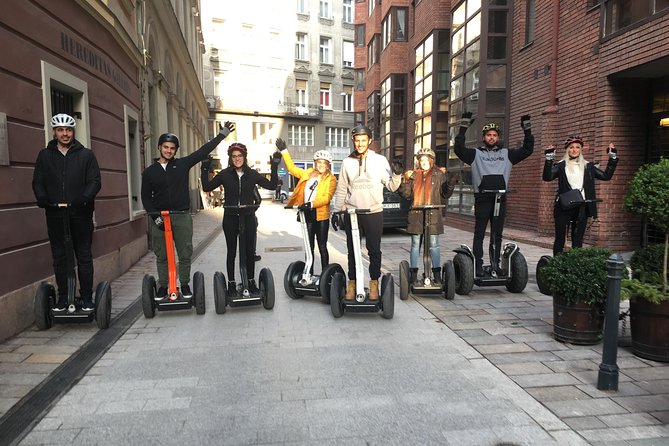
Your first stop is the Ferris Wheel of Budapest. The schedule keeps it to about 5 minutes, so think of this as a warm-up glance: a chance to orient yourself and start building mental map links between the sights.
The good part is that you don’t need extra hassle here. The stop is listed with free admission, which usually means you can focus on the view and photos rather than ticket logistics.
The likely drawback is obvious: a 5-minute pause is not a full attraction experience. If you’re hoping to ride the wheel during the tour, you may need to plan that separately.
The Hungarian State Opera House and Andrássy Street angles
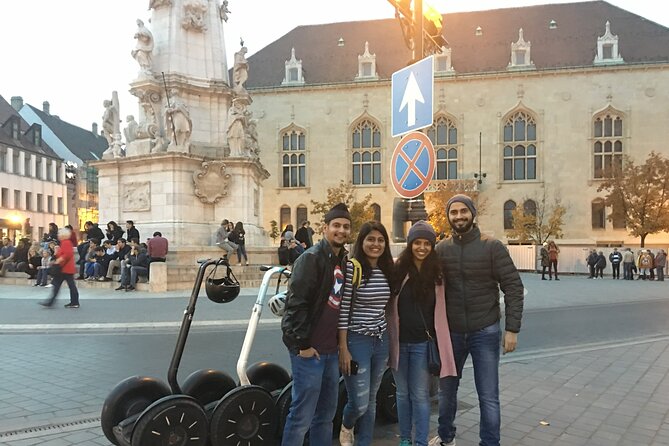
From Ferris Wheel territory, the route heads toward one of Budapest’s showpieces: the Hungarian State Opera House (Magyar Allami Operahaz). You get a short look that’s timed for photos and first impressions, with Andrássy Street playing a big role along the way.
This is a street-level taste of why Andrássy is often treated like a grand promenade. You’ll see it as the city’s more elegant corridor, lined with restaurants and speciality shops, and the Opera House is the architectural anchor that makes the whole approach feel intentional.
If you’re the kind of traveler who likes to read buildings, this stop helps. The tour is designed to show you the forms and the drama from street vantage points—so even if you don’t go inside on this outing, you’ll still walk away able to spot the landmark from a distance later.
Heroes’ Square: statuary, power, and 20th-century memory
Next up is Heroes’ Square, near City Park in the VI. district. This isn’t just a pretty plaza stop. It’s presented as a story moment where the guide explains how Hungary moved through the 18th and 20th centuries and how the country faced some of the bloodiest conflicts of the last century.
What I like about this stop is that it gives context while you’re standing in the right place. Heroes’ Square is full of symbols, and without a guide’s framing, it’s easy to reduce it to “cool statues.” With commentary happening live, you can connect the artwork to the era it represents.
Timing is still tight—about 5 minutes. So if you want to study every statue in detail, you’ll need a second visit later on your own. But as a first-day or mid-trip anchor stop, it works well.





House of Terror and Oktogon: history and nightlife in the same ride
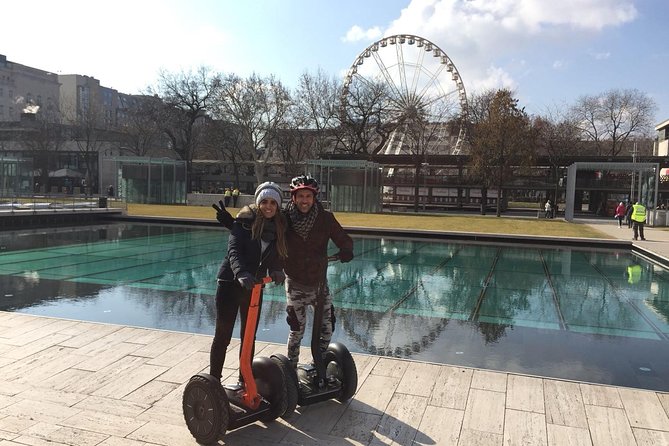
The route also passes the House of Terror area and then toward Oktogon, which the tour description frames as a social center with bars and clubs. That mix matters because Budapest doesn’t separate its past and present neatly. One minute you’re taking in memory-heavy architecture; the next you’re riding through a lively crossroads.
The House of Terror stop is described as part of the route that discusses Hungary’s path through major 18th to 20th century shifts and the costs of war. Even if you only see a slice of the site during your photo stop, the guide’s framing is what turns it into more than just a grim-looking building.
Oktogon adds a different flavor. You get a sense of where locals and visitors flow when the day turns into evening, with lots of energy concentrated around the intersection. It’s a useful reminder that Budapest isn’t only viewpoints and museums—it’s also daily life.
Vajdahunyad Castle: a whole-country style collection
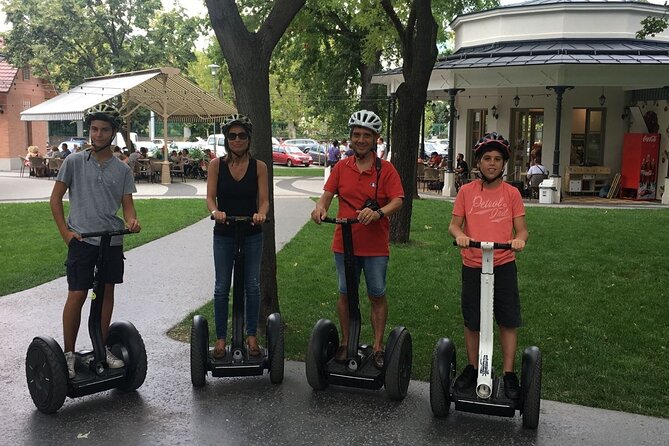
Then comes Vajdahunyad Castle. It’s often nicknamed Dracula’s Castle, and the tour’s description leans into the fun side while still pointing out the architectural idea behind it: the castle complex displays iconic buildings in different architectural styles pulled from across Hungary.
This stop is great for travelers who like variety. Instead of seeing one style and moving on, you can compare forms and details in a short span. Even in a quick 5-minute visit window, it’s visually “readable,” so you don’t feel like you’re rushing through something you didn’t understand.
There’s also a sense of atmosphere here. The tour description includes time to relax in fresh air around a lake surrounded by forest-like surroundings before returning. That’s a good contrast to the more intense history stops earlier in the loop.
Tip: if you’re shooting photos, do it with your eyes first. The castle’s different architectural elements can be easy to miss if you’re only focusing on one façade.
Széchenyi Baths and Pool: thermal icon in a photo-friendly window
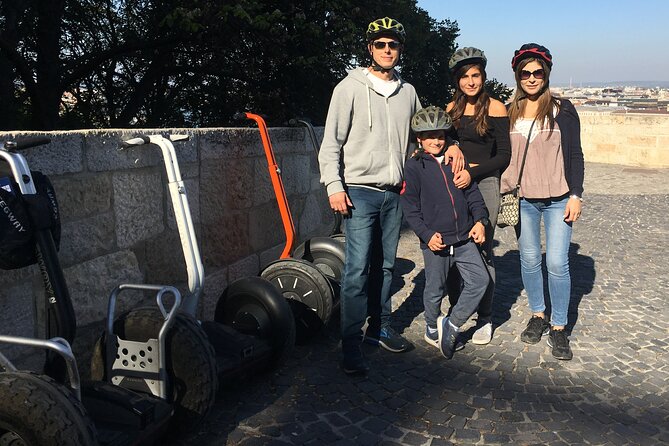
The tour ends with the Széchenyi Baths and Pool area, one of the largest thermal baths in Europe. You’ll see it as an iconic landmark stop, not as a full soak-and-scrub experience, since the schedule lists it as a short stop.
For most people, that’s still valuable. Budapest is full of bath culture, and Széchenyi is the headline. Seeing it on a Segway ride gives you the “there it is” moment, so you can decide later if you want to plan an actual bath session with a longer time block.
The consideration is simple: you won’t get the same experience as if you booked a dedicated bath visit. If thermal bathing is your main goal, treat this tour as the appetizer, not the main course.
Price and what you really get for $54.31
At $54.31 per person for about 1 hour 30 minutes, you’re paying for more than a guide. You’re getting the Segway itself, helmet, raincoat, and photo and video support, plus GoPro camera use. You also get the lesson time built into the experience.
That changes the math. A typical walking tour only gives you time and stories. This one adds transportation and equipment, plus the help capturing the moments at landmark angles. For value-focused travelers, that’s a strong mix because your time gets used twice: once to see and once to document.
Is it worth it if you’re an experienced rider? Still possibly, because the route is designed to connect iconic sights in an efficient loop. But if you hate riding gear or feel uneasy with motion on streets, you’ll want to weigh that against the fact that the stops are brief and mainly for seeing, not lingering.
Who should book this Segway tour (and who should not)
This experience is a good match if you want an efficient “highlights + context” outing and you like learning while moving. The route is designed so you’re not stuck in one neighborhood all day, and the live guide commentary helps you understand what you’re looking at right when it’s in front of you.
It also tends to suit groups that want fun with structure. In the reviews, guides like Erik, Ari, and Raed get praised for making the experience easy and safe right from the start, with patient instruction and plenty of facts during the ride. That’s exactly the kind of tone you want for a first Segway experience.
Skip it if any of the safety requirements are a problem. The tour isn’t for pregnant participants, children must meet the age and weight minimums, and the Segway weight range is capped at 130kg and 30kg minimum. Also, if you struggle with climbing and descending stairs without assistance, you may not meet the requirements for the training and equipment handling.
Timing and weather tips that actually matter
The tour runs in all weather conditions, and you’ll get a raincoat as part of the package. That’s a real advantage in Budapest, where rain can pop up without warning and make stone and pavement slick.
Dress for movement and for quick stops. Even though you’re not doing a long hike, you’ll be riding, braking, turning, and stopping often enough to need comfortable shoes and clothing that won’t fight you. Since the schedule includes several major landmark zones, you’ll likely spend time with your hands free for photos and your eyes up for guidance.
If you’re prone to motion discomfort, try to arrive with a clear head and follow the guide’s instructions closely. The 15–20 minute training is the moment to ask questions, practice turns, and get your body comfortable with the control.
Should you book this Budapest Segway tour or plan something else?
Book this tour if you want a fast, fun way to connect Budapest’s biggest landmarks in one outing, with live storytelling and included photo/video support. It’s especially appealing when you’re short on time but still want to see Heroes’ Square, the Opera House area, Vajdahunyad Castle, and Széchenyi without spending your whole day on logistics.
You might plan something else if you want slow, entry-based sightseeing. The stop times are brief, so this is designed for viewing, not deep inside-the-attraction time. And if the Segway itself feels like a hassle in your travel style, the route won’t change that.
My take: if you’re curious about trying a Segway and you like your sightseeing with clear context, this is a solid use of a morning or afternoon. You’ll get the big-name Budapest visuals, plus the “why that matters” part that makes the city stick after you leave.
FAQ
How long is the Segway tour in Budapest?
The duration is about 1 hour 30 minutes (approx.).
What’s the price per person?
The price is $54.31 per person.
Is the tour offered in English?
Yes, it is offered in English.
How much Segway training do you get?
Training lasts about 15 to 20 minutes.
What’s included in the tour?
It includes a professional guide, Segway use, a helmet, a raincoat, photo and video help (best spots), and use of a GoPro camera.
Are there admission tickets required for the listed stops?
The itinerary lists free admission for the stops shown (Ferris Wheel of Budapest, Hungarian Opera House, Heroes’ Square, Vajdahunyad Castle, and Széchenyi Baths and Pool).
What are the age and weight requirements for children?
Children must be at least 8 years old and weigh at least 30 kg.
What are the Segway weight limits?
The Segway is not appropriate for those weighing over 130 kg or under 30 kg.
Does the tour run in bad weather?
Yes, the tour goes in all weather conditions, and you receive a raincoat.
Is it a private tour?
Yes, it’s listed as private, meaning only your group participates.