REVIEW · BUDAPEST
Budapest : Must-see attractions walking tour
Book on GetYourGuide →Operated by Guydeez Tours · Bookable on GetYourGuide
Two hours in Budapest, with the right guide. This private, customizable walk strings together the big sights you actually want, while your guide adds the stories behind the buildings, the public art, the food, and even a few basic Hungarian phrases.
I like that the route is practical and centralized, starting near the Kempinski Hotel Corvinus and moving you step-by-step through the classic sights. I also love the way the stops are timed for great sightlines, especially at St. Stephen’s Basilica and along the Danube Embankment. One thing to keep in mind: at just 2 hours, it’s a highlights-and-outlooks tour, so you shouldn’t expect a full museum-style visit of every site.
In This Review
- Key Points That Make This Tour Worth Your Time
- Private, 2-Hour Highlights: What $29 Really Covers
- Meeting at Erzsébet tér 7 and Why the Location Helps
- Elizabeth Square to St. Stephen’s Basilica: The City’s Big Religious Landmark
- St. Stephen’s Square: Public Art and Hungarian Culinary Storytelling
- József nádor tér: Habsburg Connections and Hand-Painted Ceramics
- Vörösmarty Square and Váci utca: People-Watching With a Finish Line Feel
- Danube Embankment Panoramas: From Castle Hill to Gellért Citadel
- Vigadó Square: Coronation Banquet History at the Riverfront
- Szechenyi Lanchid and Gresham Palace: Chain Bridge and Secessionist Style
- Hungarian Parliament Building Finale: Neo-Gothic and Recent Political Context
- Why the Private Format Makes This Tour Feel Worth It
- Who Should Book This Tour (And Who Might Want Something Else)
- Should You Book This Budapest Must-See Attractions Walking Tour?
Key Points That Make This Tour Worth Your Time
- Private and exclusive: you’re with your guide alone, with no extra strangers in the group.
- Customizable route and pace so you can match your interests and walking style.
- Iconic architecture stops including St. Stephen’s Basilica and the Hungarian Parliament Building.
- Danube panorama viewpoints aimed at Castle Hill, Matthias Church, Fisherman’s Bastion, Buda Castle, and Gellért Hill.
- Culture through small details like public art at St. Stephen’s Square and hand-painted porcelain/ceramics at József nádor tér.
- Multilingual live guide options in English, Spanish, Italian, and French, with examples of guide styles like Adrienne, Anikó, and Alix.
Private, 2-Hour Highlights: What $29 Really Covers

For first-time visitors, the hardest part of Budapest is deciding what to see first. This tour is built to solve that problem fast: you get the key landmarks in a tight loop, plus the “why it matters” context that makes photos and streetscapes mean something. At $29 per person for a private walking experience that lasts 2 hours, it’s good value if you want orientation without wasting precious sightseeing time.
The practical win is that your guide isn’t just naming places. You’ll get basic Hungarian language help and cultural pointers as you go, along with advice on what to do next. That matters because Budapest can feel like a lot at once—broad boulevards, layers of empires, and views that beg for context.
Also, your tour can include walking plus public transport depending on what’s chosen for the route. That helps you keep moving without turning the day into a leg workout.
You can also read our reviews of more walking tours in Budapest



Meeting at Erzsébet tér 7 and Why the Location Helps

You meet at the front of the Kempinski Hotel Corvinus Budapest, at Erzsébet tér 7. I like meeting points like this because they’re easy to find and easy to re-map later. Erzsébet tér is one of those central “anchor” areas where multiple parts of the city connect, so you don’t start the tour feeling lost.
Your guide begins with a quick introduction at Elizabeth Square, where you get a sense of how the walk will unfold—history, architecture, public art, society, food, and Hungarian culture basics. It’s a smart opening because it gives your brain a framework before you start collecting landmarks.
If you’re the type who likes asking questions, this is a good format. The structure is clear, but you’re not stuck listening to a monologue. A friendly, professional guide approach is a recurring theme for this walk, with names like Adrienne and Anikó tied to that style of answering questions and staying organized.
Elizabeth Square to St. Stephen’s Basilica: The City’s Big Religious Landmark
After the welcome at Elizabeth Square, the tour moves toward St. Stephen’s Basilica, which is the largest church in Budapest. This stop is more than just a photo opportunity. You’ll learn how the church’s architecture and history connect to the city’s identity—what it symbolizes, and why it’s a landmark that locals treat as meaningful, not just scenic.
What I like about this kind of first major stop is that it helps you read the city in layers. Budapest isn’t one story; it’s many eras written on the same streets. Starting at a major religious monument gives you a reference point for those layers.
If you’re planning to visit inside later, this guide-led exterior/overview can help you decide whether it’s worth your time. And even if you don’t go in, the knowledge adds up: you’ll understand what you’re looking at instead of just seeing a big church.
St. Stephen’s Square: Public Art and Hungarian Culinary Storytelling
From there, the walk continues around St. Stephen’s Square, where you’ll spot public art featuring fat policemen. It sounds quirky, and it is—but that’s exactly the point. Public art in Budapest often mixes humor with social commentary, and it’s an easy way to understand the city’s attitude without needing a museum ticket.
This is also where the tour brings in Hungarian food history and food culture. You won’t get a cooking class, but you will come away with a better sense of what local dishes reflect—how people eat, celebrate, and remember. That kind of food context makes it easier to choose meals later, especially when a menu reads like a language test.
The drawback here is simple: you’ll be learning while walking. If you prefer slow, long stops with lots of standing still, you might want to ask your guide to pause a bit more during the square segment.
József nádor tér: Habsburg Connections and Hand-Painted Ceramics
Next up is József nádor tér, where you’ll connect Budapest to Hungarian Habsburg history. That sounds like a textbook topic, but in practice it becomes easier to grasp when it’s tied to what you see around you. This is also one of the tour’s more playful stops: you’ll look for hand-painted porcelains and colorful ceramics.
Why this works: objects like porcelain don’t just decorate. They reflect status, trade, craftsmanship, and the tastes of people who had money and influence. When a guide points out what to notice, it turns a street-level observation into a story about everyday luxury.
If you like art and design, this is one of your better chances in a short tour to spot something specific instead of only big monuments. Even if you don’t buy anything, you’ll leave with a sharper eye.






Vörösmarty Square and Váci utca: People-Watching With a Finish Line Feel
Then you’re at Vörösmarty Square, a strong choice for a walking tour because it’s active, central, and full of street life. Your guide uses this point for people-watching, and you’ll also learn how this area links to the famous pedestrian street Váci utca.
One practical advantage: this segment helps you “lock in” your bearings. You’ll understand how the city’s most central pedestrian area connects to the rest of the sightseeing loop you’ve been building. That makes the next part—moving toward the river—feel less like a random walk and more like a planned arc.
This stop also gives you a quick emotional reset. After the Basilica and history-heavy segments, Vörösmarty Square is where Budapest feels most like a living city—less about dates and more about the present moment.
Danube Embankment Panoramas: From Castle Hill to Gellért Citadel

Now comes the payoff: walking along the Danube Embankment with panoramic views aimed toward Castle Hill, Matthias Church, Fisherman’s Bastion, Buda Castle, and Gellért Hill with the Citadel.
I really like the way this part is framed. You’re not just told where the sights are—you’re set up to see how they relate to each other across the river. That’s the difference between taking pictures and understanding a skyline.
You’ll also stop at the Little Princess Statue, where you can make a secret wish. It’s small and easy, but it’s a classic Budapest kind of moment: a quick pause in the middle of serious landmarks.
If you’re visiting in colder months, plan for wind off the river. This is an outdoor section, and even when the sun is out, the Danube can feel sharp. Bring layers and keep your photo gear ready.
Vigadó Square: Coronation Banquet History at the Riverfront
After the embankment section, the tour reaches Vigadó Square, where you learn about the historical connection of Franz Joseph and Sissy’s coronation banquet. This stop matters because it adds court-level history to the same riverfront you’re enjoying for views.
Why it works: you’re seeing the physical city while the guide connects it to political moments that shaped what Budapest became. It helps explain why certain buildings and squares feel ceremonial even when they’re used for everyday life.
If you’re a fan of “how the past still shows up,” this is a good moment to slow down mentally. Riverfront spaces weren’t just for beauty—they were stages.
Szechenyi Lanchid and Gresham Palace: Chain Bridge and Secessionist Style

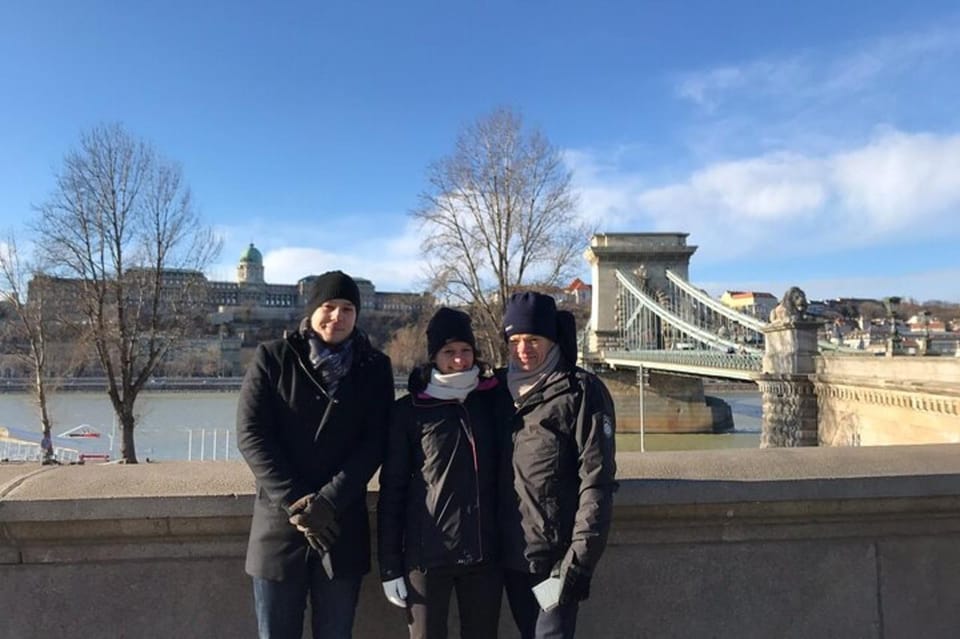
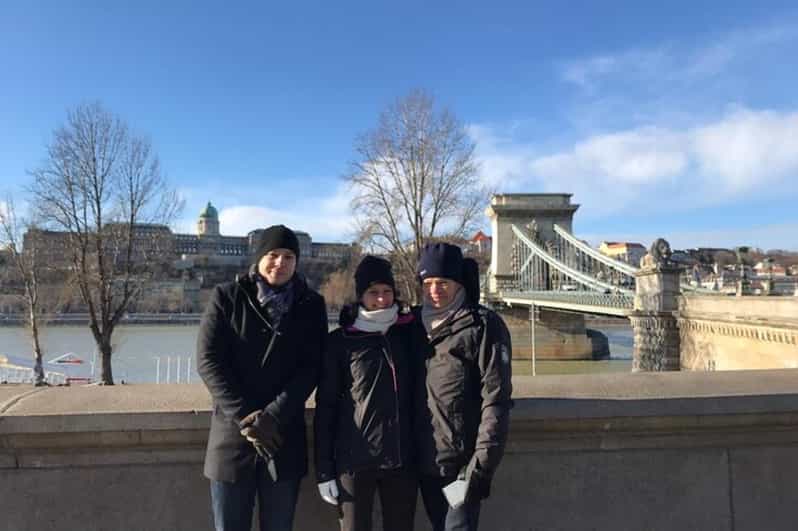
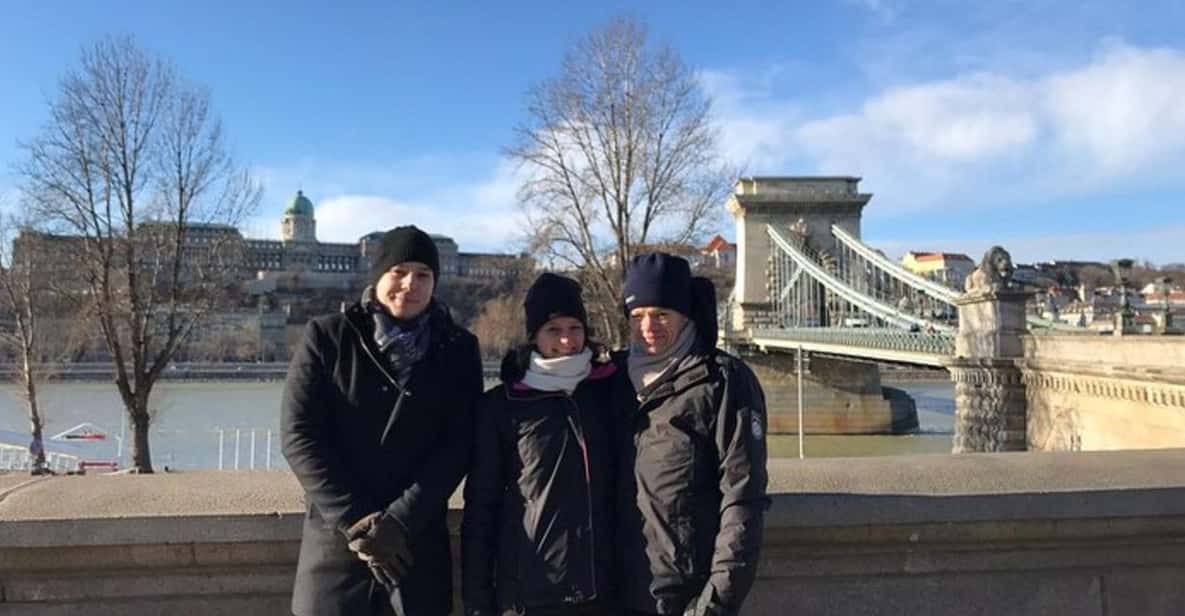
Then it’s time for Szechenyi Lanchid, better known as the Chain Bridge. You’ll learn about the bridge’s history, and your guide will help you understand how it became such a central connection between Buda and Pest.
Right after that, you’ll admire the Gresham Palace, famous for its Secessionist (Art Nouveau–leaning) design. This stop is where architecture nerds get rewarded, but you don’t need to be one. Your guide will point out what makes the building’s style distinctive and how it reflects its era.
The value here is you’ll start noticing Budapest as a design city, not only a monument city. That changes how you walk after the tour—you’ll spot details instead of only landmarks.
Hungarian Parliament Building Finale: Neo-Gothic and Recent Political Context
The tour finishes at the Hungarian Parliament Building, where you’ll learn about its neo-Gothic architecture and also hear about recent history and elections tied to Hungary’s modern political life.
Ending here is smart because it’s one of the most recognizable buildings in the city, and it naturally pulls together the themes you’ve been hearing: empires, national identity, and political change. Earlier stops explain the layers; the Parliament stop helps you connect the layers to modern reality.
If you’re wondering whether to schedule time for a longer visit afterward, this tour can help you decide. It gives you enough context that an optional return visit won’t feel like repeating the same basics.
Why the Private Format Makes This Tour Feel Worth It
The tour is private and exclusive—so you’re not negotiating for attention with other people. That matters in Budapest because many places are photo-friendly but context-light. A private guide fixes that. If something captures your interest—ceramics, architecture, public art—you can ask for a bit more.
It also means you can match your rhythm. If your feet need breaks, you can build them in. If you want the shortest path between viewpoints, you can ask for that too. That’s what the “customizable” part is really for.
You’ll also get your guide’s local advice on other things to do in the city. That often becomes the hidden value of a short tour: it prevents you from wasting time on the wrong museum, the wrong walking route, or the wrong dinner area.
Who Should Book This Tour (And Who Might Want Something Else)
This is a strong fit if:
- You’re visiting Budapest for the first time and want a smart overview fast
- You like history told in street-level ways, not just through dates
- You want major sights without committing to a full day plan
- You’d rather ask questions than read guidebook text on your feet
You might want a different option if:
- You prefer long indoor visits and slow-paced exploration
- You want deep museum-level detail for one specific site
- You hate walking sections near the river (wind and crowds can affect comfort)
Because it’s wheelchair accessible, it can also work for travelers who need that kind of route planning and support, as long as they feel comfortable with the outdoor portions.
Should You Book This Budapest Must-See Attractions Walking Tour?
Yes—if you want a high-impact orientation tour in 2 hours. For $29, you’re buying convenience, focused route planning, and context you can actually use immediately. It’s especially worth it if you’re the type who wants to understand what you’re seeing before you spend more time in the city.
Before you book, be honest about what you want: this is a highlights and viewpoints walk, not a deep-dive itinerary. If that matches your pace, you’ll finish with a clear map in your head, better language basics, and a much easier time deciding what to do next in Budapest.