REVIEW · BUDAPEST
Budapest Highlights Bike Tour with a local guide
Book on GetYourGuide →Operated by Budapest Bike Breeze · Bookable on GetYourGuide
Budapest hits different when you ride it. This 3.5-hour bike tour is a smart loop of the city’s top sights with local English stories that make the monuments make sense fast, and I really like the comfortable pace. The one real catch: you need to be a confident bike rider, and there are only short photo-style stops.
You’ll cover a lot of ground without the usual guessing. You also get a built-in orientation for where to go next, plus the kind of history that explains how Hungary’s past shows up in everyday places—whether you’re pausing for Andrassy Avenue or standing near the House of Terror.
In This Review
- Key things you’ll notice on this Budapest bike loop
- Why Budapest Looks Better From the Saddle
- Meeting Point at Rumbach Sebestyén u. 10: No Guesswork, Just Ride
- Elizabeth Square to Andrassy Avenue: Grand Boulevard, Easy Momentum
- Heroes’ Square to Városliget: Millennium Pride and Park-Air Breaks
- House of Music and Ethnographic Museum Stops: Culture Without the Long Lines
- House of Terror and St. Stephen’s Basilica: The Past Hits Hard, Then the View Opens Up
- Parliament to Chain Bridge: How Budapest Swaps Scale and Mood
- Castle-Bazaar and Elizabeth Bridge: Ending With Views You Can Remember
- Bikes, Helmets, and Optional E-Bikes
- Price and What You Actually Get for $34
- Who This Tour Fits Best (and Who Should Pass)
- Should You Book This Budapest Bike Breeze Highlights Tour?
- FAQ
- How long is the Budapest Highlights bike tour?
- How much does the tour cost?
- Where do I meet the guide?
- Is the tour guided in English?
- Will the tour run in bad weather?
- What if I can’t ride a bike or I’m under 12?
- Can I ride an e-bike instead of a regular bike?
Key things you’ll notice on this Budapest bike loop
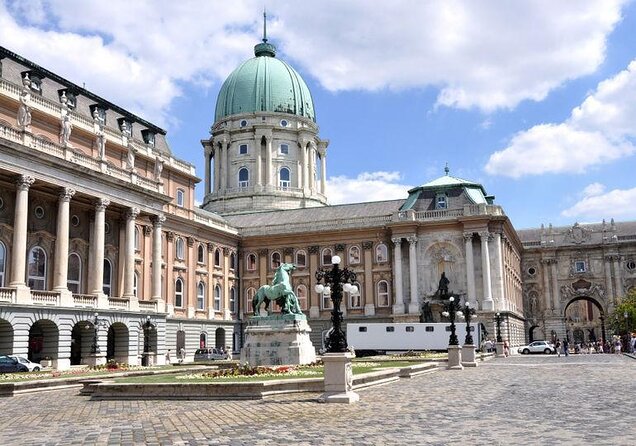
- Main-sight coverage in half a day without spending your whole trip in transit
- 15 scenic stops that keep you moving while still letting you look closely
- UNESCO World Heritage stops along the route, explained by a local guide
- Comfort-first biking with helmets and a pace aimed at typical visitors
- Guides you might meet include Danny, Daniel, Balasz, or Ivana, based on recent groups
Why Budapest Looks Better From the Saddle
If you’ve ever tried to “do” Budapest on foot, you know the problem. Distances add up, and you end up spending more time planning your next hop than actually seeing the city.
This bike tour fixes that. You’re not just riding past landmarks—you’re moving at a visitor-friendly pace that lets you register what you’re seeing. Andrassy Avenue feels like a grand introduction to the city, and when you cross to Buda’s side over the Chain Bridge, the view alone helps you understand the layout of the Danube and why Budapest is so famous for its skyline.
What I like most is that the tour isn’t just a photo checklist. The guide brings the stories down to human scale: why certain buildings matter, what different eras left behind, and how occupations shaped the feel of places you’re standing in. One of the strongest themes you’ll hear is Hungary’s layered 20th-century experience, including topics like Ottoman rule, Nazi Germany, and Communist-era influence.
And because the route is timed for 3.5 hours, you come away with a real sense of direction. That matters on a first visit. You’ll know which side to stay on, where the “big sights zone” is, and how to build the rest of your trip around what you just learned.
You can also read our reviews of more cycling tours in Budapest
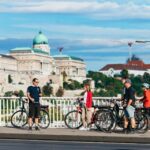
Meeting Point at Rumbach Sebestyén u. 10: No Guesswork, Just Ride
Your start is Budapest, Rumbach Sebestyén u. 10 (1075). The instructions are clear: ring the bell no. 105 at the main gate, and the team will be in the courtyard.
That may sound like small talk, but it’s actually a big part of whether a tour feels smooth. When you arrive ready, you’re not stuck hunting for a group while everyone waits. You also avoid the awkward moment of trying to match faces to photos on your phone.
Once you’re matched up with your bike and helmet, you’re ready to roll. This is also where you’ll get the baseline orientation that makes the rest of the route easier: how the ride will feel, what kind of stops to expect, and how long you’ll be out at each landmark.
Since the tour runs rain or shine, it’s smart to show up with the mindset that weather won’t cancel the plan—your route will just get more atmospheric.
Elizabeth Square to Andrassy Avenue: Grand Boulevard, Easy Momentum
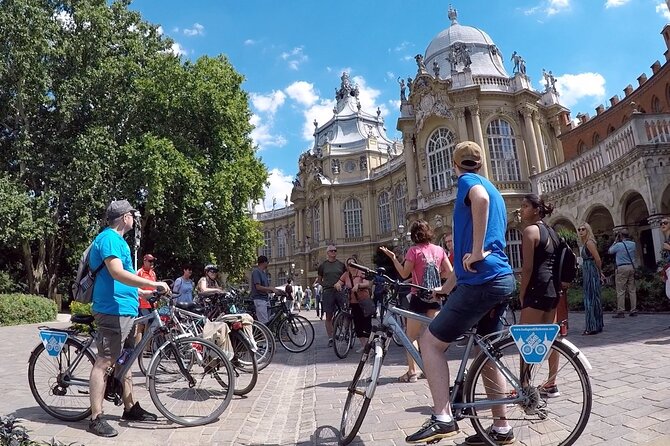
You begin with Elizabeth Square, where you get an early photo stop. It’s a useful start point because it helps you settle into Budapest’s rhythm right away. Even before you get to the big museum-and-monument stretch, you’re already spotting sightlines and streets that you’ll use later when you plan your own wander.
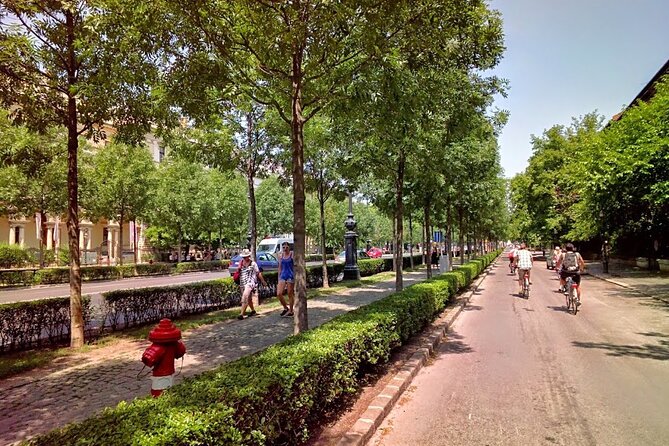
Then comes Andrássy Avenue, one of the city’s most recognizable corridors. This is where the bike angle really pays off. On foot, you’d walk it slower, and you’d miss how the avenue pulls you forward in one long, straight line. By bike, the boulevard becomes a “moving viewpoint,” and your guide can point out the layers of the city as you ride—so it’s not just a pretty street, it’s a timeline.
You’ll also pause at the Hungarian State Opera House. Even though it’s a photo stop, it works well here. You see the building at the right moment: after you’ve already gotten the big-picture context from the boulevard.
And if your interest is history, pay attention to the guide’s framing around the Hungarian founding story and later milestones. Recent groups have specifically praised how well the guide connects what you see on Andrassy Avenue and onward to major national events, including the millennium celebration.
Heroes’ Square to Városliget: Millennium Pride and Park-Air Breaks
Next, you hit Heroes’ Square. This stop is short by design, but it’s placed perfectly. Heroes’ Square is the kind of location where you immediately understand why rulers and nations care about symbolism. Your guide uses the pause to explain what you’re looking at in a way that makes the monument feel less like a random photo and more like a statement.
From there, you roll into Városliget, Budapest’s big city-park zone. This is your reset moment. Park stops matter because they break the “bike-and-stare” pattern. You get breathing room, and the air changes as you move through the greener part of the city.
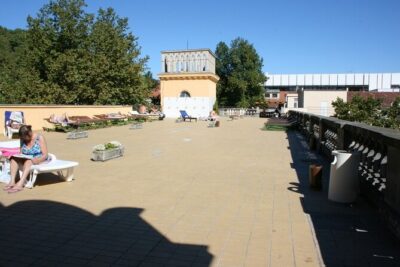
In Városliget, you’ll make a photo stop at Széchenyi Thermal Bath. The tour doesn’t position this as a full soak visit; it’s more about getting your bearings and seeing one of the city’s signature bath landmarks up close. That makes it great for travelers who want the overview without turning the day into a long spa detour.
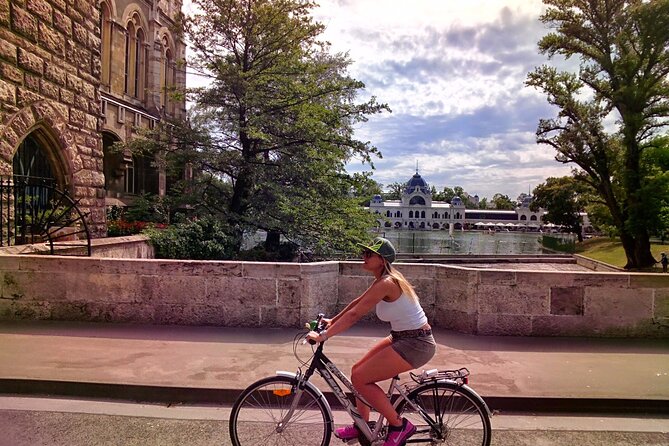
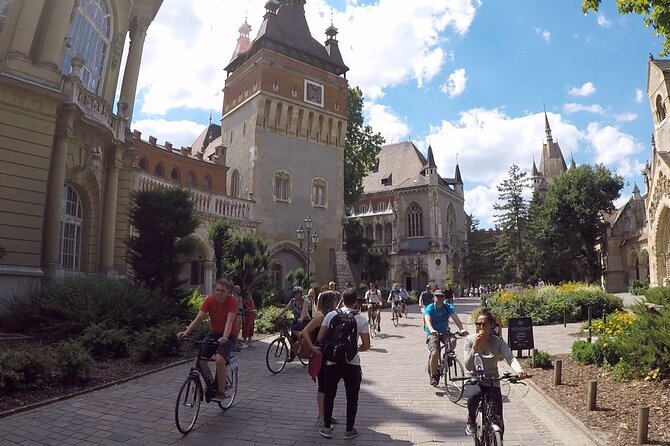
You’ll also stop at Vajdahunyad Castle, another park icon. Seeing it from the bike route helps, because you’re watching how Budapest arranges spectacle around everyday public space. The guide’s stories give the castle stop meaning, so it feels like more than a postcard building.
House of Music and Ethnographic Museum Stops: Culture Without the Long Lines
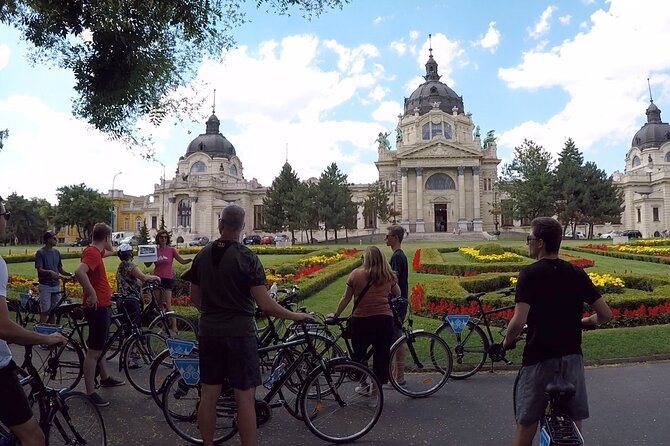
After the castle area, the tour continues with short photo-style pauses at House of Music Hungary and the Ethnographic Museum. These stops fit the overall pace. You get to register the buildings, and your guide can connect them to Hungarian culture in a way that’s hard to do if you only read plaques later.
Here’s the practical value: after a few days in Budapest, it’s easy to confuse museum names and themes. This kind of guided orientation helps you remember what each place represents, so when you do choose to return for a longer visit, you pick the right one for your interests.
This part of the ride also works for energy management. You’re still moving, still getting views, but you’re not asked to sprint between sights. For many first-timers, that balance is the difference between a fun half-day and a tiring one.
You can also read our reviews of more guided tours in Budapest





House of Terror and St. Stephen’s Basilica: The Past Hits Hard, Then the View Opens Up
One of the most talked-about stops on this route is the House of Terror. It’s brief as a photo stop, but the impact is real because the guide ties the location to Hungary’s darker chapters. If you’ve been curious about how different occupations and regimes shaped daily life, this is where the tour’s storytelling turns serious.
It’s also where I’d encourage you to lean in. Even with limited time, you can still understand the basic historical point: these weren’t distant events. They affected people, institutions, and the way the country remembers itself.
After that, you move toward St. Stephen’s Basilica for another photo stop. The contrast is striking. You go from heavy history to one of Budapest’s most visible religious landmarks. That shift isn’t random—it mirrors how Budapest often layers meaning. Old faith, modern identity, and political memory can all exist in the same city block zone.
Then you pass through Szabadság Square. This is another short stop, and it’s mostly about giving you the geographic understanding of where you are and what’s nearby. When you later decide to explore on your own, you’ll appreciate having these “connector” stops that teach you the city’s internal map.
Parliament to Chain Bridge: How Budapest Swaps Scale and Mood
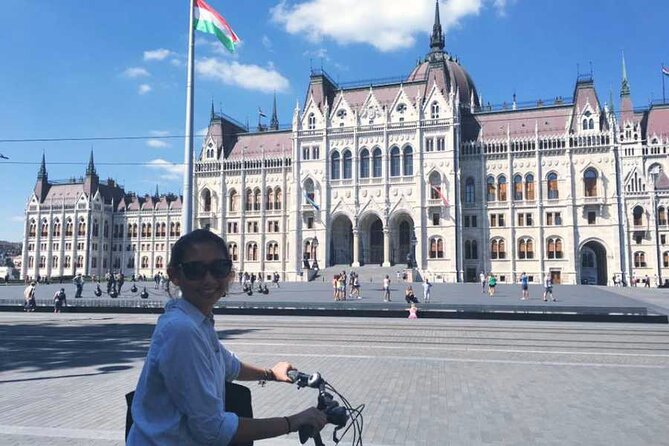
Now you hit the big civic center, with a photo stop at the Hungarian Parliament Building. This is one of those places where you can always get better photos later—but the guided timing helps you understand the context. Your guide’s explanations put the building in the national story, so it’s not just architecture trivia.
Next comes Chain Bridge. Crossing it on a bike gives you something you don’t always get on foot: the sense of flow. You’re not pausing and backtracking. You’re traveling across the Danube with the city unfolding around you. It also helps you understand why the bridge is more than a crossing; it’s one of Budapest’s strongest lines of connection between Buda and Pest.
When you cross, your perspective shifts. The view helps you orient instantly, and that makes the rest of the day easier—because you can suddenly place landmarks relative to each other instead of treating them like separate spots.
Castle-Bazaar and Elizabeth Bridge: Ending With Views You Can Remember
On the Buda side, you’ll reach Castle-bazaar for a photo stop. Even with a short pause, this area is the kind of place that sticks in your memory because it looks like it belongs to a different era—plus it’s positioned so you can see the wider city from the edges.
Then you ride toward Elizabeth Bridge. Ending with a bridge stop is a clever move. It closes the loop visually: you’ve crossed the Danube, you’ve seen the city’s major “big views,” and now you’re returning with a better sense of how Budapest holds itself together.
From there, you’re back at the start point: Rumbach Sebestyén u. 10.
Bikes, Helmets, and Optional E-Bikes
The tour includes a quality bike and helmet, and you don’t have to worry about bringing your own gear. That matters a lot because riding confidence improves when you trust the equipment.
You should also know that E-bikes can be booked as an extra. That’s a good option if you’re not used to cycling distances or if you’d rather spend more energy enjoying the stops instead of working the ride.
The route is designed for a comfortable pace, and the stops are timed to keep the experience lively. Still, the tour isn’t for people who can’t ride a bike, and the minimum age is 12. If you’re in the “I can ride, but I’m rusty” category, plan to use the beginning of the ride to settle in.
Price and What You Actually Get for $34
This tour is listed at $34 per person for 3.5 hours, and that price is doing a lot of work.
For that money, you’re getting:
- a local, English-speaking professional guide
- use of a bike and helmet
- access to a route that hits major Budapest sights in one go
- stops that include UNESCO World Heritage sites
- multiple photo/sightseeing pauses spread across key city areas
The biggest value isn’t any one monument. It’s the combination of guidance + movement. You’re not paying just for bikes; you’re paying for someone to connect the dots—so you don’t stand in front of a landmark wondering what you’re actually looking at.
Recent experiences have also praised the way the tour covers a large share of the typical highlights within a half-day, with bikes in good condition and guides who answer questions. In other words, it’s not a quick drive-by. It’s a guided ride that helps you leave with a plan for what to do next.
If you’re the kind of traveler who hates choosing between “a long walking day” and “missing things,” this is the compromise that usually feels right.
Who This Tour Fits Best (and Who Should Pass)
This is a great match if you:
- want major Budapest sights without building an itinerary from scratch
- like history that’s told in a human way, not just in textbook sentences
- can ride a bike comfortably for a half-day
It’s less of a fit if you:
- can’t ride a bike (this one is clearly not set up for that)
- are traveling with kids under 12
- want long museum time at each stop (this is timed for photo/sightseeing pauses, not deep indoor hours)
Also, if your trip schedule is tight and you want orientation quickly—this type of route helps. You’ll finish with a better sense of where things are, so the rest of your independent exploring feels easier.
Should You Book This Budapest Bike Breeze Highlights Tour?
Yes, if you want a fast, friendly introduction to Budapest that covers the big icons and gives you context along the way. The guide-led storytelling is clearly a core strength, and the bike setup makes it feel efficient without feeling rushed.
I’d book it especially if it’s your first or second day in the city and you want your bearings fast—plus a few strong ideas for how to spend the rest of your time.
Just be honest about one thing: you’re choosing a bike tour. If you’re not comfortable cycling, you’ll end up focusing on your balance instead of the sights.
If you are comfortable on a bike, this is one of the easiest ways to get a lot of Budapest into a single, memorable half-day.
FAQ
How long is the Budapest Highlights bike tour?
It runs for 3.5 hours.
How much does the tour cost?
The price is $34 per person.
Where do I meet the guide?
You meet at Budapest, Rumbach Sebestyén u. 10, 1075 Magyarország. Ring the bell no. 105 at the main gate, and the team is in the courtyard.
Is the tour guided in English?
Yes. The tour includes a live guide in English.
Will the tour run in bad weather?
Yes. It takes place rain or shine.
What if I can’t ride a bike or I’m under 12?
The tour is not suitable for people who can’t ride a bike, and the minimum age is 12.
Can I ride an e-bike instead of a regular bike?
E-bikes can be booked as an extra.