
REVIEW · BUDAPEST
Budapest: Guided Tour of the House of Music, Hungary
Book on GetYourGuide →Operated by Városliget Ingatlanfejlesztő Zártkörűen Működő Részvénytársaság · Bookable on GetYourGuide
Budapest has a lot of famous buildings, but this one makes you look up. The House of Music is an architecture-focused visit in City Park, known for its floating, leaf-like roof and glassy, light-filled interiors—plus a guide who can turn the design details into a story. I loved the undulating roof outside and the way the tour explains how the space supports music inside, and I especially enjoyed hearing it all from Dora, who brought serious energy and clarity to the design talk.
The second thing I liked: the spiral staircase and the open, multi-level feel of the building. You also get a solid look at the concert-hall spaces, the library and archives, and the broader park connection. One drawback to plan around: this tour is not about exhibitions or trying the Sound Dome, and you will not experience a live performance during the visit.
Sou Fujimoto design in plain view. You’ll get the story behind the organic forms and how the building continues the park.
That floating roof is the headline. Expect thousands of leaf-like metal elements and a structure that affects light and sound.
Acoustics get real-world explanation. The guide explains how shape, materials, and roof structure support sound quality.
You’ll see the music spaces, not the full museum. Concert hall areas plus library/archives are included, while exhibitions and Sound Dome are not.
Foyer first, then you move level by level. It’s a good route for getting your bearings fast in a modern building.
City Park views are part of the ticket. Panoramic sightlines make the outdoor stops worth it even if you’re not a music nerd.
In This Review
- Why the House of Music feels different the moment you arrive
- Exterior walk: the roof, the glass, and the park connection
- Inside the foyer: where the tour sets the tone
- The building’s layout: levels, open spaces, and “inside-outside” thinking
- Concert hall area and the acoustics lesson you came for
- Spiral staircase and design details worth lingering on
- Library and archives: a quieter side of the music mission
- Outdoor spaces and panoramic views from City Park
- Sustainability details: geothermal and rainwater harvesting
- What’s included vs. what you skip (so there are no surprises)
- Price and value: is $13 worth it for an hour?
- Who this tour fits best (and who might not love it)
- Should you book the House of Music guided tour?
- FAQ
- How long is the House of Music guided tour?
- What language is the tour guide speaking?
- Where does the tour start?
- Does the tour include exhibitions?
- Are the Sound Dome and Creative sound space included?
- Is a live performance part of the tour?
- What’s included in the tour besides the building exterior?
- Is the tour wheelchair accessible?
- Are pets allowed?
- Is the tour suitable for children?
Why the House of Music feels different the moment you arrive
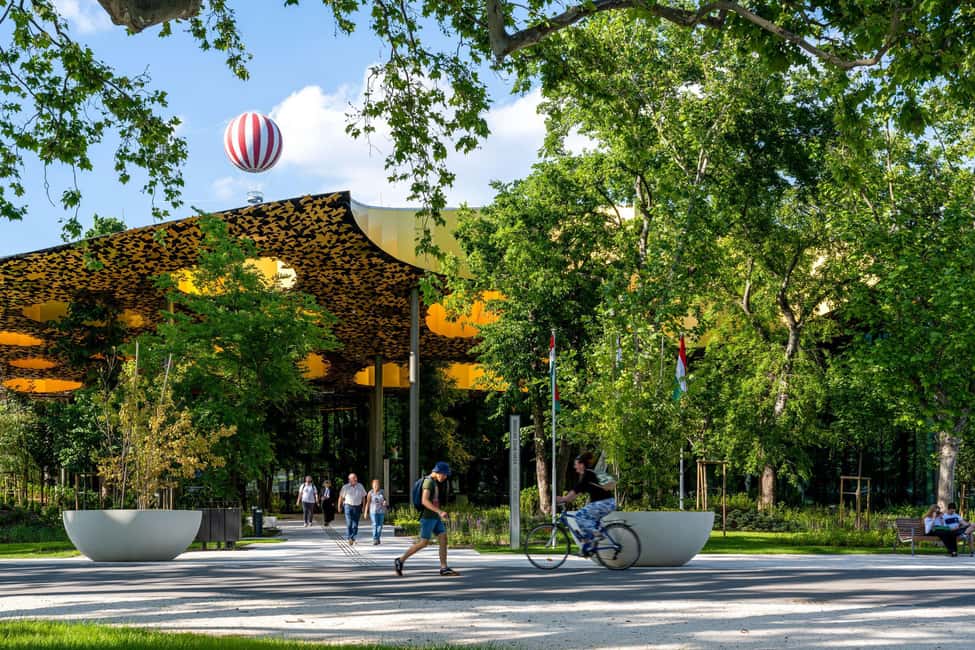
The House of Music is in Budapest’s City Park, and the setting matters. Right away, the building doesn’t feel like a box plopped into a park. It feels like the park grew a structure, then decided to keep going upward. That idea comes through in the tour’s opening look at the exterior, where the roof looks like it’s hovering.
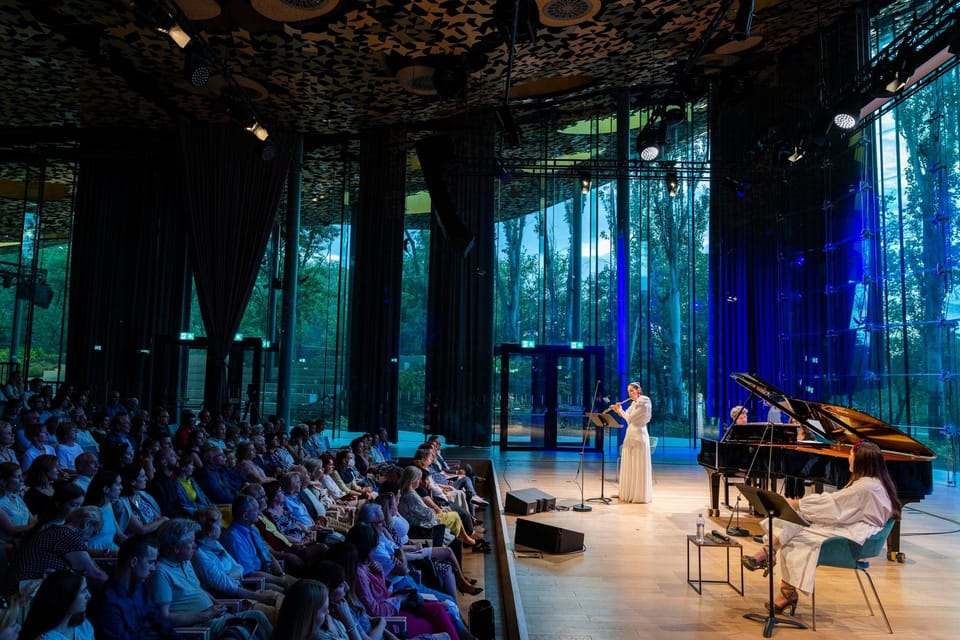
The signature roof is made of thousands of leaf-like metal elements. It’s the kind of detail you notice from far away, then keep noticing as you move closer. The guide will tie those shapes to practical effects, not just looks—especially how the roof helps with natural lighting and acoustics. For architecture lovers, that’s a fun combo: visual drama plus functional design.
And City Park gives you the second layer. You’re not trapped inside. You get outdoors moments that help you understand the building’s purpose: a music center that feels connected to community life, not sealed off behind doors.
Exterior walk: the roof, the glass, and the park connection
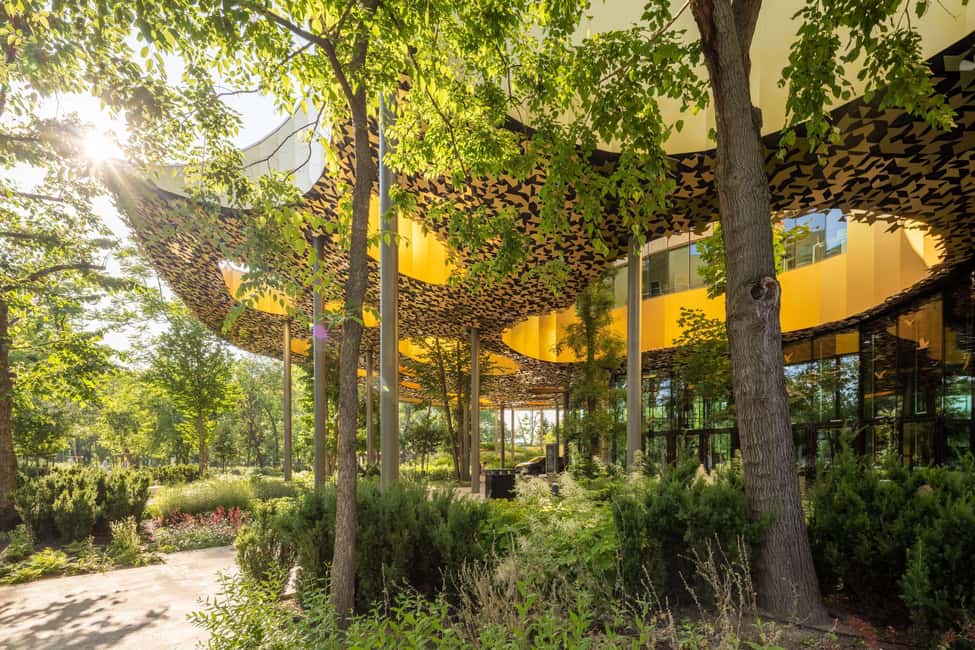
The tour starts inside the foyer, but the first “wow” moments are still tied to the exterior. You’ll focus on the undulating roof and the way it visually flows across the building. The canopy isn’t just decorative. The design includes circular openings, and the guide will explain how the roof structure contributes to sound and light inside.
Here’s what I think makes this stop worth your time: it trains your eye. Once you understand the roof as a performance-and-lighting tool, you stop seeing it as a sculpture. You start seeing it as engineering wrapped in metal leaves.
You’ll also get a feel for why the building is described as harmonizing with nature. The guide frames it as a continuation of the park—meaning the transition between outside and inside is part of the design, not an accident. When a modern building does that well, it changes how you experience every indoor room afterward.
You can also read our reviews of more guided tours in Budapest



Inside the foyer: where the tour sets the tone

After the exterior focus, you’ll move into the building and spend time in the spacious foyer. This part is more than a waiting area. It’s your “how to read the building” moment.
The foyer gives you two helpful things:
- Space and light. Glass plays a big role, so daylight floods the interior instead of making you feel like you’re underground.
- Warm contrast. You’ll see exposed concrete surfaces alongside detailed wooden elements. That mix is one reason the place feels modern but still inviting.
This is also where a good guide matters. Dora’s style (and the other excellent guide I saw described in reviews, with white hair and colorful highlights) wasn’t about rattling facts. It was about pointing out what you should look for next: where the levels are, how the circulation works, and why the building shape isn’t random.
If you’re the kind of person who likes to understand what you’re seeing before rushing to the next stop, start of tour like this is a real win.
The building’s layout: levels, open spaces, and “inside-outside” thinking
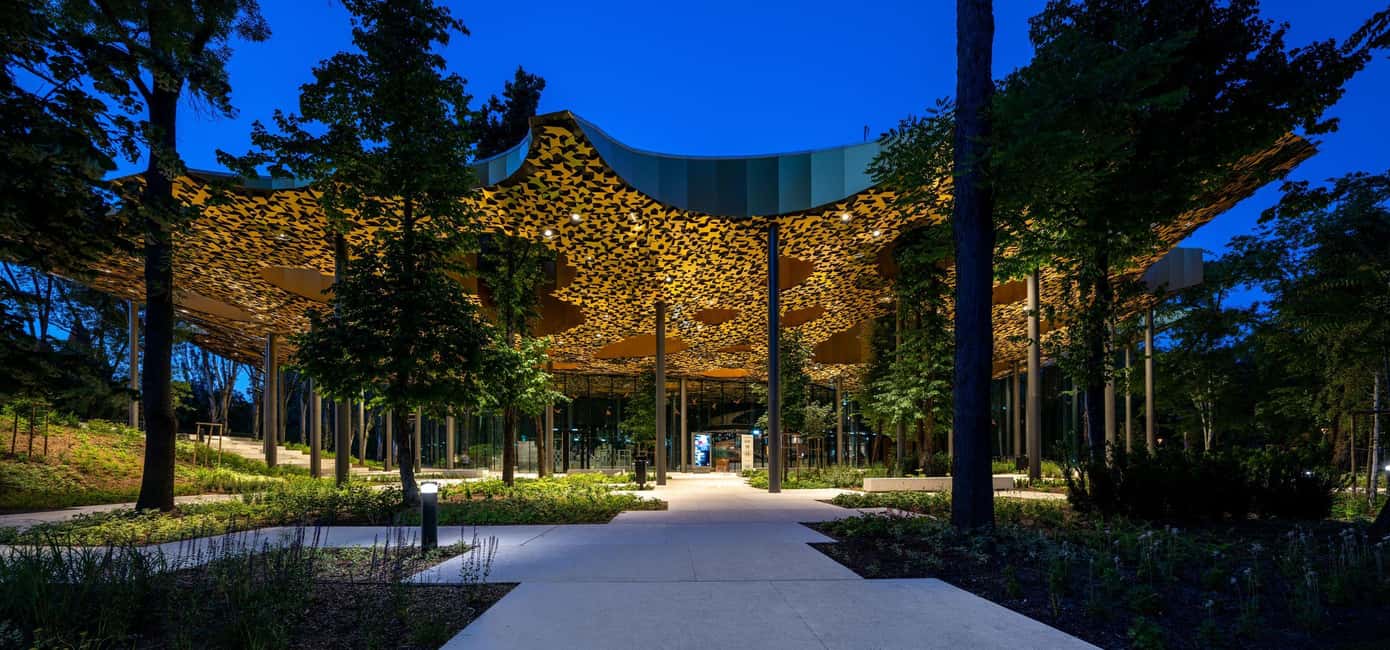
As you progress through the tour, you’ll notice that the building is designed with multiple levels and open spaces built for people. Even without exhibition entry, the architecture itself is treated like an active space—something meant for music education and community engagement.
The guide will point out how the building blurs inside and outside. You won’t just walk through rooms. You’ll experience a layout that keeps reminding you you’re still in City Park, just in a more curated, musical version of it.
Practical takeaway for you: with only about an hour, you’re not trying to master every corner. Instead, focus on understanding the overall “path.” You’ll likely start in the foyer zone, then move through the building’s main viewing areas tied to music spaces and public areas.
Concert hall area and the acoustics lesson you came for
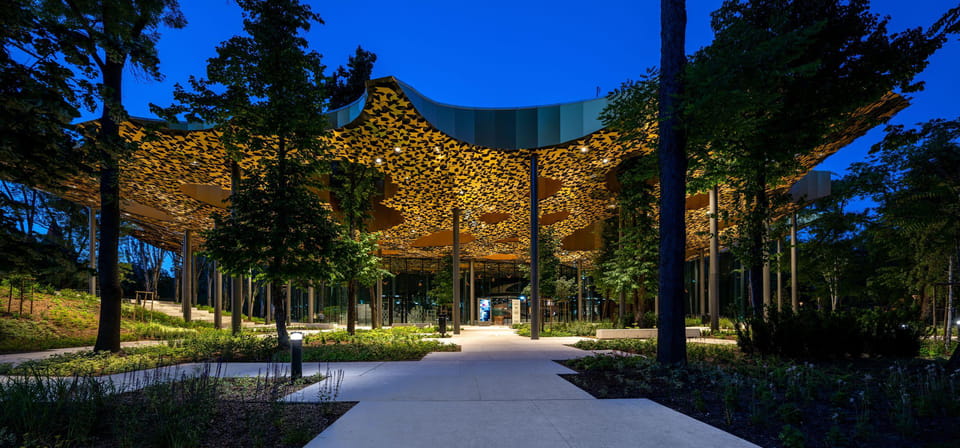
One of the most central parts of the tour is acoustics. The guide explains how the building’s shape, materials, and roof structure were designed to optimize sound quality in performance spaces and public areas.
You won’t be sitting through a show here. Still, you get something useful: the “why.” You learn what the architecture is trying to achieve so your questions make sense while you walk. If you’re a musician or you just enjoy how places sound, this is the most satisfying kind of tour—architecture that’s built around listening.
This also connects back to the roof. Those leaf-like elements and the circular openings aren’t only visual flourishes. You’re hearing, in explanation form, how the design supports how sound behaves.
If you hate technical talk, the acoustics part could feel like the tour’s main spine. But even then, it’s framed for regular people walking through the space, not for engineers.
Spiral staircase and design details worth lingering on
The spiral staircase is one of the big highlights, and it earns that attention. In a building like this, stairs aren’t just circulation. They’re architecture.
As you move through the building, you’ll get views and sightlines that help you understand the vertical design. You may also notice how the staircase rhythm relates to the building’s overall organic feel—rounded forms, layered levels, and that roof presence above you.
This is where you’ll likely take your time. The tour is about an hour total, so you don’t want to burn it all on one stop—but the staircase is the kind of feature that makes a modern building feel human. If you’re into photography, this is a strong place to frame shots because light from glass can change the interior look as you shift position.






Library and archives: a quieter side of the music mission
The tour doesn’t stop at the public-facing areas. You’ll also get a look at the library and archives. This is one of those “you’re glad it’s included” moments.
Why it matters: music institutions are more than venues. They’re also about research, preservation, and education. Seeing the library/archives reinforces that the building is meant to support music knowledge, not just performances.
You won’t have time to browse deeply here, and the tour is clear that exhibition entry isn’t included. Still, a guided look at the library/archives helps you understand the center as a whole.
Outdoor spaces and panoramic views from City Park
A big part of the House of Music story is that it belongs to City Park. As the tour progresses, you’ll spend time in the outdoor areas and soak in panoramic views.
Even if you’re not focused on the roof anymore, the park views reset your attention. Outdoors, you can see how the building sits in relation to trees and paths, and you can better understand the “continuation of the park” concept the guide keeps returning to.
This is also a nice moment if you’d rather observe than rush. The outdoor stops give your eyes a break from glass reflections and interior lines.
Sustainability details: geothermal and rainwater harvesting
The tour includes sustainability features too, which I appreciated because it makes the building feel less like a one-off landmark and more like a real civic project.
You’ll learn that the House of Music uses geothermal energy and includes rainwater harvesting. Those are the kinds of practical facts that help you connect architectural ambition to real-world operating choices.
It won’t replace a technical report, but it adds weight to the design story. You get a sense that this wasn’t built only to look good from the outside—it was built to operate and last.
What’s included vs. what you skip (so there are no surprises)
This tour is focused. Included are the guided look at:
- the building’s architectural features
- the concert hall area
- the library and archives
- beautiful outdoor spaces and park views
- the gift shop
Not included:
- entry to exhibitions
- entry to the Sound Dome
- entry to the Creative sound space
So you should treat this as an architecture-and-acoustics orientation tour, not a full museum day. If you were hoping to spend time inside interactive music displays, you’ll need a separate plan.
Price and value: is $13 worth it for an hour?
At about $13 per person for a roughly 1-hour guided experience, the value is strong if you like architecture and design explanations. You’re paying for a guide-led “reading” of the building: roof engineering, material choices, and acoustics in a way you won’t get just wandering.
Where the value gets even better is the guide quality. Reviews point to guides like Dora, who combine friendly energy with real detail and good question handling. A tour can be “fine” if it’s scripted. This one seems to land because the guide makes the building feel understandable.
If your main goal is museum browsing or hands-on sound spaces, this may feel too narrow. But if you want a smart primer to understand what you’re seeing at the House of Music, it’s priced like a practical add-on to your City Park day.
Who this tour fits best (and who might not love it)
I think this tour is perfect for:
- architecture lovers and design fans
- people who enjoy acoustics, even if you’re not a musician
- first-timers in City Park who want a guided highlight route in a modern building
- anyone who likes explanations that connect form to function
It may not fit as well if:
- you’re traveling with kids under 15 (this tour is not suitable for them)
- you want exhibition entry, Sound Dome access, or a chance to attend a performance
- you’re mainly there to sit quietly and explore without guide structure
Also note: pets aren’t allowed, but assistance dogs are allowed.
Should you book the House of Music guided tour?
Yes—if you’re coming to City Park anyway and you want to understand the building beyond the photo. Book it if you care about the roof, the glass-light feel, and the way the acoustics are designed. The tour gives you a tight, high-signal overview in about an hour, and the guide attention seems to be a standout.
Skip it (or add something else) if you mainly want exhibitions or interactive sound spaces. This is a guided walk focused on architecture and music spaces, not a full add-everything museum visit.
If you’re on a first Budapest trip, this is a smart choice because it turns a modern landmark into something you can actually explain afterward.
FAQ
How long is the House of Music guided tour?
The tour lasts about 1 hour.
What language is the tour guide speaking?
The tour is offered in English.
Where does the tour start?
It starts inside the foyer.
Does the tour include exhibitions?
No. Entry to exhibitions is not included.
Are the Sound Dome and Creative sound space included?
No. The Sound Dome and the Creative sound space are not included.
Is a live performance part of the tour?
No. You won’t experience a performance during the tour.
What’s included in the tour besides the building exterior?
You’ll get a look at the concert hall, the library and archives, outdoor spaces, and the gift shop.
Is the tour wheelchair accessible?
Yes, it is wheelchair accessible.
Are pets allowed?
Pets are not allowed, but assistance dogs are allowed.
Is the tour suitable for children?
No. It is not suitable for children under 15.