REVIEW · BUDAPEST
Budapest: 3-Hour Trabant Sightseeing Tour
Book on GetYourGuide →Operated by Cityrama Budapest Travel Agency · Bookable on GetYourGuide
A tiny paper car changes Budapest fast. You get behind the wheel of an original Trabant 601, and suddenly the city feels like it has a soundtrack from another era. What I love most is the hands-on driving feel and the way guide Andre keeps the story clear and easy to follow.
There’s one catch: this is a small old car, so if your group has tall legs, the back can feel cramped. The upside is it stays a small group experience, and you’ll want your driver’s license only if you plan to take the wheel.
In This Review
- Key things that make this Trabant tour worth it
- Trabant 601 driving: why this feels different from a normal tour
- Getting behind the wheel: what you need to drive and how it works
- The 3-hour plan: how the route creates a communist-era Budapest feeling
- Communist Statue Park: monuments you can actually connect to the city
- Prefabricated flats from the 1970s and 1980s: seeing life, not just slogans
- Ecseri flea market: a more everyday contrast to the big monuments
- If you want classic Budapest instead: how the tour adapts
- Small group and hotel pickup: the practical side that makes it easy
- Trabant airport transfer option: extending the vibe beyond the tour
- Price and value: what $294 per group really buys
- Who should book this tour, and who might skip it
- Should you book the Budapest Trabant sightseeing tour?
- FAQ
- How long is the Budapest Trabant sightseeing tour?
- How much does the tour cost?
- Is pickup included, and where do you pick me up?
- Do I need to speak another language besides English?
- Can I drive the Trabant during the tour?
- What sights are included on the communist-era route?
- Is there an option for a more normal city sightseeing route?
- Is an airport transfer available in a Trabant?
Key things that make this Trabant tour worth it
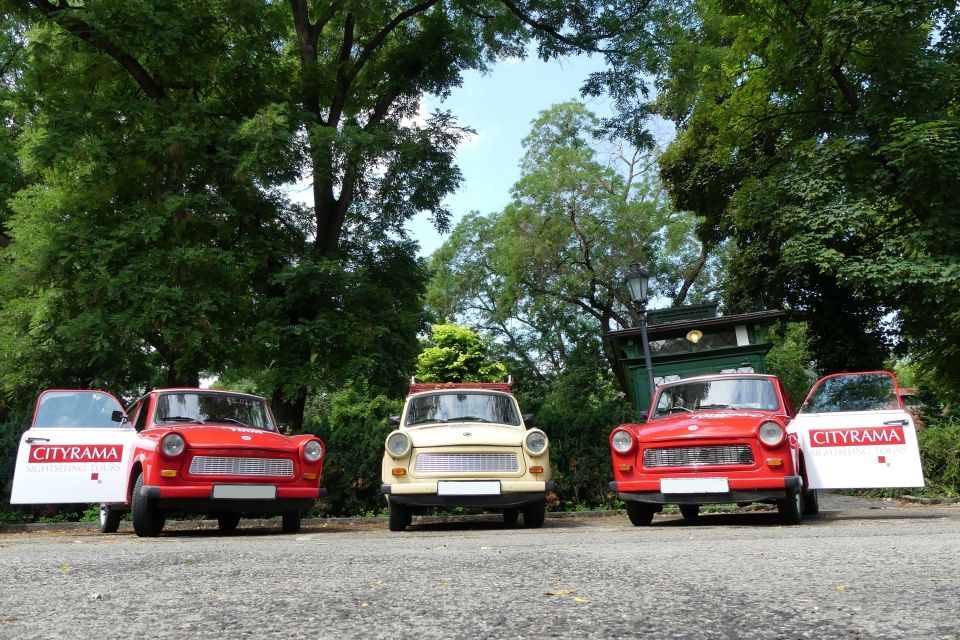
- Authentic Trabant 601 driving: old-school controls, a 2-stroke engine, and a very “you’re doing this” kind of sightseeing.
- Communist-era Budapest stops: you’ll have a chance to see monuments and 1970s–80s housing from the era’s own visual language.
- A flexible route choice: the day can tilt toward communist sights or toward more classic major attractions.
- Ecseri flea market flavor: a real-feeling stop that helps the city feel lived-in, not just photographed.
- Tight seating reality: the car is charming, but it’s not built for comfort if you’re tall.
- Trabant airport transfer option: keep the vibe going from arrival to your hotel.
Trabant 601 driving: why this feels different from a normal tour
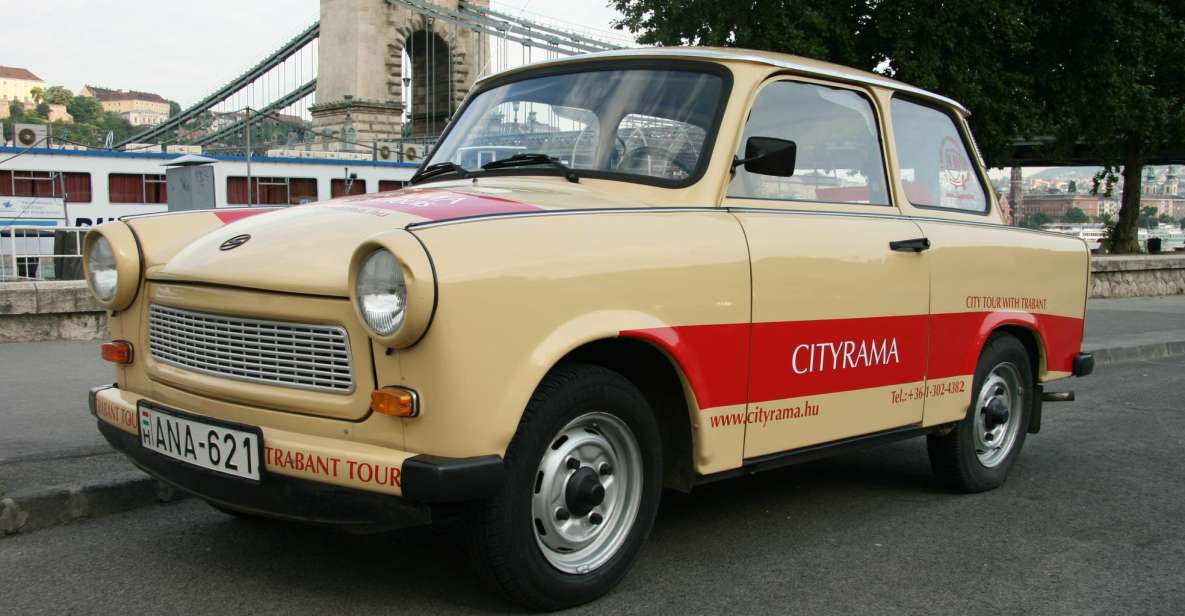
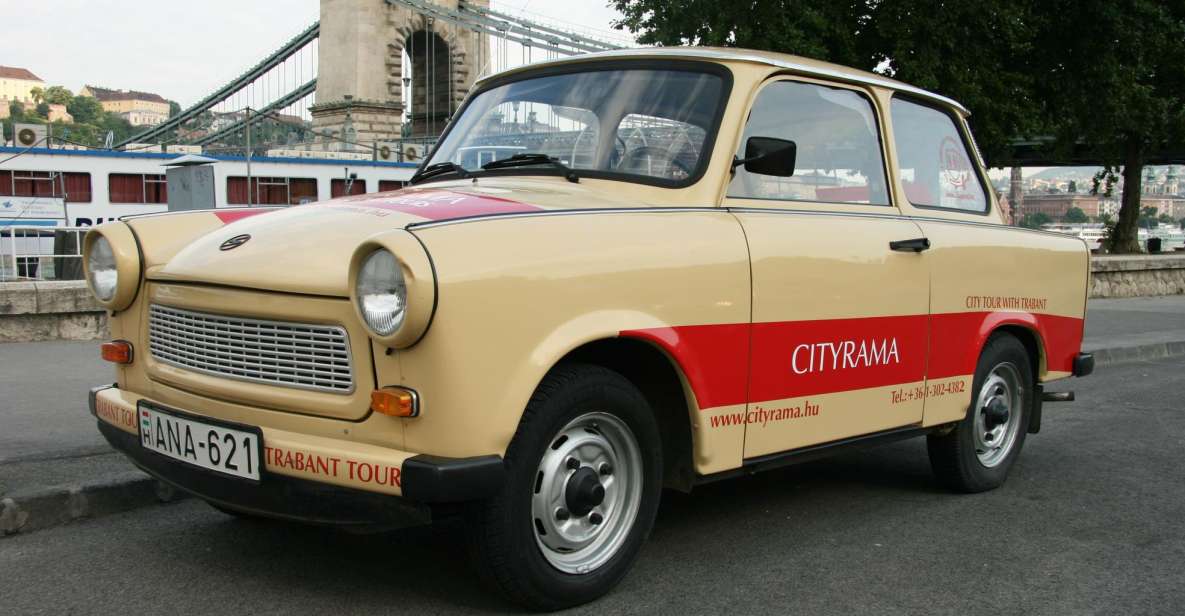
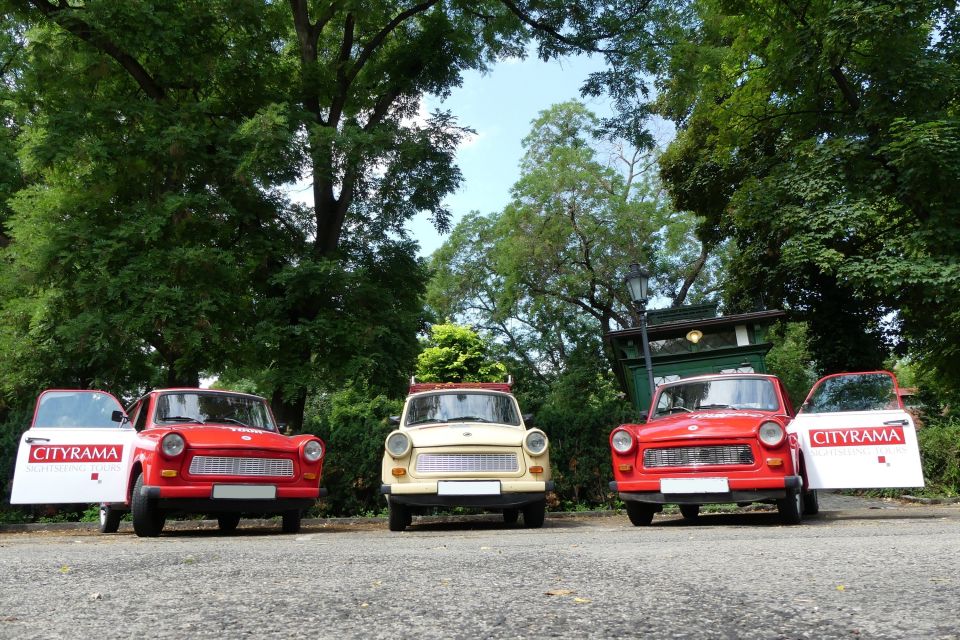
Most Budapest tours do the same pattern: hop in a vehicle, get a lecture, take pictures, repeat. This one flips the script because the vehicle is the main character. A Trabant 601 isn’t just transportation—it’s a rolling explanation of how that era thought about cars, manufacturing, and everyday life.
The hype is easy to understand once you see what you’re dealing with. The Trabant was built in massive numbers—over 3 million were produced during its run—and it earned jokes like paper Jaguars. The vibe is a bit ridiculous in the best way, but the details are real: it has a 2-stroke engine and a claimed 26 horsepower, with a 0–60 kph time of about 21 seconds. This is not a speed machine. It’s a slow, noisy, character-filled way to move through Budapest.
And you don’t just ride. If you’re part of the small group and you meet the driving requirement, you can actually drive, which makes everything feel more personal. When you’re steering through streets you otherwise would just pass by, you notice how the city is laid out. You also notice how communist-era architecture changes your sense of scale.
You can also read our reviews of more tours and experiences in Budapest


Getting behind the wheel: what you need to drive and how it works
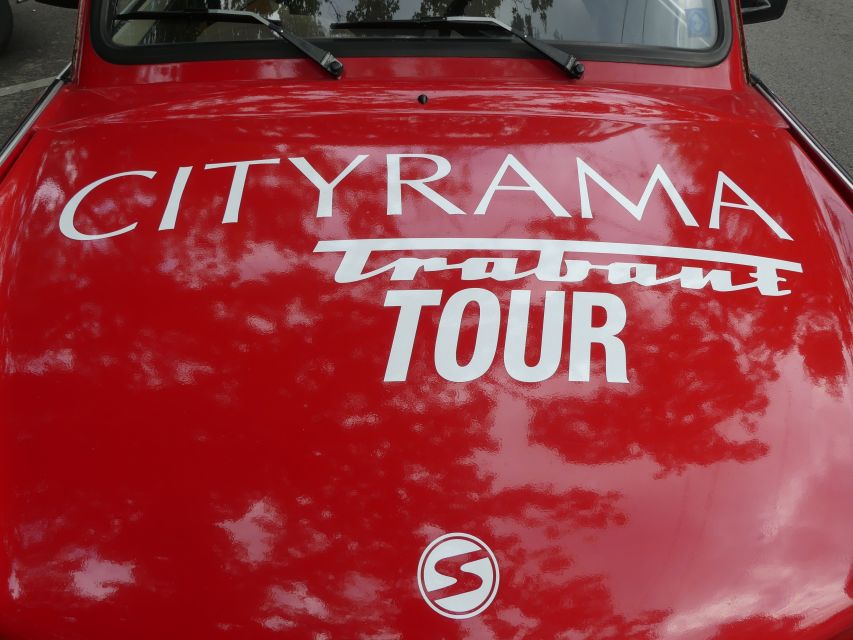
Before you go, you should treat this as a driving experience, not just a photo stop. You’ll want to bring your driver’s license if you want to drive. The car operator requires a valid license for driving, and the tour is built around letting you be in control.
Here’s the kind of start-up routine you should expect with a Trabant 601. You’ll check the fuel dip-stick first, then open the fuel tap. After that, it’s the classic rhythm: push down the clutch pedal, shift to first gear, and then you’re off.
That may sound like trivia, but it matters for two reasons. First, it sets your expectations. This is mechanical, old-school, and physical. Second, it makes the sightseeing feel less like watching and more like participating. You’ll pay attention because you’re busy doing the driving.
One smart move: don’t assume you’ll automatically be offered the chance to drive. If it’s your main reason for booking, tell the operator up front that you want to take the wheel. That way you’re not left hoping in the moment.
The 3-hour plan: how the route creates a communist-era Budapest feeling
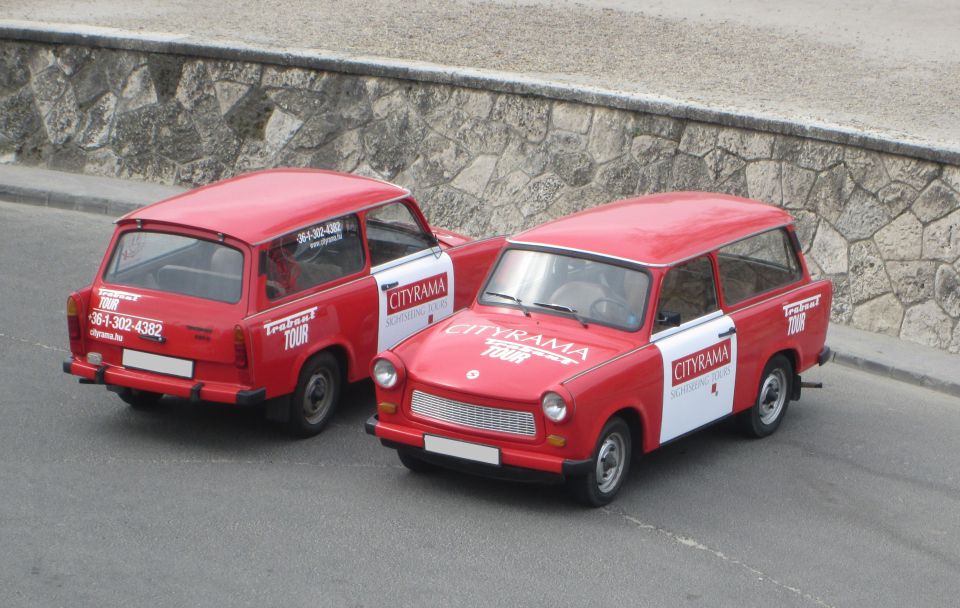
In a single 3-hour outing, the goal isn’t to cover every landmark in the city. It’s to give you a focused route that matches the tour theme. The recommended direction is communist-era Budapest, with stops that show monuments, daily-life settings, and housing styles tied to the 1970s and 1980s.
The tour structure gives you two ways the day can go:
- A route leaning into communist-era sights
- Or a more “normal” route featuring major city attractions
So what does that mean in practice? You’ll usually move between highlights with enough time to understand what you’re seeing. You’re also in a small group, so your guide can tailor explanations to what you care about most—architecture, street-level life, or the big political narrative behind the visuals.
Because this is short, you get fewer stops than you would on a full-day tour. That’s actually a strength. You’re more likely to remember what you saw, and your guide can explain the why behind the look of the buildings.
Communist Statue Park: monuments you can actually connect to the city
One of the key recommended stops is Communist Statue Park. Even if you’ve seen photos online, the real impact is different when you’re there and can look at the scale from street level.
This park works well on a driving-based tour because it’s the kind of place where you need context. It’s not just statues. It’s the visual language of power from the era—what was meant to be celebrated, what was meant to look permanent, and how the city tried to tell its story through public spaces.
From the road and nearby viewpoints, you can often get a better sense of how the city frames these symbols. That’s the benefit of pairing a city tour with a theme that’s bigger than one building.
If you like political history but hate lectures, you’ll probably like this stop. You’re not stuck indoors or reading panels for an hour. You’re experiencing the setting while your guide translates what you’re looking at.
Prefabricated flats from the 1970s and 1980s: seeing life, not just slogans
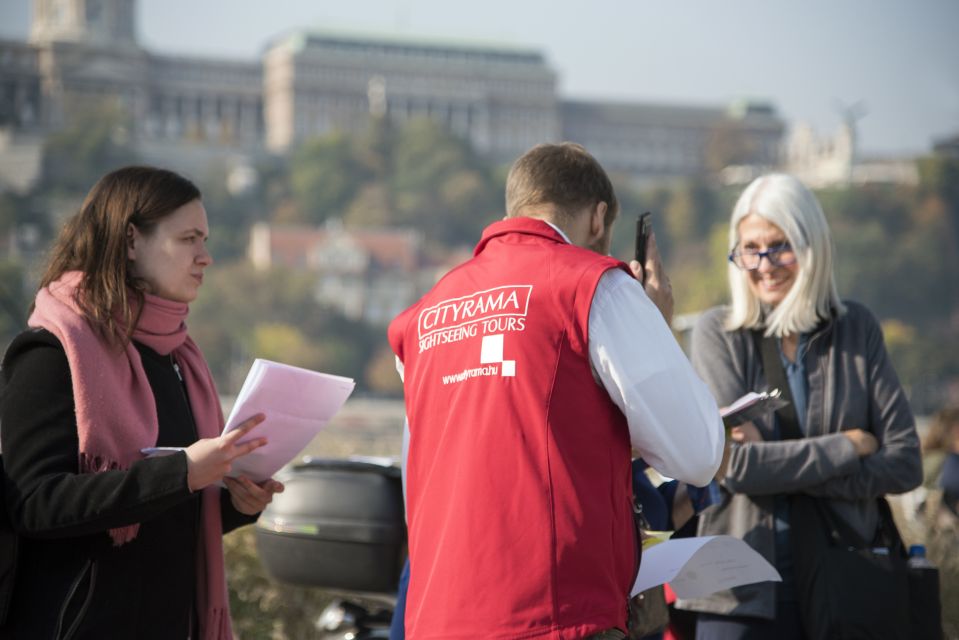
Communist-era Budapest isn’t only monuments. The big visual marker you’ll notice is housing—especially the prefabricated blocks of flats from the 1970s and 1980s.
These buildings are often discussed as architecture, but on this tour they become something else: a look at how people lived. The shape, repetition, and plain surfaces tell you what mattered to planners—speed, standardization, and getting families housed quickly and consistently.
Standing near them can change how you interpret the city. You start seeing the logic behind the urban layout. You also understand why certain areas feel different from older Budapest neighborhoods.
And because you’re on a Trabant route, the context sticks. You aren’t only viewing buildings; you’re moving through them with the same era-specific energy. That makes it easier to connect the visuals to how daily life might have felt.






Ecseri flea market: a more everyday contrast to the big monuments
The tour also recommends a stop at the Ecseri flea market. On paper, a flea market can sound random next to statues and monuments. In reality, it gives you something important: everyday texture.
Communist-era cities often get talked about through ideology and grand buildings. A market brings you back to the real engine of a city—trade, items coming and going, and the practical side of survival and style.
Even if you don’t plan to buy anything, this kind of stop helps you balance the tour. You get a contrast between official imagery and ordinary life. That contrast is where many people feel the theme of the day click.
If you’re short on time, flea-market stops can be fast and focused. Still, it’s one of the best ways to keep the tour from becoming only a photo-and-fact game.
If you want classic Budapest instead: how the tour adapts
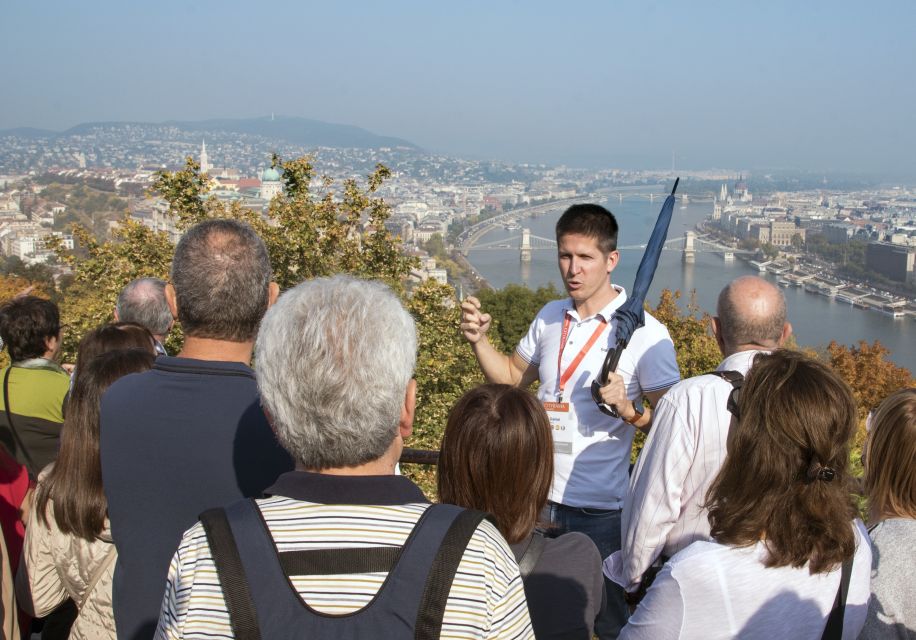
Not everyone wants the entire day to focus on communist visuals. The tour can shift toward a more normal city tour with major attractions. That option is useful if you want the Trabant experience—the driving, the novelty, the fun—while still hitting the sights most people expect from Budapest.
This flexibility is a big value. You’re not locked into one rigid script where you might spend all your time chasing only one kind of view. Your guide can keep things moving so you still get a coherent story, but with less focus on the communist theme if you’d rather.
This adaptability also matters because Budapest has many different moods. Some days you’ll want drama and symbolism. Other days you’ll want viewpoints, architecture, and classic photo angles.
Small group and hotel pickup: the practical side that makes it easy
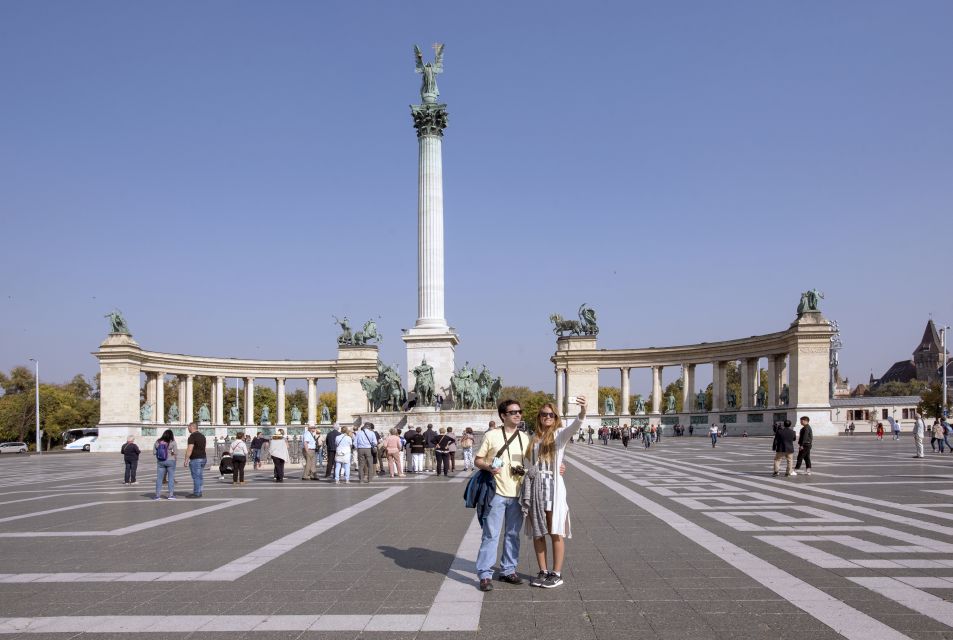
This is built for a small group capped at 3 participants, which you’ll feel immediately. In a group that size, you’re more likely to have real conversation instead of yelling over a crowd. It also makes the driving logistics simpler in an older car.
Pickup is also a key practical win. Hotel pickup is included, and it covers any accommodation in Budapest—hotels, apartments, Airbnbs, and even private addresses. The tour can start whenever you want within the available times, so it’s easier to align with your plans for the day.
This matters because Budapest sightseeing often gets blocked by logistics. With pickup handled, you waste less time figuring out where to meet and more time getting out into the streets.
And yes, you’ll still want to dress for the reality of an old vehicle. It’s not a modern ride, so wear something comfortable for short periods in a small back seat.
Trabant airport transfer option: extending the vibe beyond the tour
If your schedule makes it hard to arrive and immediately jump into sightseeing, there’s an optional airport transfer in a Trabant. That keeps the theme going instead of switching to a standard taxi the moment you land.
It also reduces decision fatigue. You can plan your arrival and departure around one consistent experience style. And if you like the authenticity factor—this is it.
If you’re considering it, think about how much you want the Trabant day to feel like a single story. For many people, pairing the transfer with the sightseeing tour is a nice way to start Budapest with personality instead of paperwork.
Price and value: what $294 per group really buys
The price is $294 per group up to 3 for the 3-hour experience. That’s not cheap compared to a standard public-transport-style tour, but it’s also not really competing with one. You’re paying for a very specific product: an authentic Trabant experience plus a live English guide, plus pickup convenience.
Here’s how to judge value in your own situation:
- If you’re traveling as a couple or a small crew, the per-person cost drops quickly because it’s per group.
- If driving the Trabant is the big goal, you’re not just buying sightseeing. You’re buying access to a rare vehicle and the chance to use it.
- If you care about theme cohesion, the short 3-hour format keeps your experience tight instead of stretching it across a long day.
One note for expectations: this is tied to an old machine. In one case, a car broke down and the tour finished a bit early, but the company handled it well. That’s worth factoring in mentally: you’re choosing a vintage experience with character, not a guaranteed modern fleet.
Who should book this tour, and who might skip it
This tour is ideal if you:
- Want to see communist-era Budapest in a way that feels physical, not just academic
- Like quirky transportation experiences that create great photos and real stories
- Enjoy small groups where you can ask questions and actually get answers
- Appreciate English-language guiding with a clear city focus—Andre’s explanations are a good example of that style
You might skip it if you:
- Know you hate cramped seating. The old car can feel tight for tall people.
- Are strongly dependent on a fully predictable schedule. Like any vintage vehicle day, mechanical issues are possible.
- Only want major landmarks and nothing thematic. In that case, the classic-sights version might fit better than the communist-focused one.
Should you book the Budapest Trabant sightseeing tour?
Yes—if you want Budapest with personality. This is one of the rare city tours where the transport is part of the meaning. The Trabant 601 driving experience turns “communist-era sights” from a list into something you can feel as you move through the city.
Book it especially if you’re traveling as a couple or with one friend, because the small-group setup and per-group pricing make it smarter. If driving matters to you, message the operator ahead and confirm you’ll be able to take the wheel, and bring your driver’s license.
And if you’re tall or you’re sensitive to cramped seating, plan accordingly. Still, even with tight quarters, the combination of motion, context, and Andre’s storytelling is exactly the kind of trip memory you carry home.
FAQ
How long is the Budapest Trabant sightseeing tour?
It runs for 3 hours.
How much does the tour cost?
The price is $294 per group for up to 3 participants.
Is pickup included, and where do you pick me up?
Yes. Hotel pickup is provided from any accommodation in Budapest, including hotels, apartments, Airbnbs, and private addresses. You can start the tour whenever you would like within available times.
Do I need to speak another language besides English?
No. The live tour guide speaks English.
Can I drive the Trabant during the tour?
Driving is an option for participants who have a valid driving license. If you want to drive, bring your license.
What sights are included on the communist-era route?
Recommended stops include Communist Statue Park, the Ecseri flea market, and prefabricated housing blocks built in the 1970s and 1980s.
Is there an option for a more normal city sightseeing route?
Yes. You can choose to enjoy a standard tour focused on major city attractions instead of the communist-themed highlights.
Is an airport transfer available in a Trabant?
Yes. An optional airport transfer can be booked using the Trabant as well.