REVIEW · BUDAPEST
Walk to recent and aged spiritual sanctuaries near Budapest
Book on GetYourGuide →Operated by EvezzVelem · Bookable on GetYourGuide
Spiritual places in the Pilis hills feel like a living timeline. This trip mixes a new Church of Pilis with valley views and the heavy, quiet mood of the Paulian Monastery ruins where St. Paul’s remains were kept. I especially like how the guide ties religion to Hungarian identity and language, not just dates on a sign. One consideration: you do walk a moderate amount, and the viewpoint option adds a real uphill.
You’ll start with a guided trail called Startrail, where the route is shaped like stations of the cross—but the “stations” focus on Hungarian historical figures and language questions. Then you’ll visit the monastery ruins at Budaszentlőrinci, and the day finishes with time for snacks before an optional hike to Kaán Károly-kilátó for big views over the forest and Budapest. If you want only museum facts and zero spirituality or esoteric angles, this may feel too personal and too interpretive.
In This Review
- Key things I’d mark on your mental map
- Where Pilis spirituality meets Hungarian identity (and why it works)
- Startrail: the walk that acts like stations of the cross
- Church of Pilis: modern worship with valley views
- The esoteric-religion layer: how the guide frames belief shifts
- Lunch and street-food break: plan for real fuel
- Budaszentlőrinci pálos kolostor: Paulian ruins with St. Paul’s link
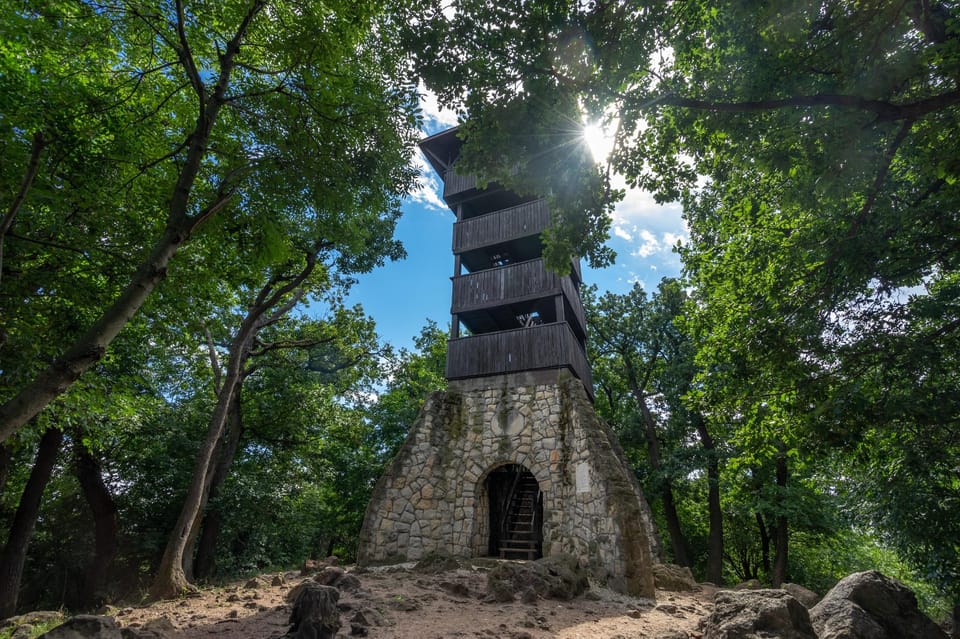
- Kaán Károly-kilátó: optional viewpoint walk that’s worth considering
- The guide matters: Zsolt’s Hungarian language and history focus
- Transportation, pickup, and how to avoid stress
- Price and value: why $127 can make sense for this route
- What to bring so the day stays comfortable
- Should you book the Church of Pilis and Paulian ruins walk?
- FAQ
- How long is the tour?
- Where does the tour pick up and drop off?
- Is transportation included?
- Is the tour in English?
- What stops are included?
- Is the lookout tower hike included?
- Are meals included?
- What should I bring?
- Can I cancel and get a full refund?
Key things I’d mark on your mental map
- Startrail’s wood-carved “stations” turn a walk into a history-and-language puzzle.
- Church of Pilis viewpoints give you the Pilis valley from right where the story is happening.
- Paulian Monastery ruins at Budaszentlőrinci include a powerful link to St. Paul and centuries of faith.
- Zsolt’s linguistics angle adds a rare focus on Hungarian language questions and origins.
- Optional Kaán Károly lookout hike is short, but includes an 110 m climb and a serious payoff.
- Street food timing (no meals included) helps you plan around real hunger, not just schedules.
Where Pilis spirituality meets Hungarian identity (and why it works)
This is a day trip where the scenery does half the storytelling. You’re up in the Pilis hills, and the valley views help explain why people built religious sites here in the first place: it’s dramatic, quiet, and easy to feel “off the clock.”
What I like is that you get two types of meaning in one route. There’s the present-day spiritual setting at the newly built Church of Pilis, then there’s the older, weather-worn atmosphere at the Paulian Monastery ruins—complete with the idea of St. Paul’s remains being kept there. The result is not just sightseeing. It’s a guided conversation about belief, identity, and how Hungary layered religions over time.
You also get a structured walk, not a vague wander. The trail name matters because it hints at how the stops are designed to guide your attention, like a moving lesson.
You can also read our reviews of more walking tours in Budapest



Startrail: the walk that acts like stations of the cross
Your walk begins on Startrail. It leads you toward the Church of Pilis and follows a station-like rhythm, similar in form to the stations of Christ’s last way. The twist is that the “stations” are about Hungarian history and language, not a single religious narrative.
Instead of stopping to reflect on one moment in Christian history, you stop to consider big questions like these (the guide frames them as discussion prompts, not trivia):
- Are Hungarians the descendants of Attila’s HUNs?
- When did people arrive in what became present-day Hungary?
- What did an original runic-style script look like?
- Who are the Magyars, and where does the language come from?
For me, this is where the tour becomes memorable. You’re not just hearing facts while standing still. You’re walking, which makes the questions stick better. Your brain is also naturally scanning the surroundings, so the topic feels less academic and more human.
The trail also makes it easy to pace yourself. You’re outdoors, on a route meant for walking, so you don’t feel rushed like you might on a quick “photo and go” itinerary.
Church of Pilis: modern worship with valley views
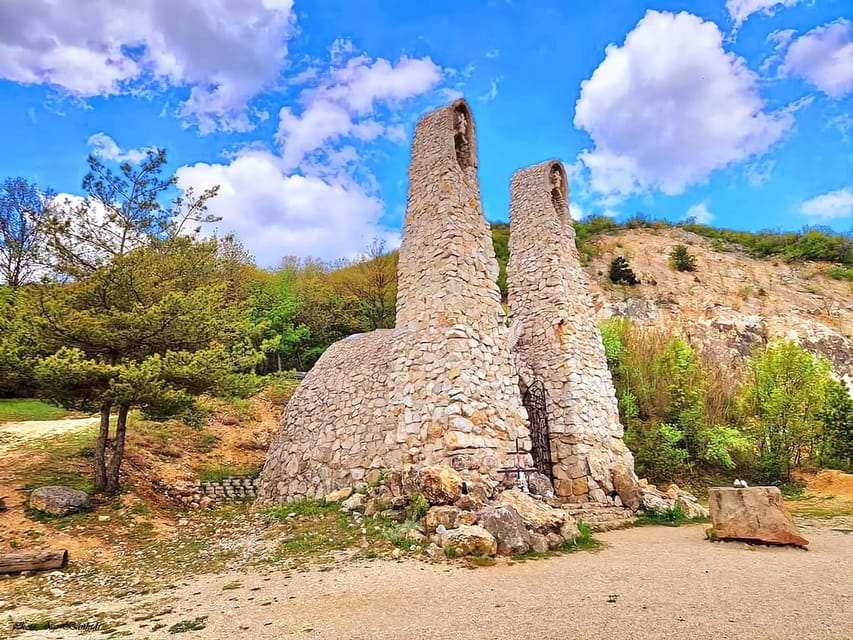
Once you reach Pilisi Boldogasszony-kápolna (the Church of Pilis), the mood shifts. You’re in a relatively new setting, yet the guide emphasizes the sense of meeting the present with earlier spiritual practice—especially by contrast with the nearby monastery ruins you’ll see later.
This stop is built around breathtaking views over the valley, so you’ll want your camera ready. Clear sightlines matter here because the story isn’t just inside the church. It’s also in the way the landscape frames the people who came before.
From what the program focuses on, you’re not meant to leave the church as a passive observer. You’re guided to connect what you see—church space, belief, and devotion—with what the tour is arguing about Hungarian will-power and the way faith shaped community life.
Practical note: this is also a good place to slow down. If you’ve been walking through questions at speed, the church view gives you a natural pause.
The esoteric-religion layer: how the guide frames belief shifts
The tour description openly points to a “Hungarian mix” of religious influences: native shamanism, Christianity, and Hinduism, plus esoteric teachings. In other words, you should expect a guided interpretation that treats religion as something layered and evolving, not something that stays neatly categorized.
You’ll also hear how religion changed over time through forces like Catholicism, Protestantism, communism, and esotericism—and what that combination leaves today. That doesn’t mean you’re being asked to agree with every claim. It means the guide is giving you a lens on why people in this region may have chosen certain spiritual paths at certain times.
If you prefer strictly traditional, academic religious history only, you’ll still get the core Christian monastery story. Just be aware that the tour’s storytelling method includes esoteric angles by design.
Lunch and street-food break: plan for real fuel

Between major stops, you get a break for lunch and snacks. The schedule gives you around 45 minutes for lunch and local food, and the car ride segments help space the day out.
Meals aren’t included, so bring an appetite plan. This is the moment to grab something quick and local. A highlight mentioned in the experience details is langosh, a classic Hungary snack that fits well with a day spent mostly outdoors.
If you’re sensitive to walking on a half-empty stomach, don’t skip this. The rest of the day includes walking and an optional climb, and you’ll feel it more if you under-eat earlier.





Budaszentlőrinci pálos kolostor: Paulian ruins with St. Paul’s link
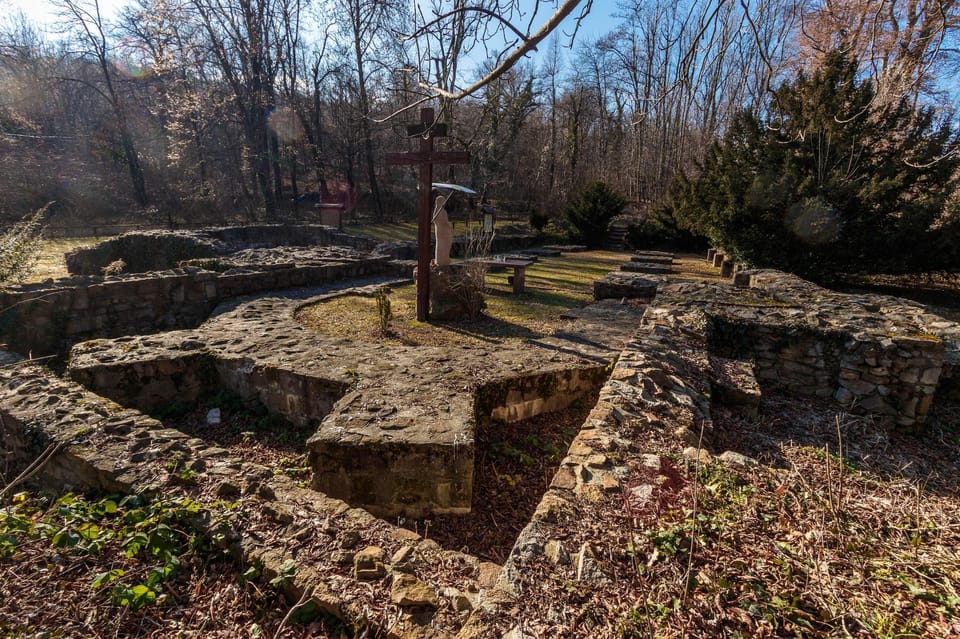
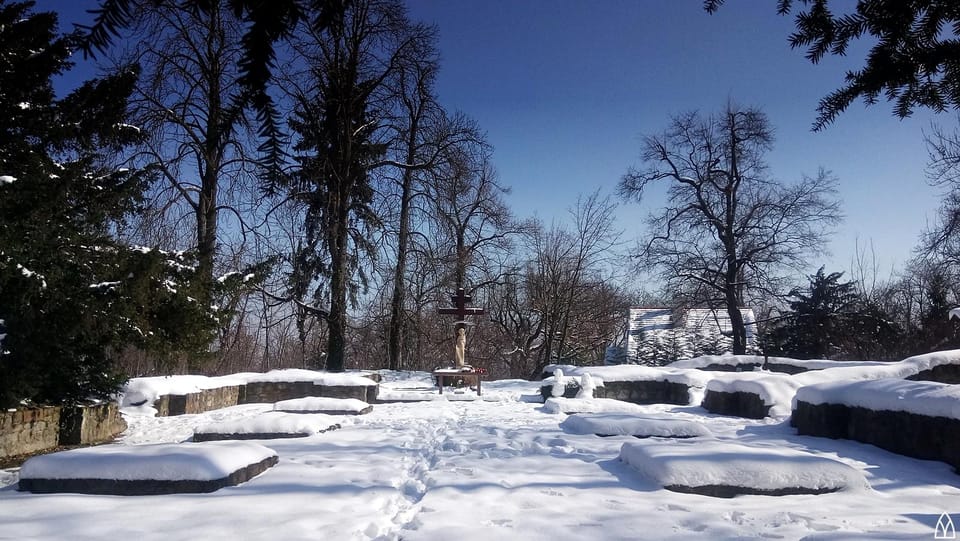
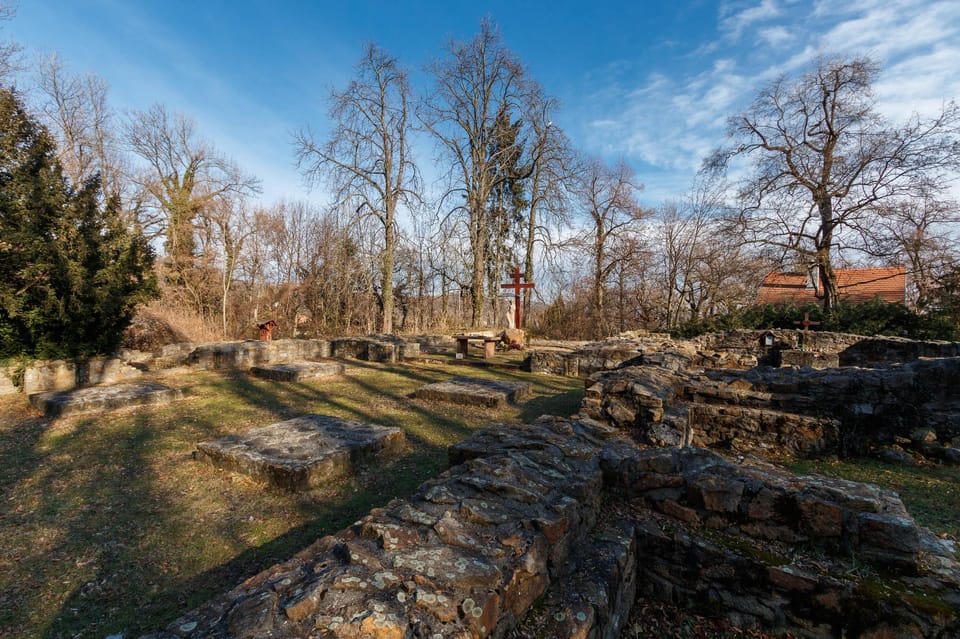
The big emotional shift comes at the Paulian Monastery ruins in Budaszentlőrinci. You drive about 30 minutes from the church area to the ruins, and the site is described as built in 1300.
Here’s the key detail that gives the place weight: the ruins are connected with the idea that the remains of St. Paul were kept there. The tour also frames reports of miraculous healings happening at the site, which helped it build a reputation beyond the local area.
Then the tour explains the monastery’s rise and decline. It was active for over two centuries until the Ottoman period of invasion, and after that the site fell into ruin—so you’re walking through the aftermath of faith-driven community life.
What I’d suggest you do on-site is simple: slow down and let the ruins talk. Stone doesn’t feel “historic” when you stand in the exact space. It feels like time has weight. The program’s focus on the ruins as having a truly mystical atmosphere makes sense with how these sites are experienced: you don’t need theatrics to feel the calm.
Also, keep your camera ready for the altar-stone area. One guide-style detail emphasized in the experience is the altar-stone being a standout moment. It’s the kind of object that turns general ruins into something personal.
Kaán Károly-kilátó: optional viewpoint walk that’s worth considering
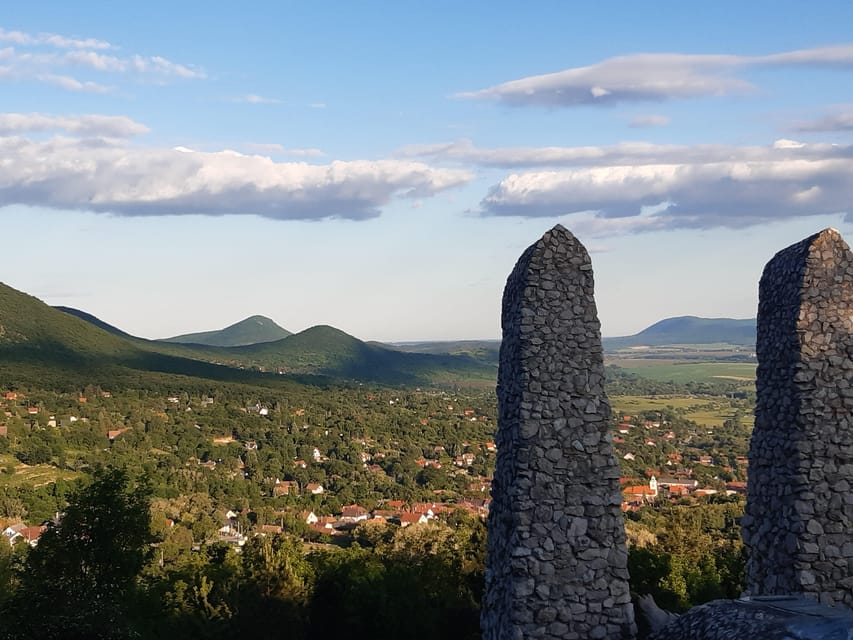
If you still have energy, you can add an optional hike to Kaán Károly-kilátó. It’s described as about 1.1 km one way, with a total of 2.2 km round-trip and roughly 110 m of elevation gain and loss. The hike itself is timed as a short add-on—around 30 minutes of effort, depending on your pace.
What makes it work is the payoff: you see one side with mountains and the other side with Budapest. Visibility can be excellent, and one experience mentions checking distance on a map and reaching around 52 km in clear conditions.
If you’re on the fence, here’s the rule I use for optional hikes: add it if you like views more than extra facts. This one doesn’t drag. It’s just enough effort for a big sense of place.
If it’s raining or muddy, wear shoes with grip and expect the forest path to be uneven. The guide builds in the option to decide on the spot, so you can match your mood and fitness.
The guide matters: Zsolt’s Hungarian language and history focus
A private day trip lives or dies by the guide. On this route, the guide is Zsolt, and the program description makes it clear he’s not just giving surface-level explanations. He’s an author connected to a rare Hungarian linguistics exploration, and he’s credited with two books on linguistic discovery.
That linguistics focus shows up in how the Startrail questions are framed. You’re not only learning who the Magyars were, or debating the HUNs idea. You’re also talking about why Hungarian feels so different from many European languages, and how runic scripts and origins get interpreted.
One reason this matters: it connects the walking trail to something deeper than scenery. The day becomes a story about language, belief, and national identity—not just a sequence of stops.
Zsolt is also described as friendly and entertaining, with experience guiding people from many countries. That mix matters because you’ll get explanations tailored enough to follow the ideas without feeling lost in a lecture.
Transportation, pickup, and how to avoid stress

This is a private group tour with car transport between locations. Pickup is offered from two places in the Budapest area: Budapest and Solymár, with drop-off back at those locations too.
Parking isn’t possible at the pick-up point, so the instruction is to wait in front of your hotel about 5 minutes before the scheduled pickup. The car is described as a red Citroën Xsara Picasso, which should make spotting it easier once you’re outside.
The day runs about 5 hours total, so delays add up fast. If you’re coordinating with a hotel, confirm the exact pickup spot the night before and give yourself time to be outside.
Price and value: why $127 can make sense for this route
At $127 per person for a 5-hour private tour, the value depends on what you care about. This isn’t just a scenic drive with one church stop. You’re paying for three things that add up in practice:
- A professional English-speaking guide who connects language, religion, and history.
- Car transportation that gets you to multiple sites around Pilis without you handling local driving.
- Entrance fees to both the Church of Pilis and the Paulian monastery ruins.
Meals aren’t included, so you’ll spend some extra on snacks or lunch. But the schedule includes a real break for that, which is helpful. If you were trying to arrange the stops independently, the hardest parts would be the timing, the guided explanations, and the transitions between sites.
If you like walking with a narrative and you want context you can’t easily get from a lone guidebook, this price can feel fair. If you’d rather do everything on your own, you’ll likely decide it’s too structured.
What to bring so the day stays comfortable
Plan like you’re outdoors for most of the morning. Bring:
- Comfortable walking shoes
- Water and snacks (especially useful if you choose the lookout hike)
- Camera
- Weather-appropriate outdoor clothing
- A bit of patience for uneven forest paths
The rules also note that alcohol and drugs aren’t allowed and that nudity isn’t permitted.
Walking is described as moderate. If you have any mobility limits, treat that seriously. The tour isn’t suitable for people with mobility impairments, wheelchair users, or babies under 1 year. It also lists a weight limit of 331 lbs (150 kg).
Should you book the Church of Pilis and Paulian ruins walk?
Book it if you want a day outside Budapest that mixes views, spiritual atmosphere, and Hungarian identity questions in a guided format. The Startrail idea—wood-carved stations that ask you to think about HUNs, Magyars, runic scripts, and language origins—makes this more than a standard “church plus ruins” outing.
Skip it if you dislike esoteric interpretations, or if you’re hoping for minimal walking and zero philosophical back-and-forth. Also skip the optional climb if you know 110 m of elevation gain will drain you—though you can still enjoy the core church and ruins parts.
If you’re the type who likes your history with a little mystery and your religion with context, this is a strong fit.
FAQ
How long is the tour?
The duration is about 5 hours.
Where does the tour pick up and drop off?
Pickup is available from Budapest and Solymár. Drop-off is also in Solymár and Budapest.
Is transportation included?
Yes. You get transportation by car, and pickup is included.
Is the tour in English?
Yes, the live guide speaks English.
What stops are included?
You visit the Church of Pilis and the ruins of the Paulian Monastery (Budaszentlőrinci pálos kolostor), with entrance fees included.
Is the lookout tower hike included?
It’s optional. The free hike to Kaán Károly-kilátó is about 1.1 km each way (2.2 km total) with around 110 m of elevation gain and loss.
Are meals included?
No. Lunch and snacks are not included, though there is time for food on the schedule.
What should I bring?
Bring comfortable walking shoes, a camera, snacks, water, and weather-appropriate outdoor clothing.
Can I cancel and get a full refund?
Yes. Free cancellation is available up to 24 hours in advance for a full refund.