REVIEW · BUDAPEST
Rise Against the Soviet: The 1956 Revolution – Private Tour
Book on Viator →Operated by Fungarian · Bookable on Viator
Budapest remembers 1956 on street corners. This private tour strings together the moments and places behind the 1956 uprising, using firsthand-era context and local details so the story feels human, not textbook. I especially like how it connects sites along the Danube and through central districts, giving you a clear sense of how quickly events escalated.
I like the way the guide frames the Communist legacy before and after 1956, including the longer fuse that led to the revolt and what happened next. Names matter here: you’ll hear about leaders like Imre Nagy and how the revolution’s rhetoric and radio pleas echoed into real consequences.
One possible drawback: three hours is tight for a topic this huge, and if you already know the Revolution in depth, you may want a second day to go deeper on your favorite corners of Budapest’s 1956 story.
In This Review
- Key things you’ll notice on this tour
- Why this 1956 Budapest tour works better than a facts-only walk
- The guide style: short answers, strong context, and human detail
- Kossuth Lajos Square: where politics turned into tragedy
- Margaret Bridge and the so-called White House: power along the river
- Bem Square and Buda-side intellectual life: students, rallies, and cafés
- The Sándor Petőfi statue: revolution as a meeting point
- Radio Budapest (Magyar Rádió Building): pleas for help at the edge of the city
- Corvin Cinema and Corvin köz: how young fighters faced tanks
- Handouts and the souvenir: small extras that help you remember names
- Price and value: what you’re really paying for
- Who should book this tour (and who might want something else)
- Practical tips before you go
- Should you book Rise Against the Soviet: The 1956 Revolution private tour?
- FAQ
- How long is the private tour?
- How many people are in a group?
- Does the tour include pickup in Budapest?
- What language is the tour offered in?
- Are entrance tickets included?
- Can I get a full refund if my plans change?
Key things you’ll notice on this tour
- A 3-hour “through-the-city” route focused on 1956 sites, with pickup available for your group of up to 5
- Real place-by-place storytelling at Kossuth Lajos Square, Margaret Bridge, and Corvin Cinema
- Context beyond 1956 so you understand why the uprising happened and what followed
- Personal testimony in the mix, including guides who lived through the Communist era
- Free entry stops on the route, with handouts and a small souvenir included
- A slightly brisk pace that’s great for first-timers, but can feel short for deep historians
Why this 1956 Budapest tour works better than a facts-only walk
Budapest has a way of leaving clues in plain sight. This tour leans into that. Instead of treating the 1956 Revolution like a single event, I appreciate that the guide keeps pointing at cause-and-effect—what set people off, why certain institutions mattered, and how the aftermath shaped daily life.
You get a private group (up to five people), so you can ask questions without feeling like you’re competing with the loudest traveler in the back. It also runs in English and includes handouts, which is helpful when you’re trying to remember names and locations while your brain is juggling centuries of Hungarian history.
The route also makes practical sense. You cover key points tied to the revolt while keeping the walking manageable with short transfers. One thing to consider: the whole thing is about three hours, so it’s built for strong orientation, not for hours of museum-level depth at each stop.
You can also read our reviews of more private tours in Budapest

The guide style: short answers, strong context, and human detail
This is the kind of tour where the guide’s background shows. In the experience lineup, you’ll meet guides such as Miklos and Peter, and some bring lived perspective from the Communist era. That matters because the guide doesn’t just say what happened. They explain what it felt like—what people feared, what they hoped for, and how daily life tightened under political control.
Even when the subject is grim, the tone stays grounded. The narration is organized around locations, so you’re not stuck hearing a long lecture while you stand at the wrong street. If you’re traveling with someone older or you need the pace adjusted, the better guides here slow down and steer the conversation toward what’s most relevant to your group.
Kossuth Lajos Square: where politics turned into tragedy
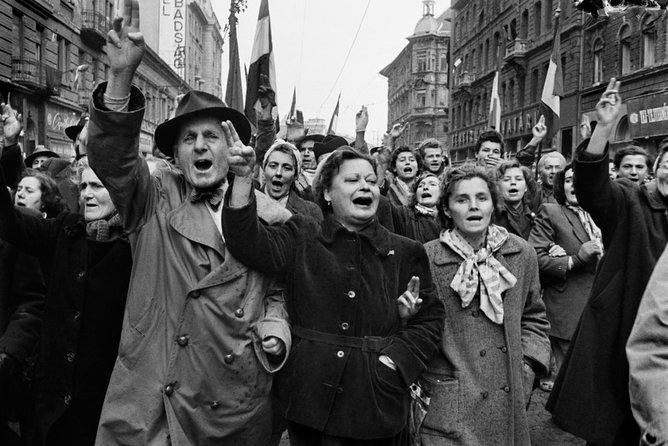
Kossuth Lajos Square is one of Budapest’s most symbol-heavy places, and the tour uses that power for a reason. You’ll stand by the Hungarian Parliament area and learn what happened around a mass demonstration in 1956—when dozens were massacred by the government.
What I like about starting here is the clarity. It’s easy to look at impressive architecture and think history was tidy and distant. The guide forces the contrast: this wasn’t a distant political theory. It was people in the streets, and it was consequences in real time.
This stop is brief (about 25 minutes) and free to enter, which makes it feel like the tour’s emotional “anchor.” Don’t treat it like a quick photo-op; give the guide a chance to set the scene before you move on.
Margaret Bridge and the so-called White House: power along the river
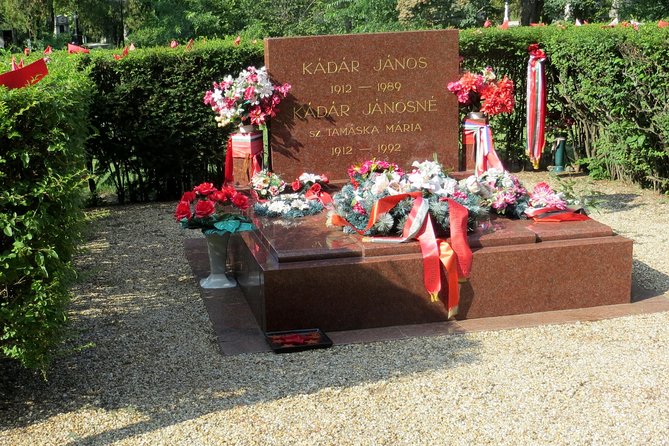
Crossing the Danube zone on foot or nearby gives you a sense of how the city’s geography shaped control. The tour highlights the building on the riverbank known in Communist times as The White House, the Party HQ of the Hungarian Communist government.
Then you’ll look toward the statue of Imre Nagy—Prime Minister in 1956, later murdered. This pairing works. One location represents the state’s command center; the other represents the revolution’s leadership and fate.
One practical note: at this stop (about 20 minutes), don’t expect a long pause. It’s more about connecting visual landmarks to political machinery. If you’re a history buff who wants time to linger, wear comfortable shoes and keep your questions coming—this is where the guide can give you names and timelines you can’t easily pull from a plaque.
Bem Square and Buda-side intellectual life: students, rallies, and cafés
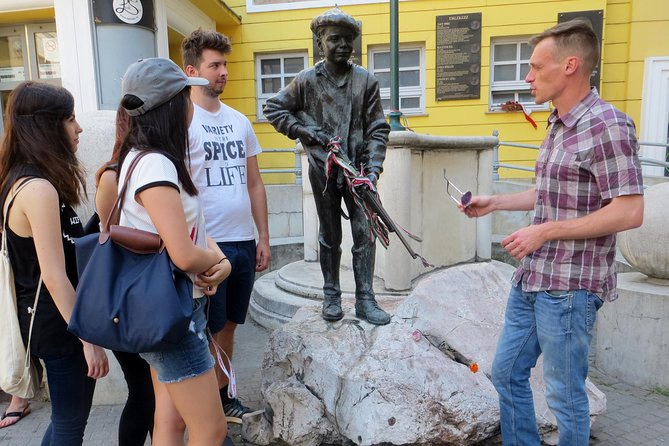
Bem József Memorial is where the uprising shows its student face. The tour focuses on the rally tied to Soviet rule: around 200,000 Hungarian students protesting in 1956, after an event originally organized to support Polish workers.
This is one of my favorite kinds of history stops. It’s not just about officials and tanks—it’s about momentum. The guide helps you understand why the protests grew and how international solidarity fed into local courage.
And then there’s the contrast of Bambi Eszpresszó on Frankel Leó utca. The tour points out that the café has been around since the 1960s and has kept a similar interior feel. I like including places like this because they show how culture and conversation continued under pressure. It turns the story from purely political into something you can almost imagine living through.
Expect about 30 minutes here, with free entry.


The Sándor Petőfi statue: revolution as a meeting point
Sándor Petőfi is a name you’ll hear again and again when discussing Hungarian resistance. On this tour, the statue acts as a living reference point for protest culture—because people still use it for political events today.
The guide also ties 1956 to performance and public language. You’ll learn about actor Sinkovits Imre, who recited Petőfi’s revolutionary words near the statue in 1956 and was later arrested and imprisoned. That detail makes the statue feel less like art and more like a stage where words could trigger real danger.
This stop is shorter (around 15 minutes), and that’s fine. It’s a “point and purpose” stop: you walk away with a mental anchor for the role of rhetoric—how speeches and symbols mattered when radios and official channels were controlled.
Radio Budapest (Magyar Rádió Building): pleas for help at the edge of the city
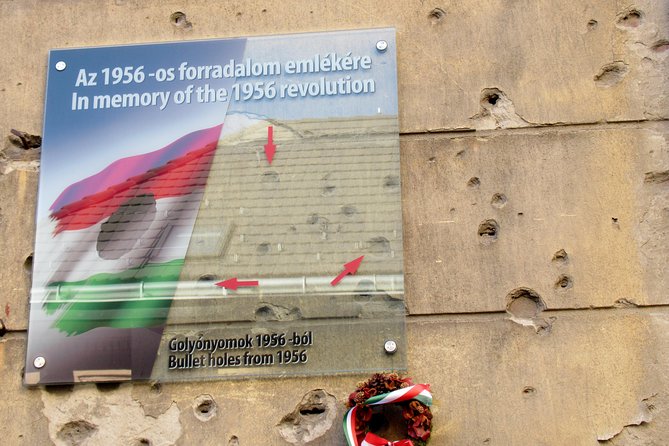
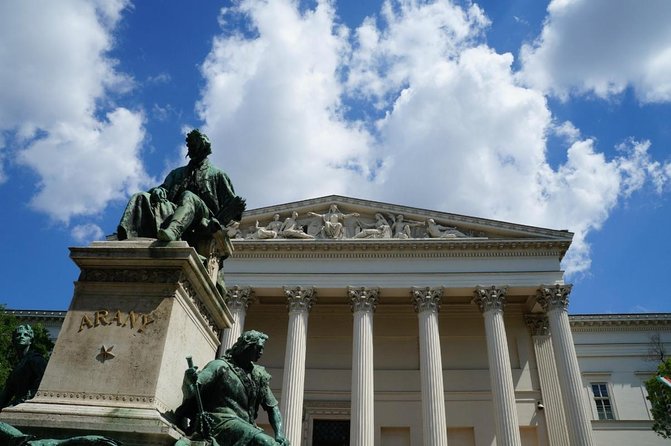
One of the most striking stops is the Hungarian National Museum area where the tour visits the Magyar Rádió Building, also known as Radio Budapest. It’s slightly secluded along tiny, one-way Sándor Bródy Street, which helps the place feel cut off from the city’s usual rhythm.
This is where the tour gets emotionally heavy. Revolutionaries used this site as one of the epicenters of fighting, and from here they begged for help from the world at large.
I like that the guide doesn’t treat it like a war monument you just look at. Instead, you get the sense of urgency—messages sent out when control was slipping and information mattered. It’s about communication under siege, not just battles.
Plan on roughly 20 minutes here, and it’s free.
Corvin Cinema and Corvin köz: how young fighters faced tanks
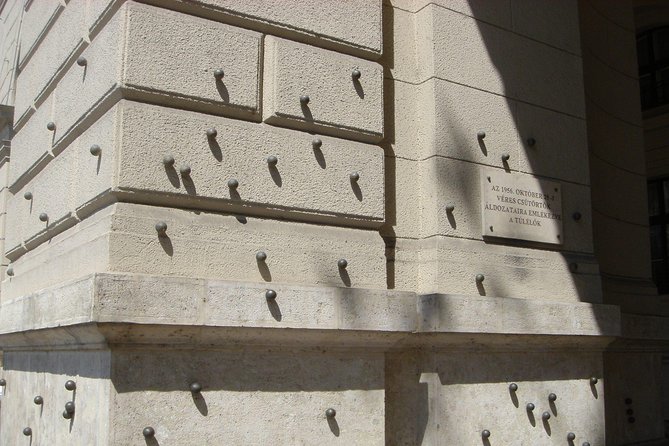
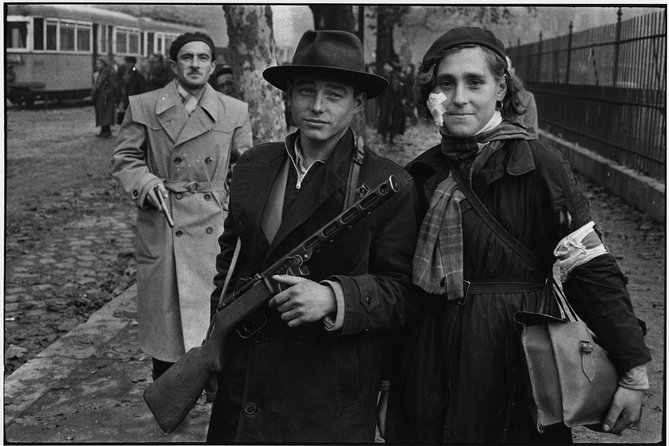
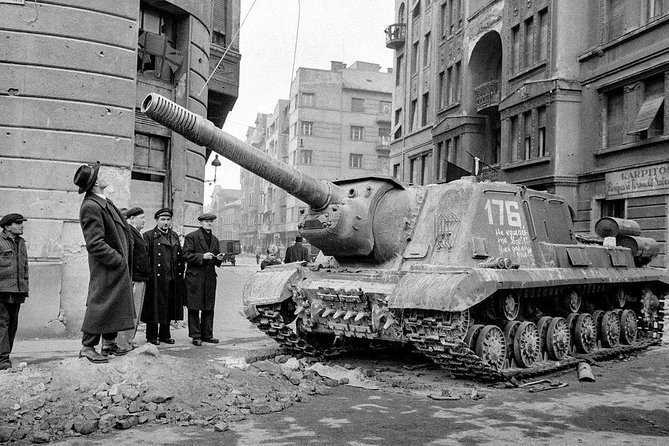
If you want the tour to feel most action-oriented, it’s here. Corvin Cinema and the surrounding area at Corvin köz are presented as a major resistance center in 1956, where local youngsters fought invading Russians using Molotov cocktails and stolen guns from soldiers to take on Soviet tanks.
This stop is about reminders of those battles and the invasion’s aftermath (about 30 minutes). It’s not a “Hollywood” version of 1956. The guide grounds it in what makes resistance possible when resources are uneven.
Why I think this part matters for you: it pushes beyond the idea that history is only made by leaders. You see how ordinary people and young fighters became part of the story.
If you’re the kind of traveler who likes to understand the human math of revolutions, this is your payoff stop.
Handouts and the souvenir: small extras that help you remember names
The tour includes educational handouts and a communism-related souvenir. Those sound like minor add-ons, but they actually do real work.
In a topic where dates and names stack up fast, handouts act like a memory scaffold. You can glance at them later while you’re back in your hotel, or when you’re comparing your impressions with what you see around Budapest the next day.
The souvenir is also a helpful “bookmark.” It’s not just clutter—it’s a reminder of what you just learned, and it keeps the story from fading after the walk ends.
Price and value: what you’re really paying for
The cost is $228.66 per group, for up to five people, for about 3 hours. That’s not a bargain price if you compare it to walking tours, but it’s a fair deal when you factor in private guiding, pickup options, and the included materials.
Here’s the value logic that makes sense: most of the stops listed are free to enter, so you’re paying mainly for interpretation and route planning. You’re also paying for the chance to ask questions and get details matched to your interests—especially valuable if someone in your group cares deeply about the revolution or has family connections.
In short: if you want a guided story at multiple key sites without the stress of building your own route and researching constantly, the pricing starts to look reasonable.
Who should book this tour (and who might want something else)
Book this if you:
- care about Communist-era history and want 1956 connected to what came before and after
- like city-walk storytelling that uses landmarks as “chapters”
- want private pacing for families or mixed-history levels
Consider another option if you:
- already know the Revolution inside-out and want a longer, site-by-site deep study
- hate short timelines for big subjects—you may feel the route is just getting started by the time you reach Corvin köz
Practical tips before you go
You’ll want moderate physical fitness. This is a walking-and-transfer style tour, so wear comfortable shoes and expect you’ll be on your feet for most of the three hours.
If you’re using transit yourself, note that the tour is near public transportation. And if you’d rather avoid dragging yourself across town, pickup is offered at your hotel (or from a central point you agree on).
You’ll also receive a mobile ticket, which keeps things simple at check-in.
If you’re a service animal handler, service animals are allowed.
Should you book Rise Against the Soviet: The 1956 Revolution private tour?
Yes, I’d book it if your goal is orientation plus meaning. This tour gives you a clear, guided route through the places that matter most to the 1956 Revolution, and it does more than list events—it links the uprising’s spark to the political structure people were pushing against, then shows how the aftermath stayed with Budapest.
I’d hesitate only if you’re expecting a multi-day deep dive or you’ve already studied 1956 at a very detailed level. The theme is huge, and the three-hour format means you’ll likely want to keep exploring afterward.
If that sounds like you, this is a smart starting point—and a good way to make Budapest’s 1956 story feel real.
FAQ
How long is the private tour?
It runs for about 3 hours.
How many people are in a group?
It’s a private tour with only your group participating, up to 5 people.
Does the tour include pickup in Budapest?
Pickup is offered, either from your hotel or from a central point you agree upon.
What language is the tour offered in?
The tour is offered in English.
Are entrance tickets included?
The listed stops on the route show free admission, and the tour includes handouts plus a communism-related souvenir.
Can I get a full refund if my plans change?
Yes. You can cancel up to 24 hours in advance for a full refund.