REVIEW · BUDAPEST
Private Art Nouveau Budapest Tour
Book on GetYourGuide →Operated by CurioCity Budapest · Bookable on GetYourGuide
Art Nouveau in Budapest feels like street theater. This private tour focuses on the most sophisticated Secession-style architecture, plus a café stop that lets you slow down and take it all in. I especially like how the guide connects the buildings to the bigger European Art Nouveau story, not just the surface look, and how the route is built around the city’s key landmarks and viewpoints.
You’ll move through real neighborhoods and see the jump from one style influence to another, including the “national” Hungarian take. One thing to consider is that this experience depends on smooth meeting logistics—so double-check your exact pickup spot and message your guide the day-of, especially if you’re traveling with tight plans.
In This Review
- Key highlights worth clocking
- Budapest’s Art Nouveau theme park, minus the crowds
- Secession movements to Hungarian style: the big idea before you start
- Starting at the Museum of Applied Arts: the Hungarian Gaudí moment
- Trams and Váci Street: shifting from inspiration to real city scale
- Gresham Palace: luxury atmosphere and what it signals
- Liberty Square and the House of Hungarian Art Nouveau café break
- Exploring a square where so many buildings share one period
- Hungarian State Treasury: the rooftop lesson you only get up close
- Who this private tour fits best
- Price and value: what $377 per group really means
- The reliability reality: planning for a smooth start
- Tips to get the most from the buildings
- Should you book the Private Art Nouveau Budapest Tour?
- FAQ
- How long is the Private Art Nouveau Budapest Tour?
- Where does the tour start?
- What’s included in the price?
- Is this a private tour?
- What languages are available for the guide?
- What should I bring?
- Can I cancel for a refund?
- Is payment required upfront?
Key highlights worth clocking
- Hungarian Art Nouveau explained on-site, with context from related European movements
- Museum of Applied Arts start (often treated as the Hungarian Gaudí landmark) for the right foundation
- Tram + walking route that keeps you close to multiple façades without tiring detours
- Gresham Palace stop for a big, luxurious interior-feeling moment
- Liberty Square café break with Art Nouveau surroundings and a private collection feel
- Hungarian State Treasury rooftop views that you only really understand once you’re close
Budapest’s Art Nouveau theme park, minus the crowds
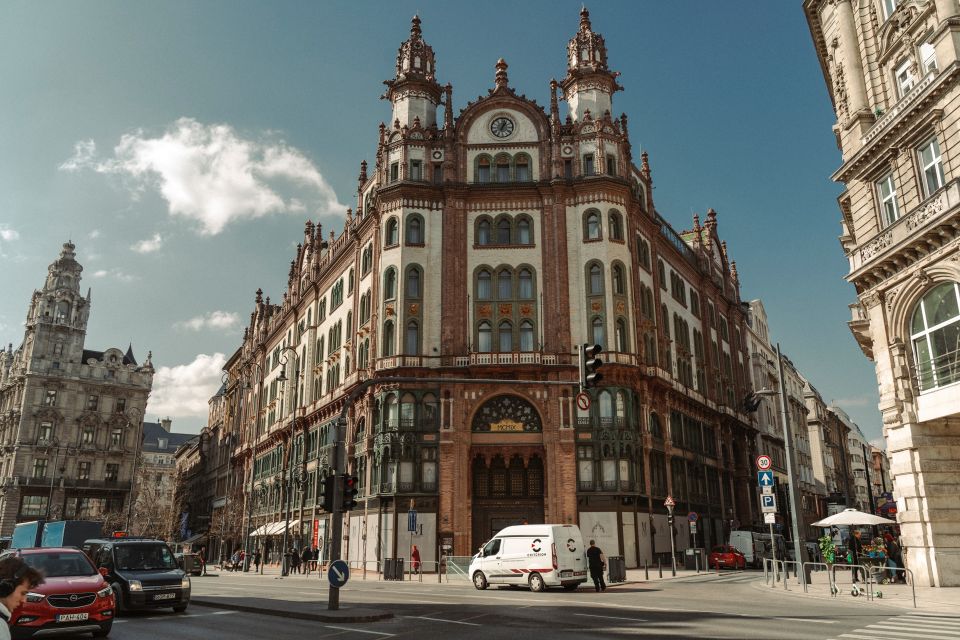
Budapest has a way of looking different at different hours. On an Art Nouveau route, the light matters. Wavy façades, rounded stained-glass windows, uneven stone textures, and color-tiled roofs all read like they were designed for slow looking. And when you’ve got a guide who can connect ornament to meaning, you stop seeing “pretty buildings” and start seeing a whole style movement taking shape.
This tour is private, which changes the feel right away. You’re not squeezed into a hurry. You can ask questions, pause for photos, and get the why behind the details. That matters because Art Nouveau is all about intent: the curve, the floral rhythm, the materials, even the way entrances invite you in.
I also like the pacing concept here: walk a section, then ride a short tram to reposition. It keeps the tour from turning into one long, grindy foot slog, and it helps you cover more of the city’s Art Nouveau core in just four hours.
You can also read our reviews of more private tours in Budapest


Secession movements to Hungarian style: the big idea before you start
Art Nouveau wasn’t one single thing. In Europe it splintered into related branches, each with its own flavor. Your tour guide is there to help you see that progression as you move from building to building.
Here’s the sequence you’ll hear about: the style flourished toward the end of the 1900s (think early 20th century), and within about 20 years, many “masterpiece” constructions appeared. You’ll connect the dots between Viennese Secession, Jugendstil, French and Belgian Art Nouveau, and then—most importantly for Budapest—the rise of a true Hungarian national style.
That last part is the reason this tour feels more than decorative. Instead of treating Hungarian Art Nouveau as a copy of somewhere else, you get it as a local identity project. Once that clicks, the architecture stops being background and starts being a message.
Starting at the Museum of Applied Arts: the Hungarian Gaudí moment
A smart move is how this tour often begins at the Museum of Applied Arts, associated with Ödön Lechner—frequently nicknamed the Hungarian Gaudí. Even if you’ve seen photos before, being there in person is a different story. Lechner’s work is the kind of architecture where the surface is part of the concept: patterns, shapes, and textures don’t just decorate; they signal what the building is trying to be.
From there, you’ll take a pleasant walk that sets you up for the rest of the route. This is where a guide really earns their fee. You’re not just reading plaques. You’re learning what to look for: the language of curved lines, the way materials are used, and what makes Hungarian Art Nouveau feel distinct from its neighbors.
Practical note: wear shoes you can trust. This isn’t a crawl-speed museum-only outing. You’ll be on your feet enough that comfort matters.
Trams and Váci Street: shifting from inspiration to real city scale
After the initial walking section, the tour typically includes a short tram ride back toward the city center, where many of the famous Art Nouveau buildings cluster. This is a good design for your energy levels. It also helps you “see in motion,” which is oddly useful for architecture photography.
Once you’re near Váci street, you’ll spot modern constructions of the style around there. That detail matters because it shows continuity and reinvention. Art Nouveau isn’t just a historical snapshot; parts of its look and mood still influence design.
You’ll then reposition again for the big landmark stops. This rhythm is the difference between “seeing a list of buildings” and actually understanding a neighborhood’s architectural logic.
Gresham Palace: luxury atmosphere and what it signals
A highlight in the route is popping into Gresham Palace. Even without a long interior tour described here, the point is clear: this stop gives you a sense of how Art Nouveau and related design tastes carried into the city’s premium, public-facing spaces.
Gresham Palace works like a mood shift. You go from outdoor façades you study from the sidewalk to a building that feels like it belongs to a past era of grand arrivals and social life. It’s the kind of location where a good guide connects style choices to the era’s ambitions: modern identity, wealth, and the desire to look forward.
If you like architecture because it tells stories about money, power, and culture, you’ll likely enjoy this part. If you only care about exteriors, it still helps because it clarifies how the style was used in serious city spaces—not just buildings that look pretty from far away.






Liberty Square and the House of Hungarian Art Nouveau café break
At Liberty Square, the tour adds something surprisingly important: a coffee or soft drink with cake, served in Art Nouveau surroundings. This is not a random “sit down” stop. It’s timed so you can recover and also reset your brain for the final sightseeing stretch.
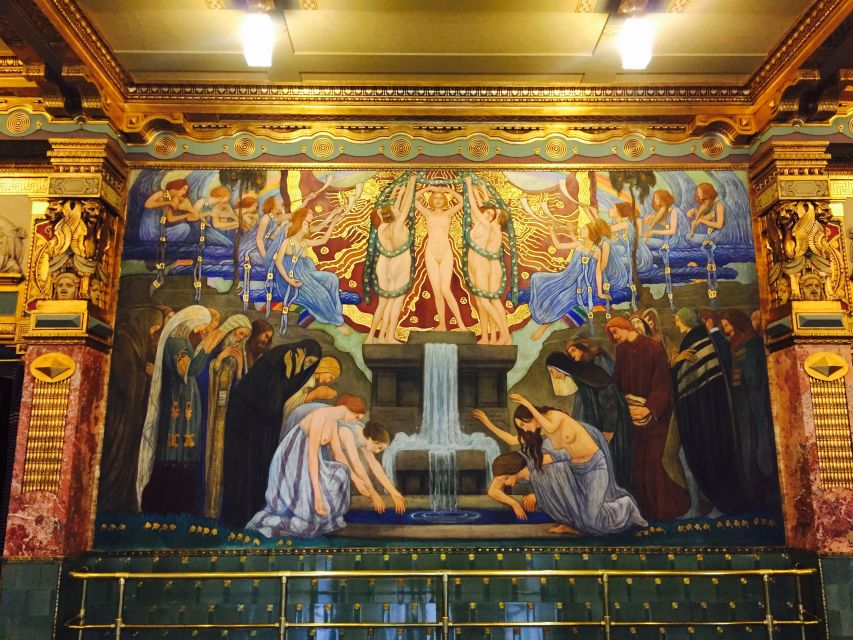
The café is at the House of Hungarian Art Nouveau, tied to a private collection of the time. Even if you don’t spend the whole visit reading every detail, the experience helps you connect the architecture to daily life—how people ate, met, and showed off style in everyday spaces.
This is also where your guide’s delivery can really shape the tour. In previous tours, guides named Suzy, Peter Horvath, and Joel have been singled out for passionate storytelling and for finding sights you might not easily stumble upon. You’ll feel the difference when the building decorations get explained as choices, not just pretty shapes.
Exploring a square where so many buildings share one period
Liberty Square is effective because you can compare. The tour encourages you to explore the square so you notice how the buildings share the same period of design language. That kind of comparison is hard to do on your own unless you already know what to look for.
Here’s what I’d pay attention to during this section:
- How façades repeat motifs across different buildings
- How balconies, windows, and rooflines contribute to a consistent look
- How the materials and colors change your perception of distance and scale
When you walk the square with context, your photos get better too. You stop shooting only the “must-see” corners and start capturing patterns, junctions, and roof details that are where Art Nouveau gets expressive.
Hungarian State Treasury: the rooftop lesson you only get up close
The final anchor stop is the Hungarian State Treasury, including its unforgettable rooftop. The key detail is that this rooftop is invisible from street level—so you need to be close to understand it.
That’s a common architecture-travel frustration: you arrive at a famous building and the most dramatic part is angled away, or it requires the right vantage point. This tour is built to solve that. By the time you reach the State Treasury area, you’ll have the context from earlier stops, so the rooftop stops being random decoration and starts being the style’s grand finale.
This is also a great place to ask a last question. If your guide is strong at tying the style movements together, this rooftop is where those explanations land.
Who this private tour fits best
This tour suits you if:
- You like architecture and want more than a photo checklist
- You want the European Art Nouveau connections explained in plain language
- You enjoy walking, with a short tram ride to balance things
- You’d rather have a guide who can adjust pacing than follow a strict group script
It’s also a good fit for couples, small groups of friends, and anyone who wants a cultural tour that still feels fun. The café stop helps make the pacing feel lighter, and the private format means you can spend extra time on the façades that catch your eye.
Price and value: what $377 per group really means
The price is $377 per group up to 25 for a 4-hour private tour. That pricing can be very fair—or less fair—depending on how many people are in your group.
Here’s the simple way to think about it:
- If you travel with 2 people, you’re paying $377 total, so it’s about $188 per person.
- If you travel with 6 people, it drops to about $63 per person.
- If you travel with a larger group within the allowed size, the per-person cost becomes much easier to justify.
What you’re getting for that total price is also worth factoring in: hotel pick-up, an in-person guide, and the coffee or soft drink included with cake. Add in that the route is designed around multiple major Art Nouveau sites in one half-day block, and it becomes a practical way to see more than you’d likely coordinate yourself.
The reliability reality: planning for a smooth start
Most tours like this run on time with a clear meeting point. But one reported issue involved a guide not showing up and a refund not being received right away. I can’t predict how your day will go, but you can reduce stress.
Do this:
- Confirm the exact pickup location at your hotel or meeting point the day before.
- Keep your booking details easy to access on your phone.
- If you’re not picked up within your agreed window, contact the provider immediately rather than waiting.
Private tours are personal by nature, which is great when everything runs smoothly, but it’s also why you should protect yourself with quick confirmation.
Tips to get the most from the buildings
You’ll have a better time if you know what to focus on while you’re walking. When you reach each stop, take 30 seconds to look at:
- Curves: how the building bends instead of just repeating straight geometry
- Windows and stained glass: rounded edges and color placement
- Rooflines: especially at the State Treasury, where the rooftop matters most from the right angle
- Street-level texture: uneven surfaces can change how the light hits
If you’re into photography, you’ll also want to move your body slightly rather than only twisting your camera. These buildings were designed to be viewed from specific angles.
Should you book the Private Art Nouveau Budapest Tour?
I’d book this tour if you want Art Nouveau to make sense. The best parts here are the guided art-historical framing and the way the route links major buildings into a story—from the Museum of Applied Arts and Lechner’s influence to Liberty Square and the State Treasury rooftop payoff. The café stop is also a genuine bonus, not an afterthought.
I would hesitate only if your schedule is extremely rigid and you can’t handle the risk of a smooth start being essential. If that’s you, message the day-of and protect your time.
If you’re flexible and you love seeing architecture explained like it’s alive, this one is a strong choice for a memorable Budapest afternoon.
FAQ
How long is the Private Art Nouveau Budapest Tour?
The tour lasts 4 hours.
Where does the tour start?
You meet your private guide at a previously arranged place, such as your hotel or apartment. A common starting point is the Museum of Applied Arts area.
What’s included in the price?
It includes hotel pick-up, a live guide, and a coffee or soft drink (with cake).
Is this a private tour?
Yes. It’s listed as a private group experience.
What languages are available for the guide?
The guide can be Spanish, English, French, Italian, or Portuguese.
What should I bring?
Comfortable shoes. You’ll be walking.
Can I cancel for a refund?
Yes. Free cancellation is available up to 24 hours in advance for a full refund.
Is payment required upfront?
You can reserve now and pay later.