REVIEW · BUDAPEST
Past and Present of Budapest Jewish District Tour
Book on Viator →Operated by Triptobudapest.hu - Free Budapest Walking Tours · Bookable on Viator
Budapest’s Jewish Quarter can feel like a puzzle box. This 1 hour 45 minutes walk strings it together with District VII stops you can actually see, from Elizabeth Square to Szimpla Kert, plus a guided story that moves from the Belle Époque era toward the destruction of Hungary’s Jewish community.
I like two things right away: the guide-led structure (you get the big timeline fast) and the fact that you focus on the standout sites without spending the whole day in line-ups. One thing to consider: you do not enter the synagogues—everything is viewed from outside—so if you want an inside visit, plan for that separately.
In This Review
- Key Highlights You’ll Care About
- Where This Jewish District Tour Starts (and How It Really Flows)
- Price and Value: Why a Low Cost Still Makes Sense Here
- Erzsébet tér: Belle Époque Grandeur Meets Hard History
- Deák Ferenc Square: Gaudiopolis and the Protection Story
- Great / Central Synagogue Outside: Movements, Zionism, and Remembrance
- Rumbach Street Synagogue: Murals, Restoration, and City Art
- Gozsdu Udvar: Entertainment, Gastronomy, Culture, and a Wall Segment
- Kazinczy Street Synagogue: Kosher Food and Ritual Bath Notes
- Szimpla Kert Ending: Murals, Pop-Up Exhibitions, and a Place to Reset
- The Guides: Why Friendly, Organized Explanations Make the Walk Work
- What Might Go Wrong (and How to Prepare)
- Practical Tips Before You Go
- Should You Book This Budapest Jewish District Tour?
- FAQ
- What is the duration of the Budapest Jewish District tour?
- Does the tour enter the synagogues?
- Where do you meet, and where does the tour end?
- Is the tour only for Jewish history, or does it cover present-day life too?
- What language is the tour offered in?
- How many people are in the group?
Key Highlights You’ll Care About
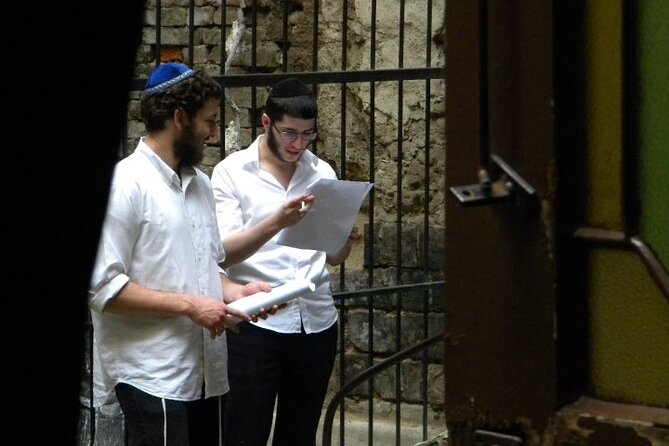
- A clear past-to-present narrative that connects 19th-century Jewish life to the Holocaust and what survives today
- Major synagogue exteriors plus Memorial Courtyard and cemetery views from outside the Great Synagogue area
- Ghetto history markers you can locate like the last piece of the ghetto wall near Gozsdu Udvar
- A walk that ends in a great onward-stroll zone at Szimpla Kert, where murals and pop-up culture keep the mood moving
- Small-group feel with a maximum of 25 people and time for questions
Where This Jewish District Tour Starts (and How It Really Flows)
This tour is a walking route through Budapest’s District VII Jewish Quarter, designed as an orientation more than a museum marathon. You meet at Erzsébet tér, right by the Ferris Wheel area, and the route ends at Szimpla Kert near Kazinczy Street.
The total time is about 1 hour 45 minutes, so the pacing is brisk but not frantic. Expect short stops for context, then quick repositioning along the streets. If you’ve got limited time in Budapest, this format helps you cover a lot of ground without feeling like you’re bouncing between separate attractions.
The route also matters. You start in a broad public square, then move closer to the religious landmarks, and finish in a place where the neighborhood’s modern creativity shows up in murals and street art. That last step is smart because it gives you a place to reorient and decide what to do next.
You can also read our reviews of more tours and experiences in Budapest.



Price and Value: Why a Low Cost Still Makes Sense Here
The listed price is $3.63 per person, and that’s the kind of number that makes you ask, ok, what’s actually included? The answer is: you’re paying for a guided walk and a booking fee that goes to administration. Your guides depend on donations at the end, which means the overall model is donation-supported even if you’ve already booked.
So the value is less about admission and more about meaningful context. There’s no paid museum entry here, and the synagogues are viewed from outside, which keeps the schedule tight and the cost low. If your goal is to understand how the Jewish Quarter fits into Budapest’s history, this can be a strong first stop.
One practical note: because the guides rely on donations, you’ll get best results if you treat the tour like a real conversation, not just a free lecture. Ask questions while you can—many guides handle them well, and the group format works best when you engage.
Erzsébet tér: Belle Époque Grandeur Meets Hard History
Your first stop is Erzsébet tér, with the guide meeting you at Elizabeth Square. This is where the tour sets tone and timeline. You’ll “sketch” the route and identify major sights as you go, then the story begins with the Jews of Hungary and focuses on the shift from the Belle Époque or Golden Age into catastrophe.
This stop is valuable because it gives you a big-picture map in your head. When you later see synagogues and streets with centuries of memory, you’ll recognize why they mattered. The guide also uses this opening to explain the overarching theme: not only religious life, but also social standing, safety, and how quickly things changed.
A small drawback if you’re sensitive to heavy topics: the tour history doesn’t tiptoe around the Holocaust-era destruction. It’s an educational walk, and the story turns darker. If that makes you pause, try to pace yourself and take a breath between stops—your feet will thank you.
Deák Ferenc Square: Gaudiopolis and the Protection Story
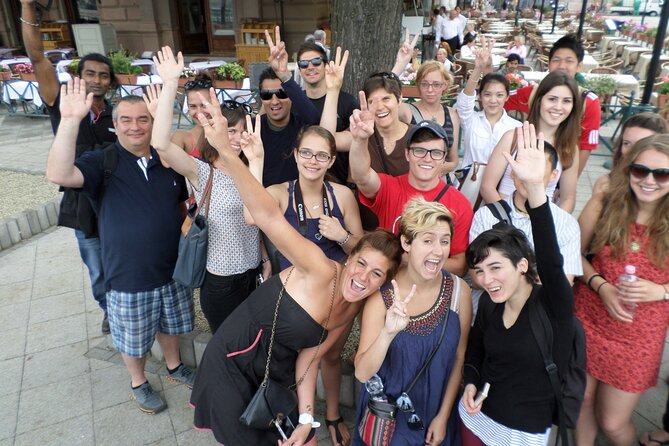
At Deák Ferenc Square, the guide brings in two key ideas. One is Gaudiopolis, described as the City of Joy in Latin. The other is the Schutzpass, credited with saving thousands of Jewish lives.
This is where the tour becomes more than architecture spotting. Instead of only pointing at buildings, you start hearing about how people lived and how, in certain moments, survival depended on protection and policy. That contrast between cultural vitality and the reality of danger helps the neighborhood history make sense, not just sound tragic.
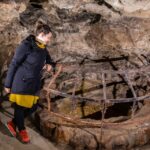
You’ll also see former medieval city wall ruins. The key point here is exclusion: those structures limited where Jewish people could trade inside city limits. It’s a reminder that discrimination wasn’t only about attitudes—it was built into the city’s physical rules.
Great / Central Synagogue Outside: Movements, Zionism, and Remembrance
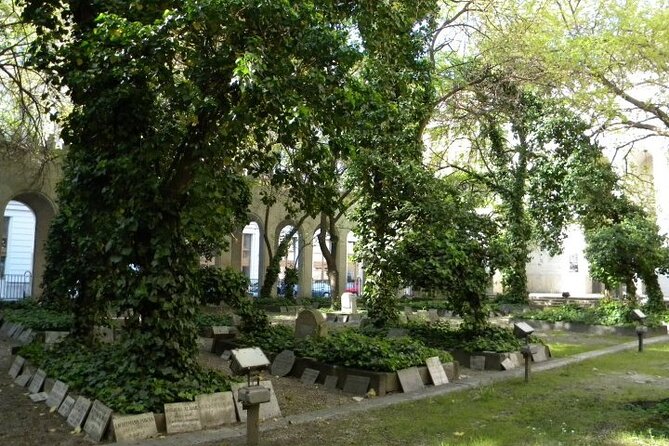
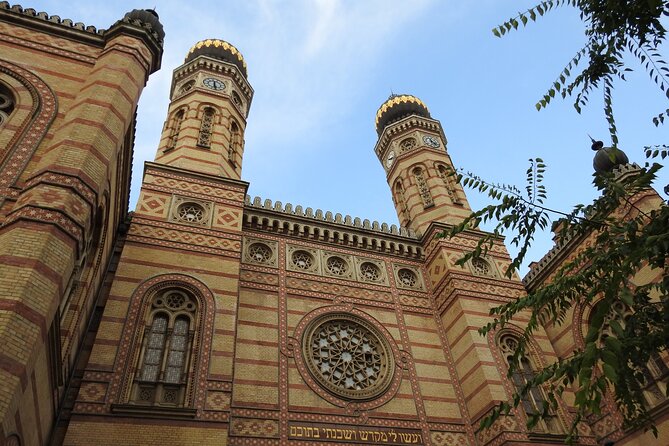
You’ll spend time at the Great / Central Synagogue area, the Nagy Zsinagóga, which the tour describes as the largest synagogue in Europe. The focus here is understanding the Jewish religious landscape in Budapest, including the Neologue and Orthodox movements and the rise of Zionism.
Important: the tour does not enter the synagogue. Instead, you view the Memorial Courtyard and the cemetery from outside. That still works, but it changes what you’ll experience. You’re not going inside for a tour of the interior spaces, so go in expecting exterior interpretation and remembrance sites visible from the perimeter.
Why I think this stop is strong for first-timers: the guide explains what you’re looking at before you move on. Even if you’re not religious, you can still grasp how different movements shaped community life, and how public life expressed identity in a city like Budapest.



Rumbach Street Synagogue: Murals, Restoration, and City Art
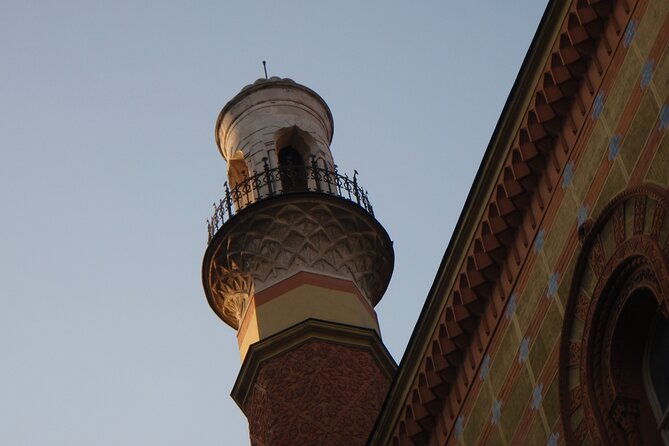
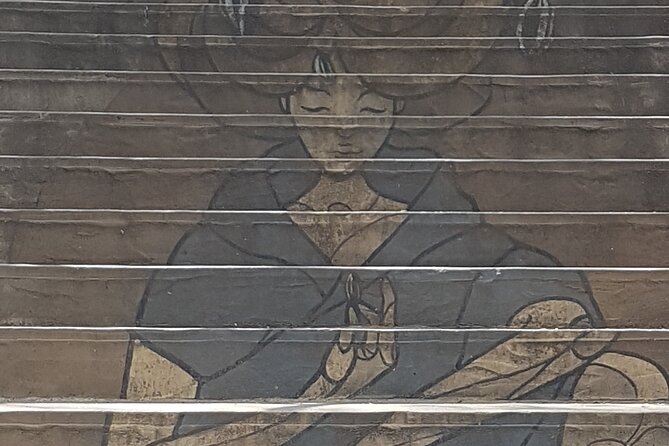
Next comes the Rumbach Street Synagogue. The tour highlights its restoration and the surrounding street-level art, including murals and urban street art. Like the other synagogue stops, you do not enter this building; it’s an exterior learning moment.
This stop is a good example of why the walking format helps. You get religious-site context, then you immediately see how the neighborhood’s walls act like archives—layers of paint and design sitting right next to historic place memory. That contrast is often what people remember later when they walk around on their own.
A practical consideration: because this is about murals and public surfaces, you’ll get more out of it if you slow down for photos only after listening. If you spend the first minute filming, you might miss the little “why this matters” explanation.
Gozsdu Udvar: Entertainment, Gastronomy, Culture, and a Wall Segment
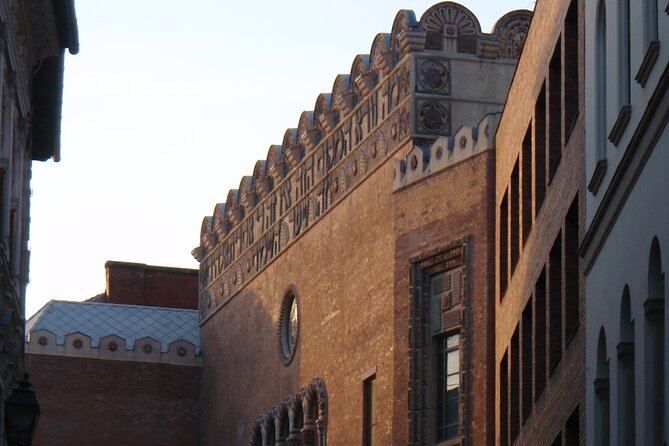
You’ll pass by Gozsdu Passage (the tour calls it Gozsdu Passage and Gozsdu Udvar) and connect past and present. The idea is simple: the passage is now known for entertainment, gastronomy, and culture, but it still sits within a neighborhood shaped by the ghetto period.
One standout detail is that you’ll also see the last piece of the ghetto wall. Even if you’ve read about the ghetto elsewhere, seeing a surviving remnant in the street layout makes the history feel anchored in real geography.
This is also a natural moment for a quick mood check. Around Gozsdu, the atmosphere can be lively compared with the seriousness of the history being discussed. For me, that contrast is part of Budapest’s story: life doesn’t pause, even when the past is heavy. Just be sure you’re emotionally ready for that kind of juxtaposition.
Kazinczy Street Synagogue: Kosher Food and Ritual Bath Notes

At Kazinczy Street Synagogue, the tour focuses on the Orthodox community linked with 50 to 60 families. You’ll also hear about kosher food and the Jewish ritual bath—the kinds of details that make daily life tangible, not abstract.
Again, no entry. You’ll stop just outside and learn from the street level context. That’s a limitation, but it’s also a realistic fit for the schedule. You get a lot of content in 1 hour 45 minutes, and this stop keeps the tour from turning into only architecture and names.
If you like practical cultural details—what people ate, how ritual needs shaped routines—this is one of the places where you’ll feel you’re learning how the community actually functioned.
Szimpla Kert Ending: Murals, Pop-Up Exhibitions, and a Place to Reset
The tour continues through more murals and street art, then ends at Szimpla Kert, described as a ruin bar. You’ll see additional urban visuals and get a final orientation.
This stop is useful because it helps you transition from history mode to explore mode. A ruin bar isn’t a memorial, but it sits in the same streets where the past is part of everyday life. When the tour ends here, you’re not stranded—you’ve got a sensible place to regroup and plan what to see next.
The tour also notes pop up exhibitions in this area. That matters if you like grabbing small, local culture moments that don’t require another ticket or long transport.
The Guides: Why Friendly, Organized Explanations Make the Walk Work
The biggest recurring praise is about the guides—how they explain, how they handle questions, and how they keep the group moving with care. Names you’ll see connected with this walk include Ester/Eszter, Gary, Dora, Edith, Christine, Judith, Edi, David, and Jude.
What I take from that pattern is this: a great guide doesn’t just list facts. They turn the route into a story. Several guides are described as professional, friendly, and focused on answering questions, and that matters because the topic has layers. You need context to make names and movements connect to what you’re seeing on the sidewalk.
There’s also an emphasis on structure. Many guides organize the narrative so you start with arrivals and community growth, then move toward destruction, then finally toward what exists now. That’s a lot to cover in 90 minutes, so the organization is a real advantage.
What Might Go Wrong (and How to Prepare)
This walk is mostly outdoors and includes standing and listening at multiple stops. One reason it feels “heavier” than some Budapest walking tours is that the material addresses the Holocaust-era destruction of Hungarian Jews. If you prefer lighter topics, choose a different walk or go in knowing the emotional tone.
Also, this tour is described as not entering synagogues. That suits the schedule, but it can disappoint if you expected interior visits. If inside access is your priority, check separate options for synagogue openings and plan extra time.
Language can be another factor. The English offering is listed, but one comment in the provided info notes that some guests had difficulty because of a strong Hungarian accent. If you know you struggle with certain accents, bring patience and ask follow-up questions when you can.
Finally, like any walking tour with multiple stops, group dynamics can vary. The tour caps at 25 travelers, which helps. Still, if you’re very slow-walking, show up early so you can get into the pace comfortably.
Practical Tips Before You Go
First, wear shoes you can stand in. This route is short on paper, but the learning happens while you stop and listen.
Second, come with one question ready. For example: How did Jewish communities get restricted in medieval city life? Or how did organizations like the Neologue and Orthodox movements shape public identity? If you ask, the guide can often tie your question directly back to what you’re looking at.
Third, if you want more to do after the tour, end at Szimpla Kert and don’t rush away. The tour ending here is meant as orientation, and it’s a good launching point for murals, cafes, and the kind of District VII wandering that works best once you understand the geography.
Should You Book This Budapest Jewish District Tour?
Book it if you want a fast, guided way to understand the past and present of Budapest’s Jewish Quarter, including big synagogue sights, ghetto history markers, and everyday-life cultural notes. It’s also a good choice if you’re first in town and you want a route you can later repeat on your own with better context.
Skip it or add something else if you specifically want to go inside synagogues. This walk doesn’t include interior entrances, and some visitors are happiest when they plan a separate time for that.
If you’re okay with walking, comfortable with history that turns serious, and you like guides who organize the story clearly, this tour is a strong value. At a low per-person cost with a donation-based guide model, you’re mostly paying for interpretation—and when the guide clicks, it makes the whole district start to make sense quickly.
FAQ
What is the duration of the Budapest Jewish District tour?
It runs for about 1 hour 45 minutes.
Does the tour enter the synagogues?
No. You view key synagogues and related areas from outside, including the Memorial Courtyard and cemetery from outside the Great Synagogue.
Where do you meet, and where does the tour end?
You meet at the Ferris Wheel of Budapest near Erzsébet tér. The tour ends at Szimpla Kert on Kazinczy u. 14.
Is the tour only for Jewish history, or does it cover present-day life too?
It’s framed as past and present. You’ll hear about the community in historical context and what the neighborhood looks like today, including modern street art and places like Gozsdu Udvar and Szimpla Kert.
What language is the tour offered in?
The tour is offered in English.
How many people are in the group?
The tour has a maximum of 25 travelers. Service animals are allowed.