REVIEW · BUDAPEST
Budapest Dohany, Heroes’, Rumbach synagogues & Jewish Ghetto Tour
Book on Viator →Operated by Hidden Treasure Tours · Bookable on Viator
Synagogues and memorials, close together. This guided walk threads through Budapest Jewish Quarter sites tied to the Neologue community, ghetto life, and the Holocaust, with visits that feel grounded in place. I like that the schedule balances architecture, street-level history, and human stories, especially around the Great Synagogue and the memorial park. One drawback: the timing is tight, so you won’t have long to wander off, grab snacks, or linger for photos.
What makes this experience work is the structure: you start at the Great Synagogue, move into Holocaust remembrance, then shift to two major synagogue stops that show how Jewish life in Budapest changed over time. I also like that the tour covers everyday street names you’ll keep seeing later, like Király Street and Dob Street, so it’s easier to connect what you learn with what you see on your own. Still, plan for a short-feet pace: even though the tour is only about 2 hours 20 minutes, it packs multiple entrances, transitions, and memorial stops into that window.
In This Review
- Key highlights I’d prioritize
- Why this tour fits Budapest’s Jewish Quarter so well
- Great / Central Synagogue: Neologue Budapest in brick, stone, and sound
- Raoul Wallenberg Holocaust Memorial Park: remembrance with names and places
- Rumbach Street Synagogue: Otto Wagner’s Moorish design, reopened
- Király Street and Gozsdu Udvar: reading Jewish life through streets, not just buildings
- Carl Lutz Memorial, Spinoza Szinház, and a quick flodni moment
- Dob Street and Kazinczy Street: Orthodox life and Secession architecture (with a ticket caveat)
- How the guide shapes the experience on heavy-site tours
- Timing, dress code, and what to plan for on your feet
- Value check: is $63.52 worth it?
- Should you book this Budapest Jewish Quarter tour?
- FAQ
- What’s the duration of the Budapest Jewish Quarter tour?
- How much does the tour cost?
- Which language is offered?
- What are the main places you visit?
- Is entry included for all synagogues?
- Is there a dress code?
- Can I cancel if plans change?
- Does weather affect the tour?
Key highlights I’d prioritize
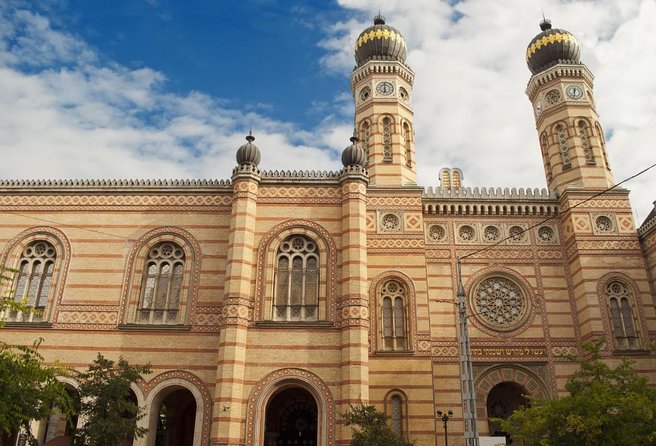
- Great Synagogue interior time with ticket included, plus context on Hungary’s Neologue Jewry
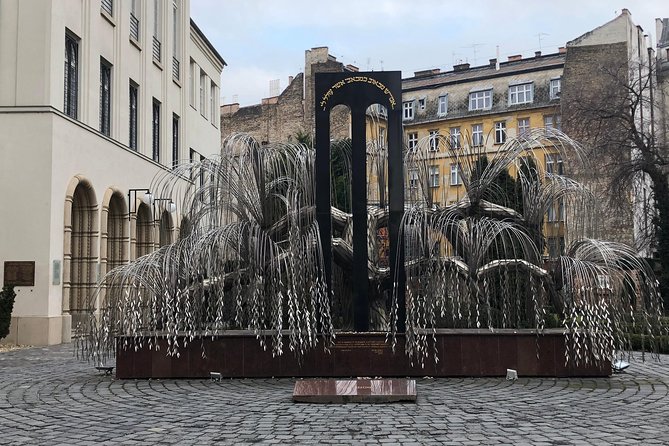
- Raoul Wallenberg Memorial Park visits, including the Emmanuel Tree of Life Memorial
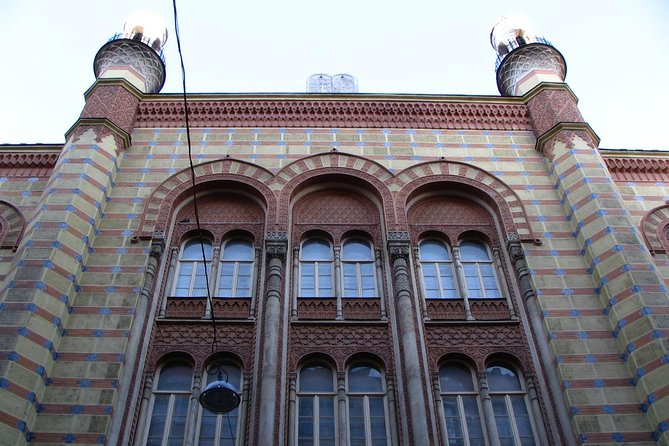
- Rumbach Street Synagogue visit (about 45 minutes) with entry included and a chance to see Otto Wagner’s design
- Királó Street and Dob Street stops that explain how commerce and community reshaped the area
- Carl Lutz Memorial quick stop, plus nearby cultural cues like Spinoza Szinház
- Kosher flodni sight stop so you know what you’re looking at, even if you can’t linger for sweets
Why this tour fits Budapest’s Jewish Quarter so well
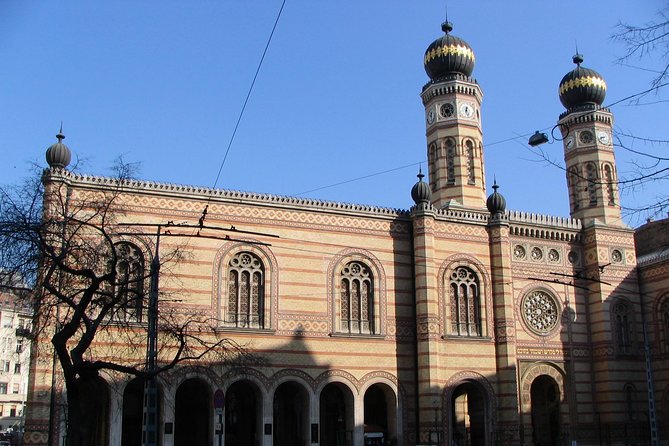
Budapest’s Jewish Quarter can feel like a mix of history and nightlife, sometimes in the same block. This tour helps you read that mix. You’re not only looking at buildings—you’re learning why those buildings exist in that style, and how the communities behind them evolved.
The pacing is also practical. A group size capped at 35 keeps it manageable, and the walking route is designed to connect sites without making you zig-zag across the city. If you want a fast way to build a mental map—especially before you try to explore the area alone—this is a strong option.
One more point: the tour is offered in English and runs about 2 hours 20 minutes. That makes it realistic for most sightseeing days, even if you’re also visiting other parts of Budapest the same day.
You can also read our reviews of more tours and experiences in Budapest.


Great / Central Synagogue: Neologue Budapest in brick, stone, and sound
Your first stop is the Great / Central Synagogue (Nagy Zsinagóga), the largest Jewish temple of Europe. You get time to go inside (about 30 minutes, with admission included) and to understand what you’re looking at.
What I like here is the tour’s focus on more than landmark status. You learn about the Hungarian Neologue Jewish community and how Hungarian Jewry had internal differences—different ways of practicing, organizing, and expressing identity. That matters because Budapest’s synagogue landscape isn’t one-style and one-story. It’s a set of different “chapters,” stacked close together.
The building itself is part of the lesson. You’re also directed to notice the organ tradition—especially the detail that the organ was played by Franz Liszt. It’s one of those moments where a famous non-Jewish name helps you understand the synagogue’s cultural weight in Hungary.
Dress code is enforced at the synagogue level. You’ll want shoulders covered and clothing that reaches the knee; cover is available for purchase on the spot, and men can get a head cover at entry. If you’re planning this on a day you’re in shorts and a tank top, swap first, or be ready to buy/borrow covers.
Possible drawback: the Great Synagogue interior is the kind of place you’ll want to study closely. With only about 30 minutes, you’ll need to be choosy about what you look at first—architecture details or the memorial/context areas the guide points out.
Raoul Wallenberg Holocaust Memorial Park: remembrance with names and places
After the synagogue, the tour shifts tone. You’ll visit the Raoul Wallenberg Holocaust Memorial Park for about 20 minutes, also with admission included. This section is where Budapest’s ghetto history turns from architectural context into something more urgent and personal.
Key stops here include:
- The Emmanuel Tree of Life Memorial
- The Holocaust Cemetery on the territory of the Budapest ghetto, where more than 2,000 victims are buried
You get the story behind the memorials and why specific people are remembered. The tour highlights Righteous Gentiles—people who saved tens of thousands of Hungarian Jews while risking their own lives. This part is especially meaningful when you hear it paced slowly, with time to sit with what you’re seeing.
I also appreciate that this stop doesn’t try to be performative. It’s set up as a guided route through memorial elements, not just a quick photo stop. If you’re sensitive to heavy subjects, it’s still clear that the guide is aiming for respect.
Practical consideration: this is a standing-and-walking memorial environment. Wear shoes you trust. And if the weather is cold or rainy, you’ll feel it more here than inside the synagogue.
Rumbach Street Synagogue: Otto Wagner’s Moorish design, reopened
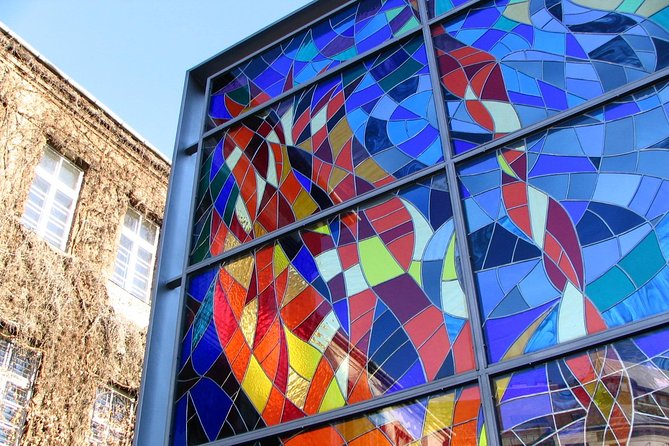
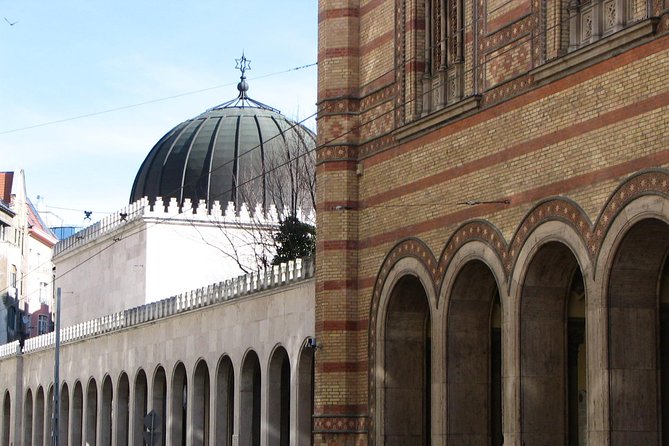
Next comes one of the most rewarding shifts on the whole route: the Rumbach Street Synagogue. You get about 45 minutes and admission included, which is a generous slot compared to many city walks.
This synagogue is tied to the Viennese architect Otto Wagner and dates to 1872. The building is described as a Moorish architectural masterpiece, and the tour treats it like a discovery you might miss if you’re only following the “famous synagogue” map.
It also recently reopened after years of renovations, which matters because you’re not just seeing a “historic shell.” You’re seeing a restored space that can be read as architecture with a purpose: design that signals identity, community pride, and continuity.
If you like architecture, you’ll probably enjoy the extra time here. With 45 minutes, you can actually look around instead of rushing through an entry line and then vanishing down the street.
Potential drawback: the “hidden treasure” feel works best when the group stays together. If you’re the kind of person who needs long moments alone, you may feel a little pressure to keep up with the group’s pace.
Király Street and Gozsdu Udvar: reading Jewish life through streets, not just buildings
After the synagogue visits, the tour does something smart: it returns to street geography.
You’ll walk down Király Street, historically the high street of Pest in the 18th and early 19th century. The guide connects that street’s commercial role to the growth of Jewish life there—so later, when you see stores and nightlife activity, you can understand why the area became a center in the first place.
Then you’ll spend a short stop at Gozsdu Udvar, described as the most colorful spot in the Jewish district. The tour frames it as a place that once housed kosher salami stores, food stores, and apartments—and now hosts entertainment, cultural activity, and chances to eat or drink with friends.
This isn’t about making the past feel trendy. It’s about showing how spaces repurpose over time. You’ll pick up a better sense of why the district can look festive today without losing the heavy context you just heard about.
Tip for you: treat the short stops as orientation markers. If you want longer time, use what the guide shows you and come back later on your own for a slower food break.

Carl Lutz Memorial, Spinoza Szinház, and a quick flodni moment
This part of the walk is short, but it adds emotional texture and local flavor.
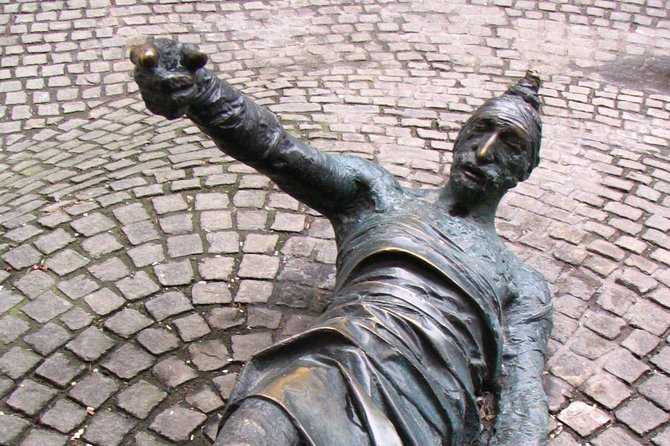
You’ll stop at the Carl Lutz Memorial, a tribute to another Righteous Gentile who helped save thousands of Hungarian Jews during the Holocaust. Even when it’s only a few minutes, it works because you’ve just come from the memorial park context.
Next is Spinoza Szinház, named after the Jewish Dutch philosopher (Portuguese Sephardi origin) who was active in the Enlightenment era in the 17th century. This is where you see the district’s cultural continuity—names and ideas that traveled across time, not just tragedy.
And then you’ll get a taste of Hungarian Jewish food culture through a stop aimed at flodni, one of the best-known kosher Jewish cakes in Budapest. The tour doesn’t promise a full dessert detour. In real life, that means you might only get a quick look or brief chance to buy something on the way through.
Consideration: if you’re strongly motivated by food stops, plan your expectations. The schedule is built around sights, not long tastings.
Dob Street and Kazinczy Street: Orthodox life and Secession architecture (with a ticket caveat)
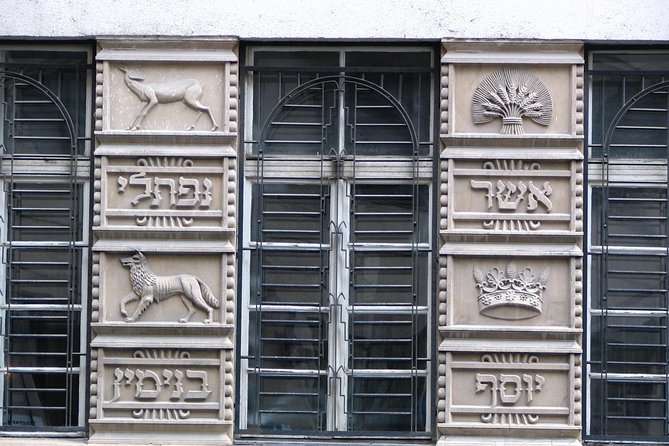
You’ll walk to Dob Street, running parallel to Király Street and described as central to the Jewish district of Pest and in the center of the Budapest ghetto. Today, it’s tied again to the revival of Jewish life and Hungarian Jewish orthodoxy.
Then the tour goes to Kazinczy Street Synagogue. The area is also known as Budapest’s cultural street, with ruin pubs nearby as well as an Orthodox Jewish center that includes a synagogue, mikveh, kosher restaurants and cafes, schools, and kosher food shopping.
The synagogue building itself is described through its early Art Nouveau, known locally as Secession architecture, and it serves the Hungarian traditional Orthodox Jewish community.
One practical note: admission here is not included in the tour price. So if you want to go in, you’ll need to plan for that extra ticket.
How the guide shapes the experience on heavy-site tours
On Holocaust-related routes, the guide makes or breaks the day. In the feedback you provided, the strongest pattern is that the guides bring a mix of structure and humanity—clear explanations, plus personal stories that help the names and dates land.
Guides such as Milan, David, Micky/Micki, and Daniel are mentioned in the experience feedback as being especially effective at:
- explaining the differences between synagogue types and what they represent
- answering questions during the walk
- using humor appropriately even when discussing very heavy material
- adjusting the pacing based on what the group needs
If you’re going into this with curiosity and also a little emotion, you’ll likely appreciate that tone. It’s not just facts. You’re guided to look at buildings and memorials as part of a human story that affected real people.
Timing, dress code, and what to plan for on your feet
Here’s what to plan for so the day stays pleasant:
- Shoes: You’ll be walking on city streets and spending time in memorial areas. Comfortable shoes are a must.
- Dress code: Shoulders covered. Clothing must reach the knee or be covered before entering. Covers are available for purchase; men can get head covers upon entry.
- Group logistics: Maximum 35 people. That keeps it social, not crowded.
- Bathroom timing: There may be a bathroom break built into the schedule (it’s been noted as part of the experience flow).
- Synagogue closures: Synagogues can close temporarily without warning. If one stop is affected, the guide offers alternative visiting time. If all are closed, alternative dates/hours or full refunds may be offered.
Also, the tour says it works best in good weather. If it gets canceled due to poor weather, you’ll typically get a different date or a full refund.
Value check: is $63.52 worth it?
At $63.52 per person for about 2 hours 20 minutes, the price is mostly justified by what you’re getting access to—especially synagogue entry times. In this tour, admission is included for the Great Synagogue, the memorial park, and the Rumbach Street Synagogue.
You’re also paying for interpretation: not just reading plaques on your own, but understanding why each site exists and how the Budapest Jewish community differed over time. The guide’s role is especially important because the history here has a lot of layers—religious differences, architecture styles, and Holocaust-era events all stacked in a small area.
Where you might feel the price pinch is if you’re hoping for long free time to explore independently, or if you strongly want to add extra museums/food stops beyond what’s scheduled. This is a guided learning route, not a open-ended wandering day.
Should you book this Budapest Jewish Quarter tour?
I’d book it if you want a structured, respectful introduction to Budapest Jewish history without spending hours researching street by street. It’s especially strong for you if:
- you like synagogue architecture and want context, not just sightseeing photos
- you want a clear route through Holocaust memorial sites
- you value a guide who can handle heavy topics with care and clarity
I would think twice if you:
- need long stretches of personal browsing time at each stop
- are easily overwhelmed by Holocaust remembrance and prefer a lighter, purely cultural walk
- plan to do lots of shopping or sit-down meals during the tour window
If your goal is to get your bearings fast in the Jewish Quarter—with a real understanding of what you’re seeing—this is a solid pick.
FAQ
What’s the duration of the Budapest Jewish Quarter tour?
The tour runs about 2 hours 20 minutes.
How much does the tour cost?
The price listed is $63.52 per person.
Which language is offered?
The tour is offered in English.
What are the main places you visit?
You visit the Great / Central Synagogue, Raoul Wallenberg Holocaust Memorial Park, Rumbach Street Synagogue, and you also walk past or stop at places including Király Street, Gozsdu Udvar, Carl Lutz Memorial, Spinoza Szinház, Dob Street, and Kazinczy Street Synagogue.
Is entry included for all synagogues?
Admission is included for the Great / Central Synagogue, Raoul Wallenberg Holocaust Memorial Park, and Rumbach Street Synagogue. Admission for Kazinczy Street Synagogue is not included.
Is there a dress code?
Yes. Shoulders must be covered, and clothing must reach the knee or be covered before entering. Covers are available for purchase on the spot, and men can get a head cover on entry.
Can I cancel if plans change?
Free cancellation is available up to 24 hours in advance for a full refund.
Does weather affect the tour?
Yes. The experience requires good weather. If it’s canceled due to poor weather, you’ll be offered a different date or a full refund.