Budapest clicks into place fast. I love how the guide connects major moments in Hungarian history to landmarks you can actually see, from early powers to the Austro-Hungarian Empire and the 20th century. I also like the smooth arc from the outside views of big monuments to the 1896 Metro ride that links the city’s eras. One drawback: several stops are explained from the outside or list tickets as not included, so you should plan on mostly observing rather than fully touring everything inside.
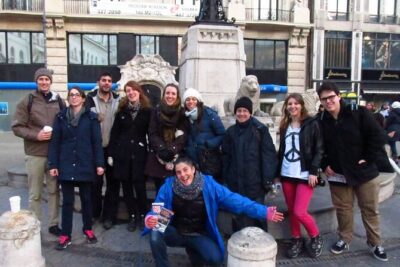
This is a small-group walk with a max of 30 people, starting at 10:30 am at Kossuth Lajos tér. You’ll receive a mobile ticket, and with your payment you also get a Metro ticket included. At the end, you pay the guide what you consider appropriate, which makes it feel more like a conversation tour than a rigid museum circuit.
Expect a classic Budapest mix of grand architecture and bold symbols, with a required stop for hot springs and a finish at Vajdahunyad Castle, nicknamed Dracula Castle. The route is built for first-timers who want context, not just photos. Go with good weather if you can, since this experience needs it to run as planned.
In This Review
- Key things to know before you go
- Price and logistics: what you’re really paying for
- Parliament Square: why the outside view still hits hard
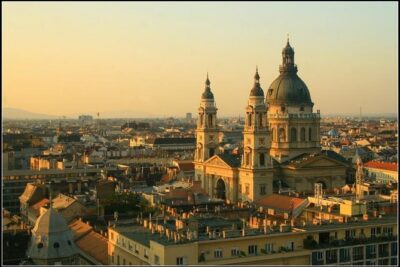
- St. Stephen’s Basilica: learning the building before you judge it
- Andrássy Avenue: world-heritage glamour with real context
- The State Opera lobby: architecture you can read
- Metro Line 1 to Heroes’ Square: the 1896 ride
- Varosliget City Park and Vajdahunyad Castle: legends with legs
- The Trianon Memorial and the Eternal Flame: symbolism with weight
- Hot springs stop: bring the right mood and the right gear
- Guide quality: the Rafa factor
- Who should book this and who should skip it
- Should you book this Spanish Budapest Essentials tour?
- FAQ
- FAQ
- What language is this Free Tour Budapest Essentials in?
- Where do I meet the guide and where does the tour end?
- What time does the tour start and how long is it?
- How many people are in the group?
- How much does it cost, and what does my payment include?
- Is admission included for all stops?
- Does the tour ride the 1896 Metro?
- What about the hot springs part?
- What happens if the weather is bad and the tour is canceled?
Key things to know before you go
- Outside-first monument stories at Parliament and St. Stephen’s Basilica so you still understand what you’re looking at
- Andrássy Avenue + State Opera lobby for world-heritage-level sights without spending hours figuring it out
- 1896 Metro ride that turns a simple transfer into a time-travel moment
- Heroes’ Square symbolism explained in a way that makes the statues and layout feel logical
- Varosliget City Park walk that breaks up the big monuments with a calmer pace
- Trianon Memorial and the Eternal Flame where included entry helps you take the meaning seriously
Price and logistics: what you’re really paying for
This tour lists a low set price of $3.43 per person, and that payment does real work. It secures your reservation and includes the Metro ticket for the historic ride portion. On top of that, the format is tip-based at the end, so your guide’s storytelling matters in a practical way.
Plan for about 2 hours 40 minutes total. That’s long enough to cover multiple districts on foot and by Metro, but short enough that you’re not stuck all day doing only one thing. Also note the schedule pattern: it’s commonly booked around 16 days in advance, so if your trip dates are firm, I’d rather reserve early than gamble.
The tour starts at Kossuth Lajos tér 10 (1055) and ends at Vajdahunyad Castle. You’ll get a mobile ticket, and the meeting point is near public transportation, which is helpful in Budapest where walking and transit are both part of the game plan. Service animals are allowed, too, based on the provided info.
You can also read our reviews of more tours and experiences in Budapest.



Parliament Square: why the outside view still hits hard
The tour opens at the Hungarian Parliament Building, right by Kossuth Lajos Square. You do not go inside here. Instead, the guide sets the historical context and points out secrets and meaning from the outside, including the key monuments around the square.
That approach can be smarter than it sounds. Parliament is a landmark where the details matter: the architecture, the political story around it, and how Hungary’s eras show up in the way the building is presented. You get the framework first, then you’re less likely to treat the place like just another grand government structure.
If your goal is photos, you’ll still get them. If your goal is understanding, you’ll also get that foundation. Just remember the entry piece is not part of this stop, so if you were hoping for a full interior visit, you’ll need to plan that separately.
St. Stephen’s Basilica: learning the building before you judge it
Next comes St. Stephen’s Basilica (Szent István Bazilika). The guide explains the building’s history, but the provided info says admission tickets are not included for this stop. That means you can still take in the exterior presence and learn the context, while any optional entry would be extra.
Basilicas can be tricky on a first visit. From street level, it’s easy to admire the scale and miss the story. This stop helps with that by giving you the background so your eyes know what to look for, even if you’re not going inside.
If you want to go up or enter, check on the spot and decide based on time and energy. If you don’t, you can still leave understanding why the basilica matters in Hungarian identity.
Andrássy Avenue: world-heritage glamour with real context
Then you walk a section of Andrássy Avenue, listed as part of a world heritage site. This is one of those Budapest stretches where the streetscape feels like a statement. The tour focuses on the big idea: how this avenue fits into the city’s image and past.
Andrássy Avenue is also a useful breather between major monument clusters. It’s not just a corridor for transit. The guide’s narration helps you see it as a deliberate urban creation, not random scenery.
Time here is short (about 10 minutes), so I’d treat it as a guided orientation. If you want to linger later on your own, you’ll know what you’re looking for, and you won’t waste your first view guessing what matters.
The State Opera lobby: architecture you can read
The route continues to the Hungarian State Opera House (Magyar Állami Operaház). Here, the tour enjoys the building and enters the lobby, while tickets are listed as free for this part. You’re not doing a full opera-season deep dive, but you do get inside the lobby experience.
Opera houses reward attention to design. Columns, layout, and decorative choices all create a mood, and that mood usually traces back to politics and culture. The guide’s story here is meant to surprise you, which is a good sign: you’re likely to hear what makes the building more than impressive-looking walls.
This is also a good stop if you like architecture but don’t want to plan a separate guided visit. You get a taste of the interior space, then you move on.


Metro Line 1 to Heroes’ Square: the 1896 ride
A standout part is the Metro 1 segment, described as the 1896 metro ride. You’re traveling back in time, and the important practical detail is that the Metro ticket is included with your payment. That removes one friction point that often ruins a good sightseeing plan: figuring out which ticket you need and whether you’re in the right line.
You then reach Heroes’ Square, one of the most important squares in Hungary. The guide reveals secrets of the symbolism, which is exactly what makes this place work. Heroes’ Square can look like a big postcard. With narration, it becomes a visual argument about history and identity.
The stop is about 15 minutes, which is enough time for understanding if you’re paying attention. If you want to read every statue more slowly, you might do that after the tour when you’re not walking against the group pace.
Varosliget City Park and Vajdahunyad Castle: legends with legs
After Heroes’ Square, you walk through Varosliget/City Park, often described as the green lung of Budapest. The value here is balance. You’ve seen heavy symbolism in the square, and now you get a calmer stretch of walking where the city feels less ceremonial and more human.
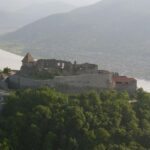
The tour then ends at Vajdahunyad Castle, which is explained as a fairy-tale environment and linked to Dracula legends. You’ll likely hear why Dracula has a connection to Budapest, and that’s part of what makes this stop so fun: it pulls cultural myth into the physical place.
This is also where you should slow down for a minute and take the whole scene in. The castle looks like something from a storybook, and the best use of your time is letting the guide’s explanation make the setting make sense. When the explanation lands, you get a photo that feels earned, not random.
The Trianon Memorial and the Eternal Flame: symbolism with weight
Two stops carry included entry and real emotional gravity: Trianon emlékmű and Lajos Batthyányi Eternal Flame.
At the Trianon memorial, you enter and learn the symbolism, including why it’s controversial. This matters because Trianon isn’t a small footnote in European history. It’s the kind of event where the physical memorial becomes a political statement, not just a stone structure.
Then you visit the Eternal Flame memorial for the dead of the 1848 revolution. The tour explains why it’s important for the Hungarian population. When a tour gives you that why, you understand why the site demands respect and why people treat it as more than a stop on a checklist.
These are included-entry parts, so you’re not doing guesswork. If you care about how history shapes landscapes and public memory, these two stops are the heart of the route.
Hot springs stop: bring the right mood and the right gear
The itinerary notes that going to some hot springs is mandatory in this city, and the guide tells you why and answers doubts. It also asks if you’re bringing your swimsuit, which is the clearest clue about how physical this part might be for you.
Here’s the practical way to handle it: pack a swimsuit if you want the option to fully participate. If you’re not planning on getting in the water, still bring what you need to stay comfortable, because the stop is presented as an essential part of understanding Budapest, not an optional detour.
Since the specific bath name isn’t provided in the info you shared, don’t assume you’ll be at one exact complex. Treat the hot springs portion as a highlight built around the city’s famous thermal culture, guided by explanation.
Guide quality: the Rafa factor
The tour earns a strong overall rating, and one name pops up clearly in the feedback: Rafa. People describe the guide as excellent and the tour as fun and entertaining, with recommendations that help you plan the rest of your stay. That’s a big deal for a short itinerary. A good guide doesn’t just tell stories on the street. They help you decide what to do after you leave.
Based on that, I’d pay attention to how the guide talks through the symbolism parts like Heroes’ Square and the memorials. If you like tours where meaning is part of the experience, this one has the ingredients to deliver.
Who should book this and who should skip it
This fits best if you’re a first-timer who wants structure plus context in a limited time window. If you’re the kind of person who reads signs only after someone explains why they matter, you’ll like this format. It’s also good if you enjoy a mix: major landmarks, a historic Metro ride, park time, and at least a taste of the thermal bath culture.
Skip it if you want a fully ticketed, inside-everything day. Parliament is explained from outside, St. Stephen’s Basilica is listed as not included for admission, and you’re not here for a slow museum-style day. Also consider your stamina. The route mixes walking and transit, so if you prefer very relaxed pacing, you might want something shorter.
The upside is that you finish with a strong sense of what to prioritize next. You’ll know where to return for a deeper look, and you’ll understand why people care about the memorials, not just what they look like.
Should you book this Spanish Budapest Essentials tour?
Yes, if you want to get oriented fast and you like story-based sightseeing tied to real places. The value is strong for a first pass because you pay a small fixed price, get a Metro ticket included, and then your guide’s explanation shapes how every landmark lands for you.
I’d book it especially if your trip is your first time in Budapest and you want a guided backbone before you start exploring on your own. If you only want the biggest interiors with minimal walking, then you should consider another option. But if you’re happy to learn as you look, this is one of the most practical ways to start.
FAQ
FAQ
What language is this Free Tour Budapest Essentials in?
The tour is provided in Spanish.
Where do I meet the guide and where does the tour end?
The meeting point is Budapest, Kossuth Lajos tér 10, 1055 Hungary. The tour ends at Vajdahunyad Castle, Budapest, Vajdahunyad stny., 1146 Hungary.
What time does the tour start and how long is it?
The start time is 10:30 am, and the duration is about 2 hours 40 minutes.
How many people are in the group?
The tour has a maximum of 30 travelers.
How much does it cost, and what does my payment include?
The price is listed as $3.43 per person. With your payment, you secure your reservation and have the Metro ticket included.
Is admission included for all stops?
No. Some stops list admission tickets as not included, while others list tickets as free or included. For example, Parliament is explained from the outside, and St. Stephen’s Basilica lists admission as not included.
Does the tour ride the 1896 Metro?
Yes. The tour includes the Metro 1 ride described as the 1896 Metro, and the Metro ticket is included with your payment.
What about the hot springs part?
The tour includes a stop at hot springs as a mandatory part of the experience, and the information specifically suggests bringing a swimsuit.
What happens if the weather is bad and the tour is canceled?
The experience requires good weather. If it’s canceled due to poor weather, you’ll be offered a different date or a full refund. You can cancel up to 24 hours in advance for a full refund.