REVIEW · BUDAPEST
Explore Budapest from the Local’s Perspective – Public Transportation Tour
Book on Viator →Operated by Fungarian · Bookable on Viator
Budapest gets easier fast. This 3-hour public transportation tour turns major sights into practical routes, and I like that you get a 24-hour transit pass plus a guide who teaches you how to ride with confidence. The one drawback: it moves at a city pace, so you get great orientation, not deep time in museums or thermal baths.
From Andrássy Avenue’s grand buildings to the junctions around Deák Ferenc tér, the whole point is learning Budapest the way locals do: by tram, metro, and frequent connections. The guide support is real too. In one set of Q&A, the team’s Miklós specifically emphasized making the transport system feel usable on day one, not stressful.
If you want a first-day plan that helps you stop guessing and start going, this is an excellent fit. Just don’t plan on squeezing in extra stops afterward without checking how your legs feel—Budapest walking adds up quickly.
In This Review
- Key things you’ll notice on this route
- Price and value: what $118.58 actually buys you
- How the 3-hour format helps you start strong (and not get stuck)
- Andrássy Avenue to Heroes’ Square: monuments you can navigate next
- City Park sights: Vajdahunyad Castle and the art pair facing Heroes’ Square
- From Margaret Bridge to the tram ring: learning Nagykörút like a pro
- Nyugati and Deák Ferenc tér: the transfer points that run the city
- Buda Castle area and Gellért Hill: choosing your viewpoint route
- Kálvin Square wrap-up: finishing at another practical hub
- Who should book this tour (and who might not)
- Should you book this Budapest public transportation tour?
- FAQ
- How long is the Budapest public transportation tour?
- What language is the tour offered in?
- Is pickup from my accommodation included?
- Does the tour include a public transportation pass?
- What’s included with the tour besides the guide?
- Is food and drinks included?
- Is this tour private or group-based?
- Are children allowed?
- Is free cancellation available?
- Are service animals allowed?
Key things you’ll notice on this route
- A real 24-hour transit pass is included, so you can keep using what you learn right after the tour.
- Nagykörút tram lines and the city’s big transfer points are shown in action, with frequent service patterns you can rely on.
- UNESCO-listed Andrássy Avenue sets the tone early, then you connect to monuments and river crossings.
- Heroes’ Square + surrounding art buildings give you landmark scale without needing a full museum day.
- Buda Castle area vs. Gellért Hill: you get a choice-style approach depending on how your route is shaped.
- Pickup from your accommodation and a private-group format keep the start simple.
Price and value: what $118.58 actually buys you
At $118.58 per person for about 3 hours, the value comes from bundling three things that cost money or time on your own: a guide, a 24-hour city public transport pass, and step-by-step help figuring out how to use the system.
You also get useful add-ons that make the pass easier to use:
- a notebook and a souvenir pen
- a map showing the route
- a rider’s booklet, basically a manual for getting around Budapest public transport
- a mobile ticket for the included pass
If you’re staying more than a day or two and you plan to ride more than a handful of times, that pass can make the whole trip feel cheaper than it first looks. And because the tour is private (only your group), you’re less likely to be stuck “waiting for the slowest person” while the clock runs.
You can also read our reviews of more tours and experiences in Budapest.



How the 3-hour format helps you start strong (and not get stuck)
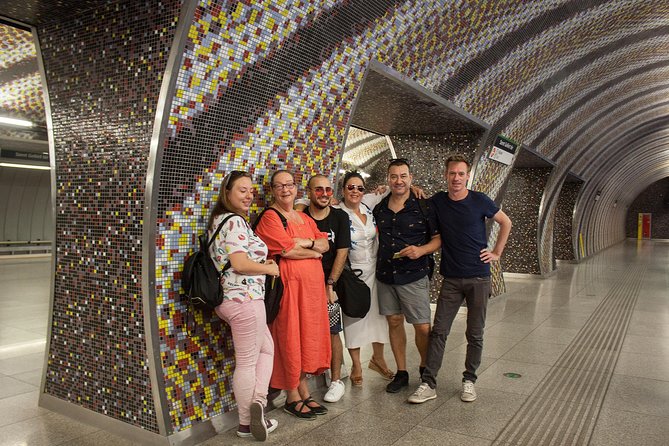
This is a short tour, so it’s built like a quick training session. You meet your guide from your accommodation (you provide the address), then you follow a planned route that mixes:
- walking between key viewpoints and squares
- rides that show you the practical way to cross parts of the city
The biggest payoff is mental. By the end, you should know where the big lines connect and how to move between Pest and Buda without second-guessing each move. That matters a lot in Budapest because the city is split by the Danube and the best sights don’t sit in one neat neighborhood.
One more consideration: the tour can include several stops that are mostly for seeing and orientation (squares, station areas, façades). If you’re the type who needs long indoor time at a museum, plan to come back later.
Andrássy Avenue to Heroes’ Square: monuments you can navigate next
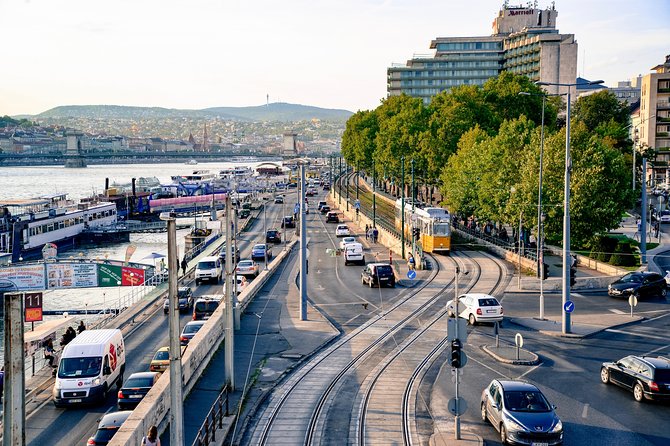
You start on Andrássy Avenue, a boulevard dating to 1872 and recognized as a World Heritage Site in 2002. What I like about this opener is that it’s scenic, but it’s also functional: it’s a major artery lined with striking Neo-renaissance façades, plus cafés, theatres, embassies, and luxury boutiques.
Then you hit Heroes’ Square, where the scale is immediately impressive. The statue complex centers on the Seven chieftains of the Magyars, plus other major Hungarian leaders. There’s also the Memorial Stone of Heroes, which the description notes is often mistakenly called the Tomb of the Unknown Soldier—exactly the kind of small clarification that saves you confusion when you’re reading signs later.
In about 15 minutes at Heroes’ Square, you’ll get the landmark context you need for photos and later self-guided exploring. The “quick hit” format is smart here: the goal is recognition, not a full guidebook lecture.
City Park sights: Vajdahunyad Castle and the art pair facing Heroes’ Square
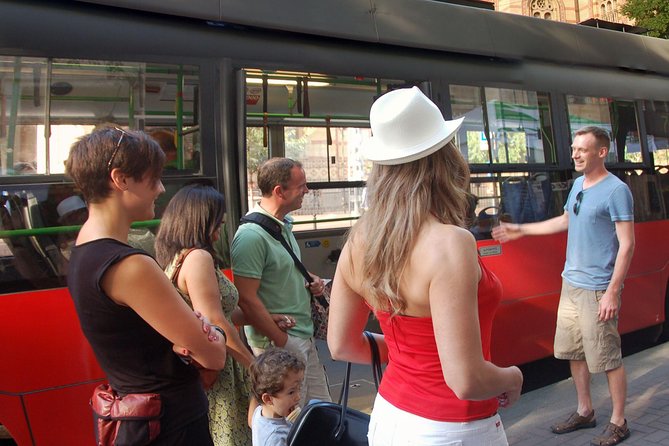
Next comes Vajdahunyad Castle in City Park. It’s worth paying attention to even if you don’t go deep inside, because the story is built into the structure. The castle was built in 1896 for the Millennial Exhibition celebrating 1,000 years since the Hungarian Conquest of the Carpathian Basin in 895. Designed by Ignác Alpár, it’s a collage of Hungarian landmarks, including a strong connection to Hunyad Castle in Transylvania (now in Romania). Today it houses the Museum of Hungarian Agriculture, described as the biggest agricultural museum in Europe.
Right nearby, you’ll be close to the Museum of Fine Arts, which faces the Palace of Art. The building is noted as eclectic-neoclassical, built between 1900 and 1906 from plans by Albert Schickedanz and Fülöp Herzog. The collection is international European art (the description says not Hungarian-focused) with more than 100,000 pieces. Even if you only see it from the outside, you learn how Budapest clusters major institutions around the same square area.
The tour also points out the Budapest Hall of Art, a contemporary art space in a historic building on Heroes’ Square, including a café with views over the square. Again, this is a “get your bearings” stop—use it to decide later whether you want to return for a specific exhibit.
And if timing lines up, you may also pass the City Park Ice Rink, opened in 1870 and described as among the largest and oldest in Europe. It’s the kind of local landmark that feels like part of everyday Budapest life, not just a tourist photo backdrop.
From Margaret Bridge to the tram ring: learning Nagykörút like a pro
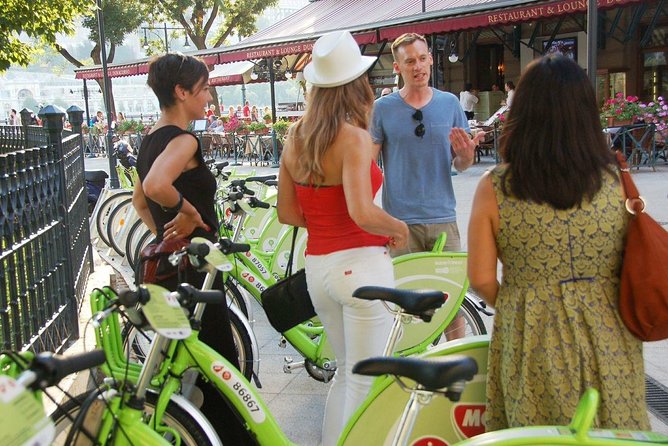
One of the most practical parts of this tour is the public transport lesson in motion. You go through Jászai Mari tér, a major public transport hub at the foot of Margaret Bridge and named for actor Mari Jászai.
Then you cross or connect near Margaret Bridge—a three-way bridge linking Buda and Pest across the Danube, tying Margaret Island to the city banks. It’s described as the second-northernmost and second-oldest public bridge in Budapest, which is a nice reminder that you’re crossing something historic, not just getting from A to B.
Now for the real transport nerd payoff: the tour route includes Budapest’s big tram corridor along the ring road, Nagykörút. The description notes it’s among the busiest tram lines in the world (with a local legend that it may be the busiest), carrying millions of passengers each year. The service is also frequent: usually up to 15-minute intervals, and every 2 minutes during rush hours.
This is the part where the “local perspective” becomes real for you. Once you see how the ring road works, it becomes easier to plan routes between neighborhoods without hunting for complicated transfers.



Nyugati and Deák Ferenc tér: the transfer points that run the city
Next you reach Budapest Western Railway Station (Nyugati pályaudvar). This is one of three main railway terminals, and it sits on the Pest side. It’s accessible via the 4 and 6 tram lines and the M3 metro line—so it’s a key “systems” stop. The surrounding area is described as a busy meeting point with restaurants, bars, and shops, which makes it useful if you’re hungry or want a post-tour wander.
Then comes one of the most important locations in Budapest public transport: Deák Ferenc Square (Deák Ferenc tér). It’s named for Ferenc Deák, often called the Wise Man of the Nation. Under the square, three metro lines converge. Tram lines 47 and 49 start here, along with several bus lines.
Also, it’s a good reality check stop. This is where you learn that Budapest’s “big sights” and its “big connections” aren’t separate. They’re linked. Once you know this junction, you can build day plans that flow more naturally.
A small extra stop at Elizabeth Square adds a social touch. It’s a park by Deák Ferenc tér and described as a popular hangout for young people, with alcoholic drinks sold in the grassy area and common late-night activity until midnight.
Buda Castle area and Gellért Hill: choosing your viewpoint route
Budapest tourism often makes people pick one hill or one viewpoint. This tour gives you a choice-style approach.
You’ll be guided to the Buda Castle area, with a note that you can explore Gellért hill instead using a funicular option. The key value here is learning how to get there efficiently. If you plan to go up by cable or switch transport modes, you’ll know what to ask for on your own later.
Then the route continues toward Szent Gellért Square. This area is described as dominated by a water-themed design—wavy benches and a small fountain with a pond décor, plus an entry to a unique underground station. It’s one of those details that’s easy to miss when you’re only focused on the big skyline.
From there, you reach the Gellért Thermal Baths and Swimming Pool area, part of the Hotel Gellért complex. The tour doesn’t state that you enter the baths during the 3 hours, so treat this as a landmark stop—great for spotting what you’ll want to do later if baths are on your list.
You also get the famous panorama moment at Gellért Hill. The description calls it 235 meters high and says it’s the best panorama point above the capital. It’s named after Bishop Gellért, linked to the story of King St. Stephen and the dramatic legend of Gellért being rolled into the Danube.
Finally, you cross or connect via Liberty Bridge (Szabadság hid) on the way toward the foot of Gellért hill, which keeps the views moving rather than feeling like a dead-end.
Kálvin Square wrap-up: finishing at another practical hub
The tour ends up at Kálvin Square (Kálvin tér), a major square and intersection named after the French Protestant Reformer John Calvin, tied to the large Reformed Church there. It’s also described as a transport hub with tram, bus, and trolleybus routes.
The stop also places you near the Hungarian National Museum, which is helpful because it gives you an immediate next idea. After a transport-focused tour, you want a finish that doesn’t strand you. Kálvin tér works for that: it’s central enough that you can head to dinner, a museum return, or a night walk without losing momentum.
Who should book this tour (and who might not)
This public transportation tour fits best if you:
- want your first day in Budapest to feel organized, not chaotic
- plan to use trams/metro often and want a guide to show you the logic
- like seeing major landmarks while learning how they connect via the city network
It may feel less perfect if you:
- want long indoor time at museums or baths within the same half-day
- hate walking between stops and prefer purely drive-to viewpoints
If you’re trying to cover Pest and Buda efficiently and you don’t want to spend your first hours figuring out routes, this is a strong match.
Should you book this Budapest public transportation tour?
Yes—if your priority is to get moving like a local quickly, this is a smart buy. The included 24-hour pass, the rider’s booklet, and the route map mean you’re not just paying for sightseeing. You’re paying for a transport skill that keeps working after the guide steps away.
Book it especially if you want a practical intro to big stations like Nyugati and major junctions like Deák Ferenc tér. Those are the places where independent travel usually feels hardest. With this tour, you arrive at them already knowing what they mean and how to use them.
FAQ
How long is the Budapest public transportation tour?
It lasts about 3 hours (approx.).
What language is the tour offered in?
The tour is offered in English.
Is pickup from my accommodation included?
Yes. Pickup is offered, and you meet the guide from your accommodation. You’ll need to provide your address in the special requirements box.
Does the tour include a public transportation pass?
Yes. You receive a 24-hour pass for the city’s public transportation system, for use with the transportation modes covered during the tour.
What’s included with the tour besides the guide?
The tour includes a notebook, a souvenir pen, a map showing the route, a rider’s booklet (manual for Budapest public transport), the 24-hour pass, and a local guide.
Is food and drinks included?
No. Food and drinks are not included.
Is this tour private or group-based?
It’s listed as a private tour/activity, meaning only your group participates.
Are children allowed?
Yes, but children must be accompanied by an adult.
Is free cancellation available?
Yes. You can cancel for a full refund with free cancellation, as long as you cancel up to 24 hours in advance of the experience start time.
Are service animals allowed?
Yes. Service animals are allowed.