REVIEW · BUDAPEST
Budapest: Memento Park and Icons of Communism Guided Tour
Book on GetYourGuide →Operated by Licensed guide & driver · Bookable on GetYourGuide
Memento Park hits differently because you’re surrounded by the actual Communist icons—giant statues and plaques that Hungary installed after the system fell. I like the way the guide connects the monuments to real-life power: how Marxist theory was used to justify control, how propaganda worked, and how daily life could change when communists took over. I also love the direct, specific moments, like standing in front of Stalin’s Grandstand and looking for the Boots of Stalin as a symbol of longing for freedom. One possible drawback: the subject matter is heavy and the park can feel bleak, so it’s not a casual stroll.
The logistics are simple: you meet in central Budapest, ride out by private car, and then get a focused museum visit with time for photos. In a small group (limited to 7), I found it easier to ask follow-up questions instead of trying to catch every detail while walking past towering figures.
In This Review
- Key things I’d note before you go
- Why Stalin’s boots and the statues feel so personal
- Getting to the park: Batthyány tér to Memento Park by private car
- Inside the open-air museum: 41 icons, Marx to Lenin
- How propaganda worked when communists held power
- The secret police story and why intimidation was effective
- Stalin’s Grandstand, the pulled-down statue, and the “Boots” moment
- What the 3 hours actually feels like
- Price and value: what $63 buys you here
- Who should book this tour, and who might rethink it
- Should you book this tour?
- FAQ
- How long is the Budapest: Memento Park and Icons of Communism Guided Tour?
- Where is the meeting point?
- What is included in the price?
- How many people are in the group?
- Do I need to buy a ticket for Memento Park?
- How much time do we spend at Memento Park?
- How do we get to Memento Park from the city?
- What will I see at Memento Park?
- Can I take photos at the statues?
- Is food included on the tour?
Key things I’d note before you go
- Small-group format: limited to 7 participants, so you won’t get lost in the crowd.
- Private car transfer: you skip the hassle of figuring out transport to a 10-mile (16 km) open-air museum.
- 41 Communist-era monuments: Marx, Engels, Lenin, and more are part of the open-air display.
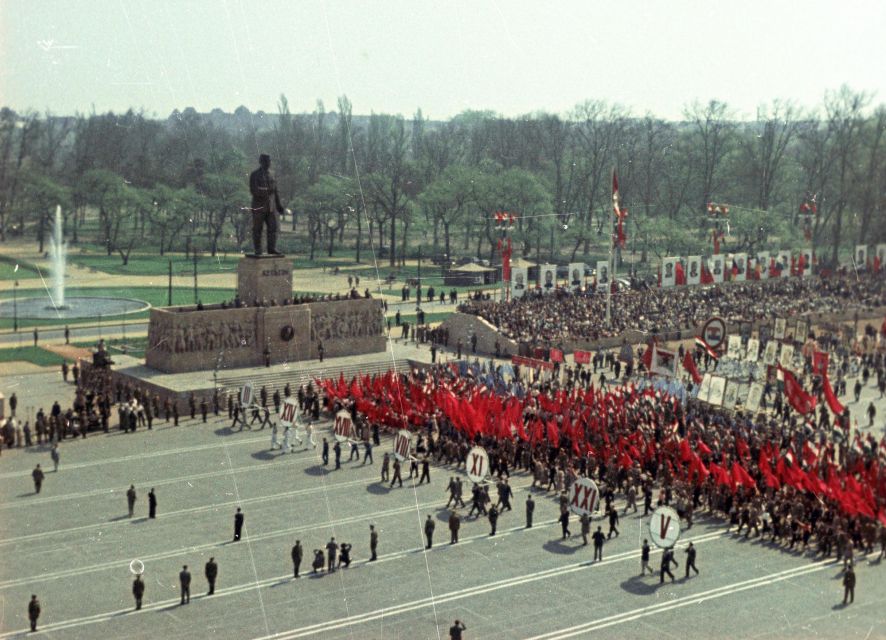
- Stalin’s Grandstand and boots: you get a concrete story about how the statue was pulled down—and what remains.
- Propaganda explained step-by-step: the guide links ideology to intimidation, including the secret police story.
- Photo-friendly stops: you can take pictures, and your guide will help you get in the frame.
Why Stalin’s boots and the statues feel so personal
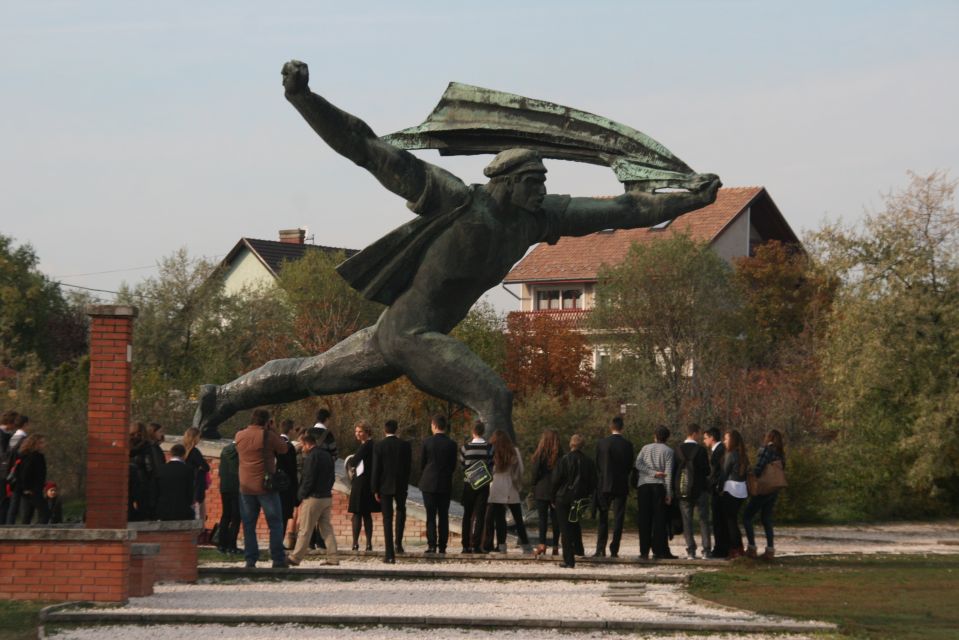
Memento Park is an outdoor museum built around something most people never get to see up close: propaganda made physical. Instead of reading about Communist-era messaging in a book, you stand near the oversized symbols the regime used to dominate public space—statues that were intentionally placed to influence what people saw every day.
The emotional punch comes from the contrast the guide points out. You see names and faces meant to project certainty and power, but the stories you hear are about fear, manipulation, and the ways people resisted or escaped. The moment centered on Stalin’s Grandstand is especially striking because it turns a distant historical figure into a local event: Hungarians pulled down the hated dictator’s huge statue, and today you mainly notice the Boots of Stalin.
I also appreciated that the tour doesn’t treat communism like a vague label. It frames ideology as something that changed practical life—how the rule of law shifted, how intimidation worked, and how the Soviet system tried to recruit and control ordinary people.
You can also read our reviews of more guided tours in Budapest



Getting to the park: Batthyány tér to Memento Park by private car
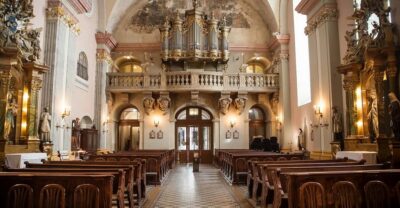
Your tour starts at Batthyány Square (Batthyány tér), right by the Danube. The meeting point is in front of St. Anne’s Church with its two towers, and it’s easy to reach by Metro line 2 or trams 19 or 41.
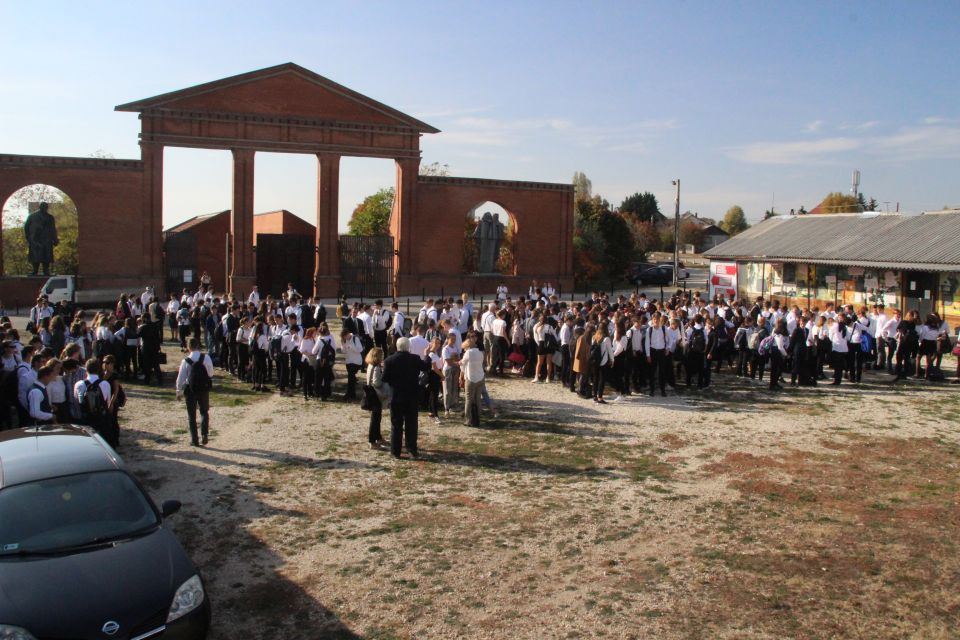
Then you head out by private car to Memento Park, about 10 miles (16 km) from the city center. This matters more than it sounds. The park is far enough that you’d spend energy on transit, and the guided structure is what helps you use that time well. You get your context first, then you arrive ready to look at the statues instead of trying to decode them from scratch.
The schedule keeps things tight and readable: you’re in transit before and after the park, and your real focus time is inside the museum area. If you like tours that don’t feel rushed but still move, this one fits.
Inside the open-air museum: 41 icons, Marx to Lenin
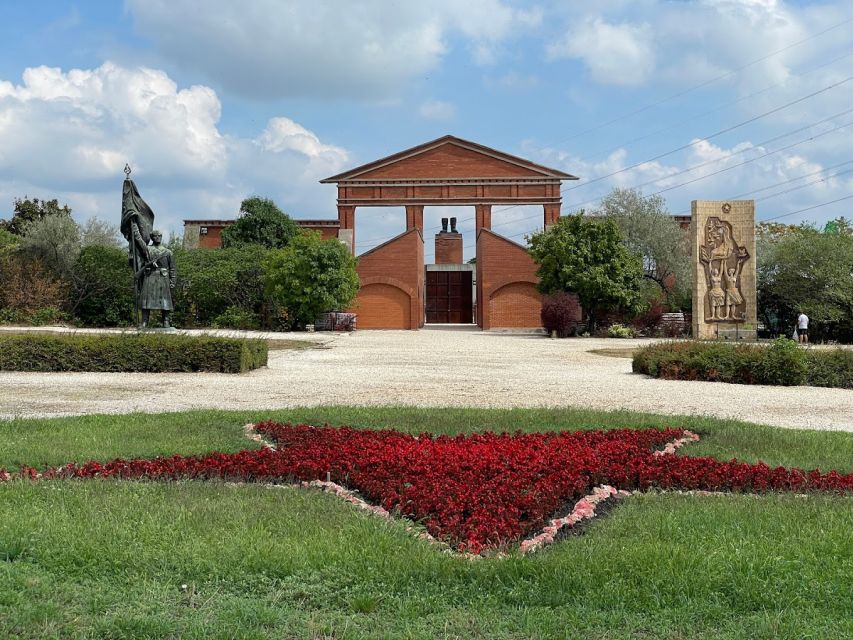
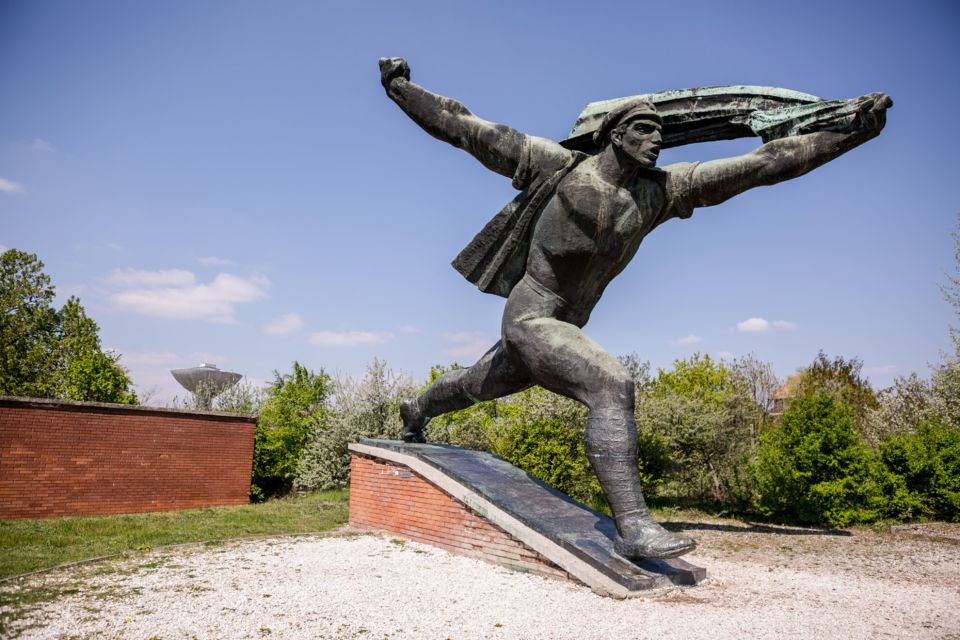
Memento Park is an open-air setting, which means you’re walking among monuments rather than shuffling between gallery rooms. The tour takes you through the park’s core display: 41 statues and icons from Hungary’s Communist past, including figures like Marx, Engels, and Lenin.
This is the kind of place where a guide changes everything. When you see a statue on its own, it’s just a big object. When you hear why it was placed there, how it was meant to shape public opinion, and how the ideology was sold as the future, the statues start to feel like tools—not art for its own sake.
You also get a chance to connect the symbols to the political story the guide is telling. The aim is not just to identify names. It’s to understand why Communist ideology had room in Hungary after World War II and how that foothold lasted for decades. Standing among the monuments makes the message feel intentional, almost engineered.
And yes, it’s photo-friendly. The guide will help you take pictures with the statues, and they’ll even help you get yourself into the shot.
How propaganda worked when communists held power
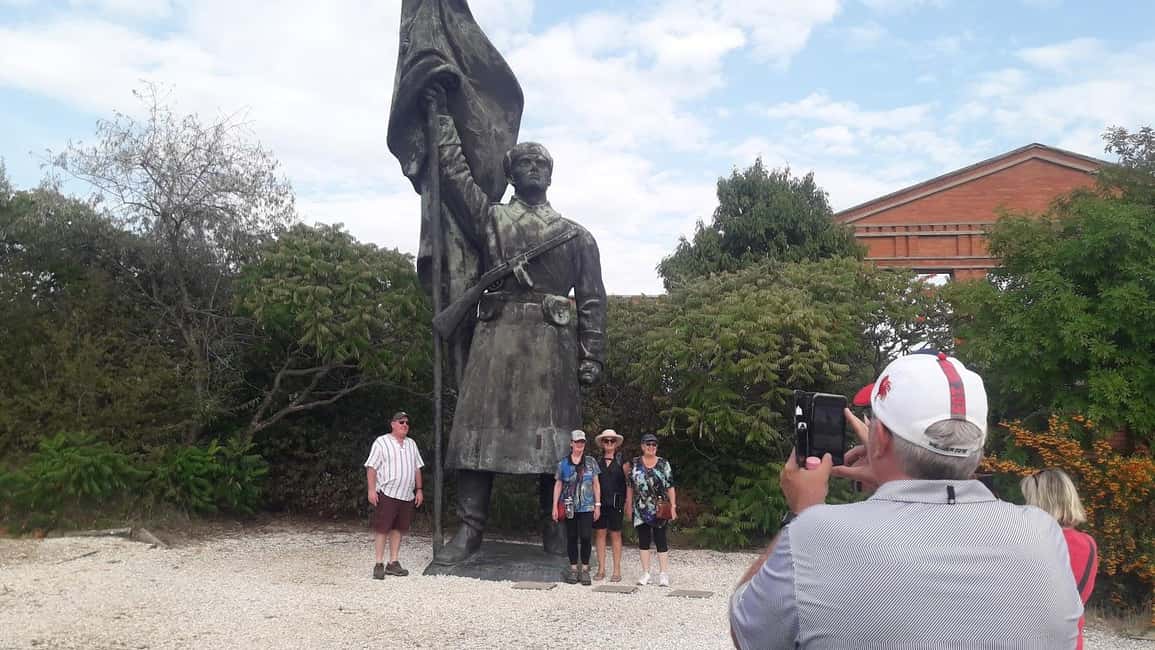
A big part of what I liked is that the guide explains communism as a system for controlling people, not just a change in leadership. You’ll hear how the rule of law could change once communists gained power and how a propaganda machine was used to steer beliefs.
This tour gives you a clear thread: theory became policy, policy became pressure, and pressure became something you could feel in daily life. The guide also talks about the idea of how Marxist theory turned into a nightmare for millions, and it’s presented in a way that helps you understand the human stakes behind political concepts.
One practical reason this matters for you: it helps you read what you see. In a place like this, it’s tempting to focus only on the shock factor of giant statues. With the tour context, you notice details more thoughtfully—what the regime wanted to project, what it wanted you to admire, and what it needed you to fear.
If you’re the type who enjoys asking why things happened, this format will suit you. You get the storyline while you’re still close enough to the monuments for it to feel real.
The secret police story and why intimidation was effective
The tour also covers a grim but central element: how Soviet rule relied on intimidation and how the secret police recruited new members. The way the guide explains it helps you understand that control wasn’t only about speeches and statues. It was about making ordinary people unsure of their safety and their future.
That’s why the tour’s tone can feel cold. You’re walking through a space built for messaging, but the guide keeps pulling the story back to consequences—how people could be pressured, how rules could become tools, and how recruitment could happen through fear.
There’s also a “hope through resistance” angle. You’ll learn how manipulation worked, and you’ll hear about ways brave people could escape. That keeps the tour from becoming only bleak. It reframes the past as something with choices inside it, not just a one-way machine.
I like tours that don’t leave you with facts but also help you interpret them. This one does that by connecting intimidation and propaganda to the monuments themselves. You start to see the statues as part of an ecosystem of control.






Stalin’s Grandstand, the pulled-down statue, and the “Boots” moment
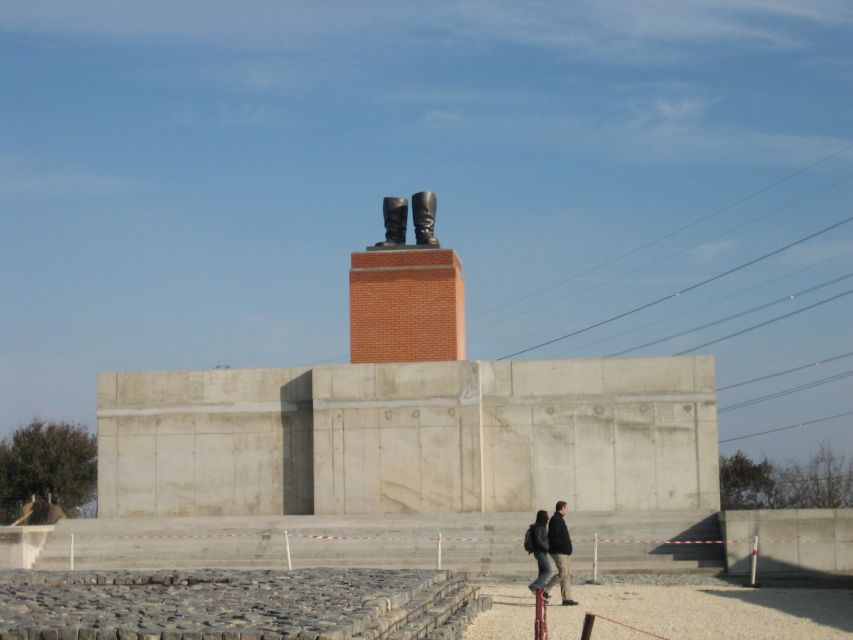
If you’re wondering what to look for, put your focus on the big storytelling moments. Standing in front of Stalin’s Grandstand, you can imagine what the crowd did when they revolted—angry Hungarians pulled down the huge statue of a hated dictator.
Then the guide brings you to what’s left: the Boots of Stalin. That detail isn’t just a quirky leftover. It’s framed as a symbol of people’s longing for freedom—power reduced to scraps, memory preserved in a way that says the system didn’t win forever.
This is one of those experiences where your brain needs the guide’s timing. If you arrive without context, you might treat the boots as a strange statue fragment. With the tour, you understand why the boots matter emotionally and politically.
And because you’ll also have photo time, you can capture that moment visually. It’s one thing to learn the story; it’s another to see how it feels to stand where the symbols were meant to intimidate people.
What the 3 hours actually feels like
This tour runs about 3 hours total. The pacing is designed around the reality of distance and walking time.
- Transit out and back keeps you from burning energy figuring out transport.
- Guided museum time is about 1.5 hours at Memento Park.
- Free time and sightseeing are built into that museum block so you can slow down, take photos, and look at the arrangements at your own pace.
For your planning, this is a good add-on if you want a deeper cultural stop without losing an entire day. It’s also a strong option if you’re short on time but want something more meaningful than a quick photo stop.
The small group size (up to 7) helps the experience feel controlled. You can hear the guide, and you’re not doing an endless line of walking past plaques without discussion.
Price and value: what $63 buys you here
At $63 per person, this tour isn’t trying to be the cheapest option. It’s paying for three things you would otherwise have to piece together on your own:
- Entry to Memento Park (included).
- A live English-speaking licensed guide (included), who explains what you’re looking at and why it matters.
- Round-trip transport by car from the city center (included).
The value is in the context. At a place like this, a self-guided visit can leave you with impressions but not understanding. The guide’s job is to connect ideology, fear, propaganda, and resistance to the statues you’re physically surrounded by.
It’s also value-added because the tour includes a bottle of water and includes help with photos. Those small touches matter more than you’d think once you’re outside in an open-air museum.
If you’re the kind of person who learns faster with a human guide and wants to ask questions, this price starts to look like a bargain. If you already know the full Communist timeline and just want photos, you might feel the cost more than the benefit—but most people come away glad they didn’t do it alone.
Who should book this tour, and who might rethink it
I’d steer you toward this tour if you:
- want a structured way to understand Hungary’s Communist-era public messaging
- enjoy history that’s explained through specific sites, not just timelines
- like small-group experiences where the guide can answer questions
- care about seeing “the story behind the statues,” including Stalin’s Grandstand and the boots
I’d suggest you reconsider if you:
- are looking for something light and relaxing
- prefer purely aesthetic viewing and don’t want an explicit focus on intimidation, propaganda, and control
- dislike tours with serious themes
A quick note on comfort: the park is open-air, and the tone is intentionally bleak. Dress for the weather and treat it like a thoughtful visit, not a casual outing.
Should you book this tour?
Yes, if you want meaning, not just monuments. The combination of transport from Batthyány tér, entry included, and a live English guide is exactly what makes Memento Park worth your time. You come away with a clearer picture of how Communist ideology took hold in Hungary, how propaganda worked in everyday space, and why resistance mattered.
If you’re specifically interested in Stalin’s symbolism, the story around the pulled-down statue, and the meaning behind the Boots of Stalin, this guided format is the easiest way to get the most out of the stop. I’d book it rather than trying to piece it together solo—especially with a small group.
FAQ
How long is the Budapest: Memento Park and Icons of Communism Guided Tour?
The tour duration is listed as 3 hours.
Where is the meeting point?
The meeting point is Batthyány Square (Batthyány tér), near St. Anne’s Church with two towers.
What is included in the price?
The tour includes pickup and transport by car, entrance fee to Memento Park, a live English-speaking licensed guide, transport back to the city, a bottle of water, and help with photos at the statues park.
How many people are in the group?
The group is limited to 7 participants.
Do I need to buy a ticket for Memento Park?
No. The entrance fee to Memento Park is included, and you also get skip the ticket line.
How much time do we spend at Memento Park?
You’ll spend about 1.5 hours at Memento Park, with guided tour time plus free time for sightseeing.
How do we get to Memento Park from the city?
You’ll travel by private car from the city center to Memento Park, which is about 10 miles (16 km) away.
What will I see at Memento Park?
You’ll see an open-air museum with 41 statues/icons from Hungary’s Communist period, including figures like Marx, Engels, and Lenin, plus Stalin-related monuments like Stalin’s Grandstand and the Boots of Stalin.
Can I take photos at the statues?
Yes. You can take pictures at the statues park, and your guide will happily help you get in the photo.
Is food included on the tour?
No. Food is not included. Souvenirs can be purchased at the museum shop.