REVIEW · BUDAPEST
Budapest Essential Walk&Food tasting
Book on Viator →Operated by Budapest Tour Guy · Bookable on Viator
Thermal baths and strudel, all on one route. This Budapest Essential Walk and Food tasting strings together the big postcard moments—Deák Ferenc Square, Heroes’ Square, Szechenyi Baths area, St. Stephen’s Basilica, Hungarian Parliament, Fisherman’s Bastion, and Széchenyi Chain Bridge—without making you feel lost. I especially liked Gábor’s quick, street-level history stories, and I loved the built-in strudel-and-coffee stop that gives the tour more flavor than just sightseeing.
The tour is designed for a 3 to 4 hour pace, but it’s also a lot of walking with a few quick transit legs. One possible drawback: it’s weather-dependent, and if conditions are rough (like strong wind or rain) you’ll still be outside and moving.
You’ll finish in the Castle District area near Szentháromság tér (Holy Trinity Square), with views and photo angles that make Budapest look like it has been arranged for you. It’s a great way to get your bearings fast, especially if this is your first visit.
In This Review
- Key highlights at a glance
- How this Budapest essentials walk keeps the route efficient
- Deák Ferenc Square to the Opera area: starting where the city opens up
- Heroes’ Square and City Park: Vajdahunyad Castle and the architecture lesson
- Szechenyi Baths area: learning thermal culture without the long detour
- St. Stephen’s Basilica: the founder story and a pop-culture connection
- Szabadság tér strudel break, then Soviet and wartime memorials
- Hungarian Parliament and Kossuth tér: architecture with real political context
- Castle Hill via Metro 2: Fisherman’s Bastion panoramas
- Széchenyi Chain Bridge and ending near Matthias Church
- Price and value: what $90.11 is really buying
- Who should choose this tour, and what to watch for
- Should you book Budapest Essential Walk&Food tasting?
- FAQ
- Where does the tour start?
- Where does the tour end?
- How long is the tour?
- How much does it cost?
- Is admission included for the stops?
- Is this a private tour?
- What time does the tour operate?
- Is the tour flexible if weather is bad?
- How does cancellation work?
- Are service animals allowed?
Key highlights at a glance

- Private tour with your own group so you can go at a comfortable pace
- Gábor’s history storytelling from churches and palaces to public monuments
- Strudel-and-coffee break (poppy seed is a standout)
- Mix of walking and transit including Metro 2 and the funicular to keep it efficient
- Top Budapest sights without ticket stress since stops are marked admission ticket free
How this Budapest essentials walk keeps the route efficient
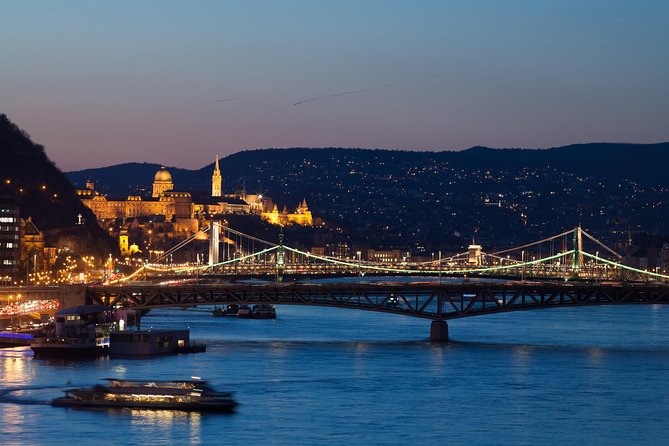
What I like about this kind of tour is the focus. Instead of trying to do everything, you get a smart circuit through the places that shape how Budapest looks and feels. The guiding idea is simple: walk key streets, stop for context, then use short public transport hops when the city gets spread out.
The timing is built for real people, not just sightseeing machines. You’ll spend around 15 to 30 minutes at most major landmarks, which means you see a lot, but you’re not stuck in one place for an hour. I also like that the tour is private, so if you pause for photos or just need a breather, you’re not fighting the flow of a large crowd.
One more practical point: everything is marked admission ticket free for the listed stops. That matters because you’re paying for interpretation and routing, not stacking entrance fees on top. You still should plan for personal spending like snacks or drinks at the strudel break, but the sightseeing side stays manageable.
You can also read our reviews of more walking tours in Budapest



Deák Ferenc Square to the Opera area: starting where the city opens up
You meet at the stairs of the Lutheran Church at Deák Ferenc tér (Deák Ferenc Square). It’s a strong starting spot because it’s central and connected, so you can arrive easily and the tour can set off right away.
From there, you take a short walk toward Elizabeth Square and get a look at the Opera House from outside. This is one of those smart “see it first” moments. Even without going in, the building’s presence tells you why Budapest developed this theatrical, European-style center. Your guide frames what you’re seeing so the Opera House doesn’t feel like just another ornate façade.
At this stage of the walk, you’ll also get a basic map in your head. Once you understand how Deák tér connects to the rest of the city, the rest of the landmarks start lining up logically.
Heroes’ Square and City Park: Vajdahunyad Castle and the architecture lesson
Next comes Heroes’ Square, a dramatic open space where Budapest flexes its national pride. You get views of the grand buildings around the square, and the guide uses that outside-only perspective to explain what you’re looking at—how power, identity, and architecture show up in the street view.
Then the tour taps into a very Budapest detail: you ride the Millennium underground, described as Europe’s first underground. Even if you’ve used metros before, this bit adds character. It’s not just transportation; it’s part of the story of how the city moved and modernized.
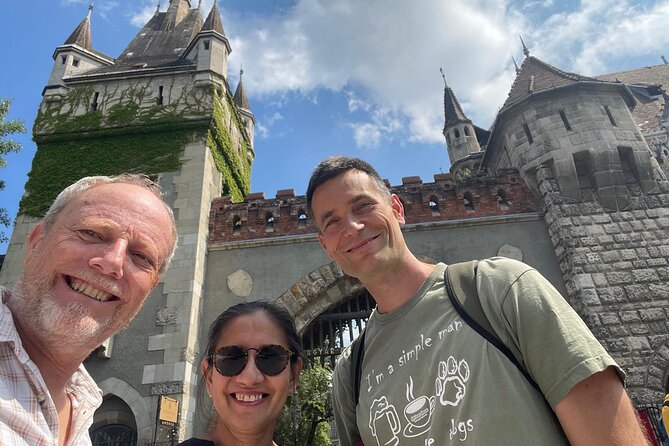
From Heroes’ Square you head into City Park, with a stop at Vajdahunyad Castle. The focus here is architecture. You’ll learn how the castle’s appearance connects to different historical influences, and why it looks the way it does. If you enjoy spotting details—turrets, textures, and the way the complex sits inside the park—this is one of the more satisfying stops, because the guide helps you read the building instead of just watching it go by.
Szechenyi Baths area: learning thermal culture without the long detour
After the park, the route turns toward the most famous thermal-bath district. You get acquainted with the history of Szechenyi Baths, and there’s a chance to see the outdoor pools from the side entrance if conditions and access allow.
Here’s the key value: you get the context first. Instead of treating the baths like a single attraction to check off, you understand why thermal bathing is part of Budapest’s identity. Even a quick look at the outdoor pools gives you the sense of scale and atmosphere the guide is talking about.
Then you take the underground back toward downtown, aiming for St. Stephen’s Basilica. This timing works well because you shift from park-bath vibes back to the city center without wasting half a day on transit.
St. Stephen’s Basilica: the founder story and a pop-culture connection
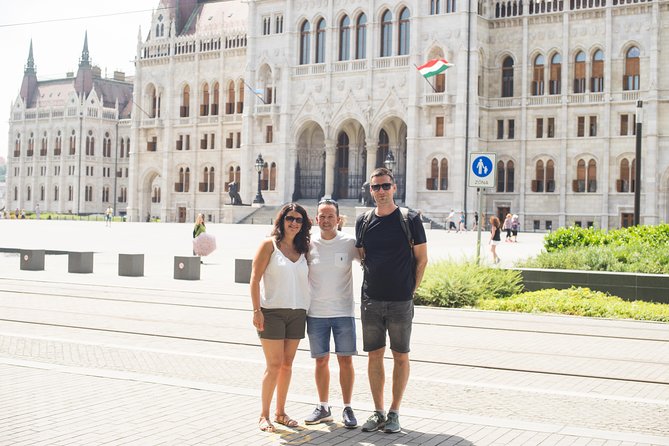
At St. Stephen’s Basilica, the stop is shorter, but it’s intentional. You learn about the birth of Catholic Hungary and the role of King Stephen, the state founder the church is closely associated with.
Your guide also brings in another name that many visitors know from outside history: Ferenc Puskás. That kind of connection is practical. It helps you connect the sacred-and-state story of Hungary with something more familiar, so the stop lands even if you’re not a church-history person.
In a tour with quick stops, this one is worth it because you leave knowing what the big symbolism points to. You’ll be able to look at the basilica and understand why people treat it like more than just a beautiful building.
You can also read our reviews of more food & drink experiences in Budapest





Szabadság tér strudel break, then Soviet and wartime memorials
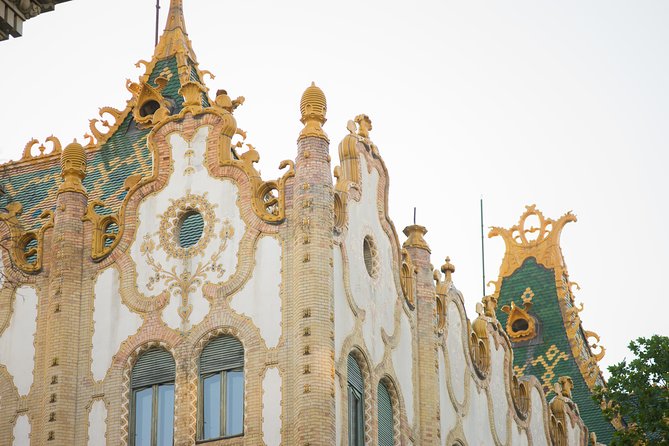
After the basilica, you head to Szabadság tér. This is where the tour becomes more than just monuments and views. You take a short break at a strudel house, and the guide has recommended options like poppy seed strudel alongside coffee.
I like this pause because it changes the energy. Walking tours can feel like a straight line from one photo stop to the next. The strudel break makes the experience feel like a day in the city, not a checklist.
Once you’re refreshed, you move toward the bank district and the memorial layer of Budapest’s 20th-century story. You learn about remaining Soviet statues, the American embassy, and the memorial of the German occupation. These stops don’t have the same “wow” factor as the Parliament or the Castle views, but they’re important. They explain why the Danube and these streets carry emotional weight, not just beauty.
Hungarian Parliament and Kossuth tér: architecture with real political context
The tour reaches Kossuth tér, where you observe the Hungarian Parliament Building. Again, this is outside-focused. The advantage is that you can appreciate the scale and style quickly, while the guide talks about architecture and how it connects to Hungarian history and politics—past issues and current ones.
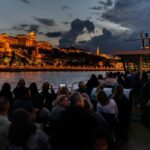
Then you add one of the most moving memorial moments in central Budapest: the Shoes on the Danube Promenade near the Parliament area. This is one of those places where the setting matters. The guide’s framing helps you understand what the memorial is pointing to, and why the placement along the river is part of the meaning.
If you tend to skip memorials because they feel heavy, don’t. The tour gives you just enough context to make it respectful, not rushed, and not overwhelming.
Castle Hill via Metro 2: Fisherman’s Bastion panoramas
After Parliament, you shift under the Danube using Metro 2, the red line. The point of this ride isn’t only speed. It connects the river-crossing geography to the way the city is organized above it.
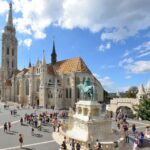
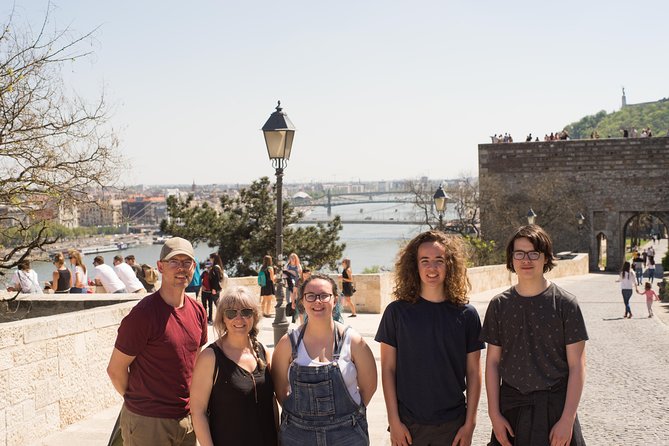
Then you climb back up toward Castle Hill and start your walking stretch at Fisherman’s Bastion. The highlight here is the panoramic viewpoint from the look-out terrace. From this angle, Budapest finally clicks as a city built in layers—river below, historic district above, and long views that make the skyline look planned.
From Fisherman’s Bastion you continue toward the Royal Palace area. The tour keeps it moving, but the stories help you see why this part of Budapest became the symbolic center, not just a hillside neighborhood.
Széchenyi Chain Bridge and ending near Matthias Church
The last big move is down toward the river. You walk along Castle Hill and use the funicular for the steep section, which makes the final stretch feel easier than it would on foot alone.
You hear stories about the Széchenyi Chain Bridge, described as the iconic first permanent bridge of Budapest, plus the details about the lions. Those small facts matter because they turn the bridge from scenery into a real structure with meaning.
The tour ends at the Széchenyi Chain Bridge area, but it’s timed so you finish near Szentháromság tér (Holy Trinity Square), just off Matthias Church in the Castle District. That ending choice is smart. If you want to keep exploring after the tour, you’re positioned right in the historic zone where it’s easy to wander without needing a map.
Price and value: what $90.11 is really buying
At $90.11 per person, this isn’t a bargain in the “cheap and cheerful” sense. It’s priced like a guided private experience: you’re paying for route planning, live interpretation, and the convenience of a guide coordinating a string of major landmarks without you figuring out how they connect.
Here’s where the value comes in. Most stops are marked admission ticket free, so your money goes toward what you actually came for: understanding what you’re seeing. And you don’t waste time trying to guess what order to do these in. If you’ve ever tried to DIY a route through Deák tér, Heroes’ Square, the baths area, and Castle Hill in one afternoon, you know how quickly it becomes a transport puzzle.
Also, the private format matters. If you’re traveling as a couple or small group, the cost per person can feel very reasonable compared to doing multiple ticketed tours on top of each other.
One thing to keep in mind: the plan is listed as 3 to 4 hours, but time can run longer depending on walking pace and conditions. In one rainy outing, Gábor kept going despite strong wind and downpour and the tour stretched until close to 6 pm, with extra help returning the couple toward their hotel. That’s not a promise, but it shows the tour’s flexibility when reality hits.
Who should choose this tour, and what to watch for
This is a good match if you want Budapest essentials with guidance and you like learning while you walk. It’s also a great option if you don’t want to get stuck on one single theme. You’ll cover religious landmarks, national monuments, modern history memorials, and architecture, all in one afternoon.
It may not be ideal if you expect long, inside-time experiences at every stop. Several of the listed items are outside-focused or quick visits—Parliament and the basilica especially. And while there’s mention of Szechenyi outdoor pools if you can access them, the stop isn’t presented as a full bath session.
Weather matters too. The tour requires good weather, and if it’s canceled for poor conditions, you’ll be offered a different date or a full refund. That’s a big deal because you’re outdoors for a lot of the route.
Finally, if mobility is limited, you should plan carefully. This route includes walking around major areas and short transit rides (including Metro 2 and funicular). The tour is marked as most travelers can participate, but your personal comfort with stairs and uneven surfaces will matter.
Should you book Budapest Essential Walk&Food tasting?
Book it if you want a first-time friendly circuit that hits Budapest’s must-see landmarks with clear explanations and a satisfying food break. The combination of Gábor’s history storytelling and the strudel-and-coffee pause makes it feel like more than just photos.
Skip it or choose a different format if you want hours inside major sites, or if you’re traveling when weather is unreliable. Otherwise, this is a strong way to get your bearings, understand what Budapest’s monuments mean, and end in the Castle District ready to keep wandering.
FAQ
Where does the tour start?
The tour starts at the Lutheran Church of Ferenc Deák Square, Deák Ferenc tér 4, 1052 Hungary.
Where does the tour end?
The tour ends at Széchenyi Chain Bridge area (Széchenyi Lánchíd, 1051 Hungary), with the finishing point described as in the Castle district near Szentháromság tér just off Matthias Church.
How long is the tour?
It runs about 3 to 4 hours.
How much does it cost?
The price is $90.11 per person.
Is admission included for the stops?
The stops listed are marked admission ticket free, meaning you should not need separate admission tickets for those tour stops as described.
Is this a private tour?
Yes. It’s a private tour/activity, so only your group participates.
What time does the tour operate?
The listed opening hours are Monday through Sunday, from 3:00 PM to 9:00 PM.
Is the tour flexible if weather is bad?
The experience requires good weather. If it’s canceled due to poor weather, you’ll be offered a different date or a full refund.
How does cancellation work?
You can cancel for a full refund up to 24 hours in advance of the experience’s start time.
Are service animals allowed?
Yes, service animals are allowed.