REVIEW · BUDAPEST
Budapest Castle Walk
Book on Viator →Operated by Taste Hungary · Bookable on Viator
Royal views, wartime scars, and a coffee break. This is a focused Budapest Castle Walk through the Buda Castle district, where I love how the guide ties medieval, Ottoman, Habsburg, and WWII history to the streets you’re standing on. You also get real payoff at St. Matthias Church, not just a quick exterior stop. One consideration: this is a hillside cobblestone neighborhood, so wear shoes with grip and expect some uphill walking.
You’ll start at the Zero Kilometre Stone near Clark Ádám tér and finish near Matthias Church, making it easy to roll into lunch or a late afternoon stroll. The group stays small (max 8), and you’re not just herded from landmark to landmark—you get time for photo stops, questions, and a included coffee/drink.
In This Review
- Key things to know before you go
- Why the Buda Castle District tells Budapest’s story in 3 hours
- Meeting at Zero Kilometre Stone: timing, pacing, and the small-group advantage
- Stop 1: Fisherman’s Bastion—panoramas with Jewish and Habsburg context
- Stop 2: St. Matthias Church—tiled roof, interior time, and WWII scars
- Stop 3: National Széchényi Library—how the royal court shaped the neighborhood
- Stop 4: Castle Garden—president-level view, normal-citizen streets
- Várkert Bazaar and Danube-side breaks: why the photos work here
- The coffee break and the included Matthias entrance: small details, real value
- Price and what you really get for $125
- Who should book the Budapest Castle Walk, and who might skip it
- Should you book the Budapest Castle Walk?
- FAQ
- How long is the Budapest Castle Walk?
- Where do I meet the guide, and where does the tour end?
- What time does the tour start?
- What’s included in the price?
- Is St. Matthias Church entrance included?
- How big is the group?
- Is this tour available year-round, and can I cancel?
Key things to know before you go
- UNESCO Buda Castle district, but explained simply: you’ll connect architecture and streets to major historical shifts.
- St. Matthias Church entrance included: plus time for the interior and the colorful tiled roof.
- Jewish community sites, clearly placed: the guide points out old street and synagogue locations in context.
- Big WWII chapter on the ground: you’ll hear how the 1945 siege damaged this area and why it matters.
- Danube-side Várkert Bazaar viewpoints: photo breaks that actually help you understand where you are.
Why the Buda Castle District tells Budapest’s story in 3 hours

Budapest can feel like two cities stacked together. This walk is your shortcut to one of them: the Buda Castle hill, UNESCO-listed and historically layered in a way that’s hard to grasp from a distance.
What I like most is the way the tour keeps history tied to geography. You don’t just hear names and dates. You walk through the same kind of narrow lanes and courtyards that once carried royal power, foreign rule, and wartime destruction. That makes the “big story” feel less abstract.
Also, you get a very “useful traveler” mix: major sights (Royal Palace area, Matthias Church, Fisherman’s Bastion), plus the smaller pieces people often miss—hidden gardens, courts, palaces, and statues tucked into the neighborhood.
The whole experience is built around about 3 hours, so it’s long enough to feel like you actually learned something, but short enough that you can still enjoy the rest of your day.
You can also read our reviews of more walking tours in Budapest



Meeting at Zero Kilometre Stone: timing, pacing, and the small-group advantage
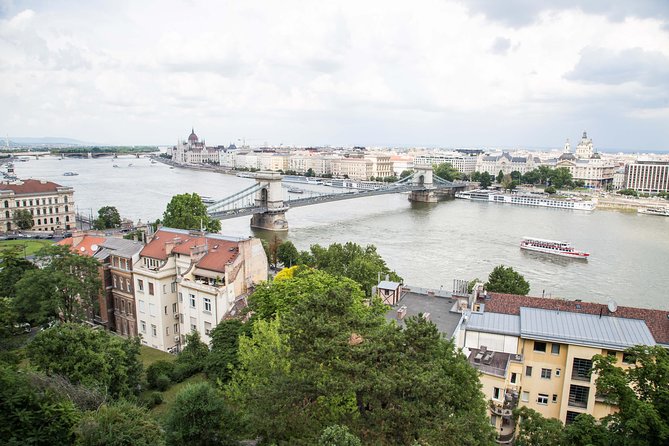
This tour meets at the Zero Kilometre Stone on Clark Ádám tér (3:00 pm start) and ends at Matthias Church on Szentháromság tér. That end point is handy because it drops you right back into one of the most walkable parts of central Buda.
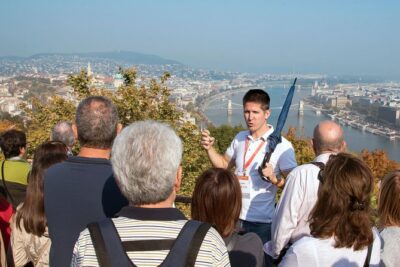
It runs year-round and is guided in English by a local, English-speaking guide. It’s also structured as a small group: up to eight people. That size matters. In a group that small, you’re more likely to ask questions and get answers that match what you’re looking at right now—rather than waiting your turn while someone else is asking something unrelated.
Plan on cobblestones and some hills. Even if the tour is only 3 hours, the terrain affects how long it feels. A quick check: this isn’t billed as a museum crawl. Museum entrances are not included, so if you want to go inside multiple museums, you’ll need to budget extra time and tickets.
One practical tip: your time matters. A previous purchaser had trouble because the booking didn’t clearly show which tour time they had selected. So before you head out, make sure your confirmation and your selected start time are clearly matched on your phone or printed details.
Stop 1: Fisherman’s Bastion—panoramas with Jewish and Habsburg context
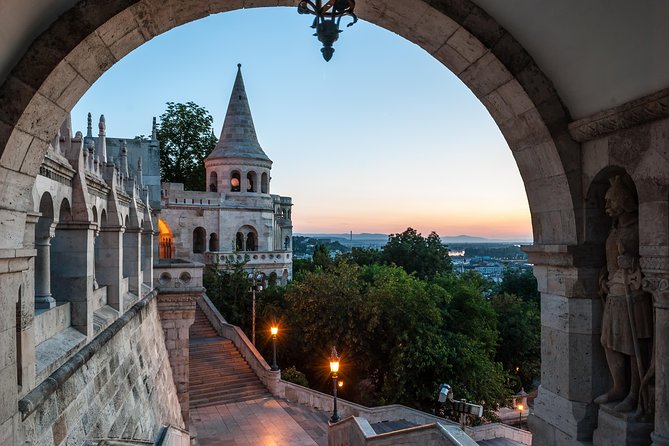
You start with one of the most recognizable view spots: Fisherman’s Bastion. Even if you’ve seen it in photos, it’s different in person because you’re standing right where the hill’s shape guides the streets below.
Your guide uses this area to set up multiple threads at once:
- how the hill area shaped royal residence development starting centuries ago
- how later empires influenced the neighborhood
- and how the Jewish community fit into the story, including old street and synagogue sites
There’s also a special kind of value here: the viewpoint isn’t just for looking. You’ll be taught how to orient yourself so the rest of the walk makes sense. When you understand what you’re seeing across the Danube, courtyards and garden corners start to feel less random.
Time here is brief—about 10 minutes—and admission is free. Think of it as a launchpad: views first, context right away, then back into the streets.
Stop 2: St. Matthias Church—tiled roof, interior time, and WWII scars
St. Matthias Church is one of the strongest anchors of this walk. It’s not just a landmark; it’s part of the identity of Budapest’s royal and national story, and the tour builds a clear reason for why it matters.
First, you’ll get time focused on the church itself: the interior and the multi-colored tiled roof. You’re not rushing past it for a picture and moving on. The goal is to help you notice what makes it special and to connect that to the wider history you’ll hear on the walk.
Then the guide shifts the mood toward WWII. You’ll learn about the heroes and villains the area remembers, and—most importantly—about the Siege of Budapest and the destruction that happened when Russian and German forces fought in the streets around here in 1945.
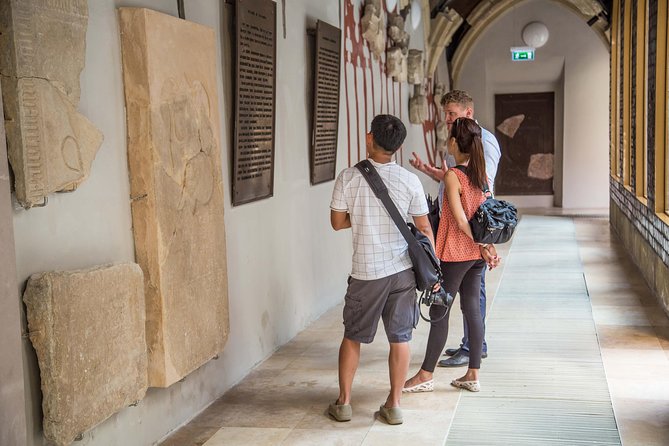
There’s also a stop for a WWII bunker during the tour. Even if you’ve read about the war before, seeing a bunker in the neighborhood it affected changes how the story lands. The church area becomes more than “pretty architecture.” It becomes a place that holds the physical consequences of conflict.
Stop time at Matthias is about 20 minutes, and entrance is included. That’s a good value detail: you’re paying for the guide and the experience, and one of the main paid sights is already handled.
Stop 3: National Széchényi Library—how the royal court shaped the neighborhood

Next up: the National Széchényi Library. This is a short stop (about 10 minutes), but it plays an important role in connecting “who ruled” with “what you see now.”
Here’s what the tour helps you understand: the area’s royal court sparked a long golden age, even if no royals lived there in the way you might expect. That little twist matters. It corrects the simplistic idea that history is always about where rulers slept. Sometimes it’s about where power operated, where collections grew, where the neighborhood’s status hardened over time.
You’ll also hear how the palace and surrounding areas were destroyed and rebuilt multiple times. The big message is that what you see today is the result of layered rebuilding—especially after WWII, when extensive damage led to changes that shaped the current appearance.
Admission here is free, so you’re not losing momentum to tickets. You’re using the time to learn the “why does this look like this?” part of the story. That’s what makes the walk feel smarter than a simple sightseeing loop.






Stop 4: Castle Garden—president-level view, normal-citizen streets
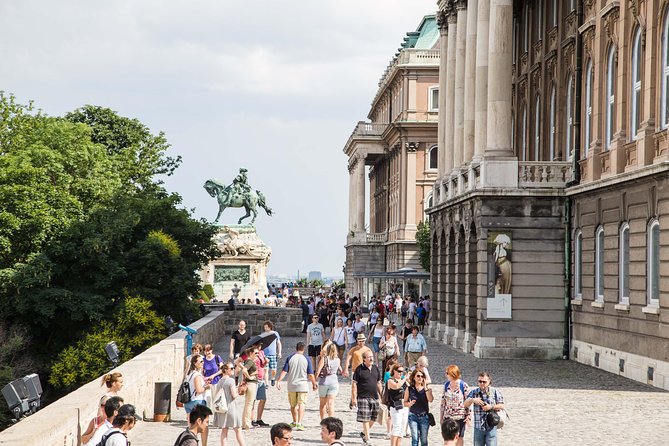
The final stop is Castle Garden, another neighborhood stop that’s more interesting than it sounds. The tour frames it as a living area—one where history didn’t just stop at a museum label.
You’ll learn that the Hungarian president is able to call this area home today, alongside a few hundred regular residents living in buildings that have stood for hundreds of years. That detail matters because it keeps the tour grounded. This district isn’t only “old stuff for tourists.” It’s an actual place where people still live, walk, and plan their daily routines.
Time is again short—about 10 minutes—and admission is free. Use this last stretch to slow down and look at the courtyards and building edges. These are the kinds of spaces the guide points out that often get missed if you’re moving on your own.
Várkert Bazaar and Danube-side breaks: why the photos work here
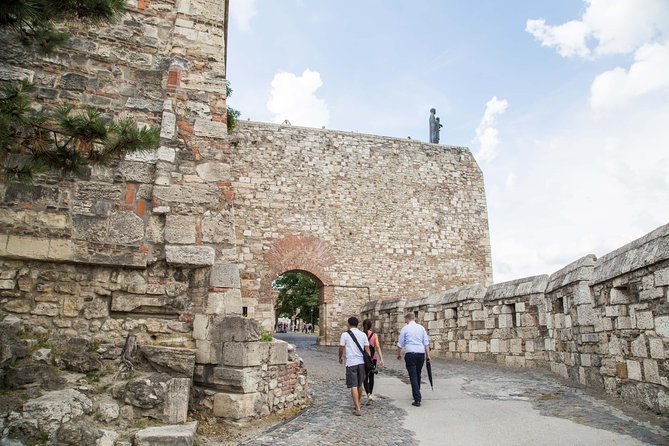
Between stops, you’ll spend time in the Danube-side area around the Várkert Bazaar. This part of the walk is described as restored neo-Renaissance, and it functions like a palate cleanser after the steep church-and-courtyard sections.
The point of this segment isn’t only aesthetics. It’s orientation. When you step into the Danube-facing open areas, you get a clearer sense of how the castle hill sits above the river and why certain viewpoints became strategic over time.
It’s also where you’ll get some of the best easy photos. And because you’re with a guide, you’re not just taking images—you’re learning what direction and elevation mean in terms of how the city grew.
The tour also includes multiple photo stops and time for questions, which is a big deal in a place where the details are small and the history is huge.
The coffee break and the included Matthias entrance: small details, real value
This tour includes a coffee break (one coffee or another drink) plus coffee and/or tea. That might sound like a throwaway perk, but it’s actually a smart design choice.
You’re walking for about three hours through uphill cobblestones and changing mental gears—medieval, Ottoman, Habsburg, Jewish community context, and WWII. A planned break keeps the energy steady enough that you can absorb more than you’d manage on a nonstop march.
The other value detail is the entrance to St. Matthias Church being included. Since you’re going to one of the most famous interiors in the district, getting that included saves both time and decision fatigue. It also makes your $125 feel more concrete: you’re not paying for the guide only and then adding the biggest ticket items yourself.
Museums are not included, though. So if your dream day includes multiple interiors beyond Matthias, you’ll still need to plan separately. This is a guided walking tour with one included key entrance.
Price and what you really get for $125
At $125 per person for about 3 hours, you’re paying for the guided story and the included items, not for a long museum shopping list.
Here’s what that price covers in practical terms:
- An English-speaking local guide with a structured route
- Lots of stop-and-explain time across several major Buda Castle landmarks
- A coffee/drink break
- Entrance fee to St. Matthias Church
When I compare that to doing the same sights solo, the advantage is efficiency and context. You can absolutely walk the area yourself, but you’ll be missing the links between periods of history and the specific parts of the neighborhood where those changes left their marks.
One caution on value: if you want to spend extra time inside multiple museums, you may feel like the tour is “just” a walking orientation plus one interior. If that’s your style, add museum time after the walk rather than trying to cram it during the tour.
Who should book the Budapest Castle Walk, and who might skip it
Book this if you want:
- a guided way to connect Buda Castle’s UNESCO district to Ottoman, Habsburg, Jewish community, and WWII history
- major hits like Fisherman’s Bastion and Matthias Church without spending your day making ticket decisions
- a small-group experience (max 8) where questions are realistic
- a route that ends near Matthias, so your afternoon doesn’t feel fragmented
You might skip it if:
- you hate hills and uneven cobblestones
- you want mostly museum time and long interior stays (this tour is set up for walking and short stops)
- you’re the type who prefers a completely self-guided day with no guide-led narrative
If you’re traveling with a mix of ages or interests, this works well because it includes viewpoints, architecture, and clear human stories across time.
Should you book the Budapest Castle Walk?
Yes—if your goal is understanding, not just checking boxes. For $125, the blend of St. Matthias Church entrance, panoramic stops, and a guided storyline through multiple eras is a strong use of a half-day in Budapest. The coffee break also makes it feel civilized, not rushed.
Just come prepared for the terrain and double-check your tour time before you meet the guide, since schedule clarity can matter.
FAQ
How long is the Budapest Castle Walk?
It’s listed as approximately 3 hours.
Where do I meet the guide, and where does the tour end?
You start near the Zero Kilometre Stone in Budapest (Clark Ádám tér) and the tour ends at Matthias Church (Mátyás Templom, Szentháromság tér).
What time does the tour start?
The start time shown is 3:00 pm.
What’s included in the price?
An English-speaking local guide, a coffee break during the tour (one coffee or another drink included), coffee and/or tea, photo stops and time for questions, and entrance to St. Matthias Church.
Is St. Matthias Church entrance included?
Yes, entrance to St. Matthias Church is included, and you also get time to visit the interior.
How big is the group?
It’s a small-group tour with a maximum of 8 travelers (and you can also choose a larger group option or a private tour).
Is this tour available year-round, and can I cancel?
It’s available year-round. Cancellation is free up to 24 hours in advance for a full refund.