REVIEW · BUDAPEST
Budapest: Budapest Retro Interactive Museum Ticket
Book on GetYourGuide →Operated by Budapest Retro Interactive Museum · Bookable on GetYourGuide
Communism, but make it interactive and fun. Budapest Retro Erlebnispark gives you a fast, hands-on walk through daily life before the fall of the iron curtain, with a three-story set of exhibits that you control. I especially like climbing into a real LADA police car and hitting the buttons in the time-period displays to make the past feel close. One thing to plan for: some exhibits aren’t fully in English, so you may need a bit of patience to follow along.
I also love the playful details in the museum bistro, where the retro theme doesn’t stop at the exhibits. You can test classic-style Hungarian flavors and drinks right on site, and the whole visit is usually 1–2 hours, so it fits easily into a busy Budapest day. If you want a quick nostalgia hit that feels more like an experience than a lecture, this one works.
In This Review
- Key highlights worth your time
- Entering a three-story communist-era time capsule
- The LADA police car and 1971 jukebox: the fun anchors
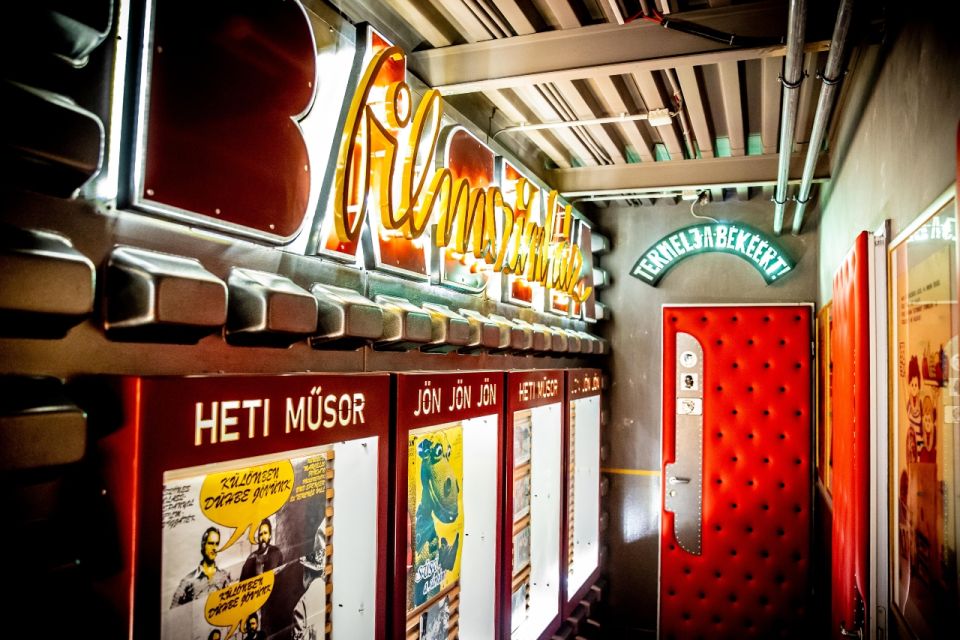
- Media, phones, and the Híradó-style news studio
- Bertalan Farkas and the museum’s space-race storytelling
- Retro bistro lunch break: eat the era, not just look at it
- The retro card photo keepsake (and why it’s worth it)
- Timing and how to fit it into your Budapest day
- Crowds, language, and what to do if English is thin
- Value check: is $15 worth it?
- Who should book this museum in Budapest?
- Should you book Budapest Retro Erlebnispark?
- FAQ
- How long should I plan to spend at Budapest Retro Erlebnispark?
- Where do I present my voucher?
- Are food and drinks included with the ticket?
- When is the museum closed?
- Is there any special offer for seniors?
- Is the ticket valid for multiple days?
Key highlights worth your time
- Climb into a real LADA police car (eighties style) and try out the fun interactions around it
- Play retro tunes on a 1971 jukebox and feel how music tech worked back then
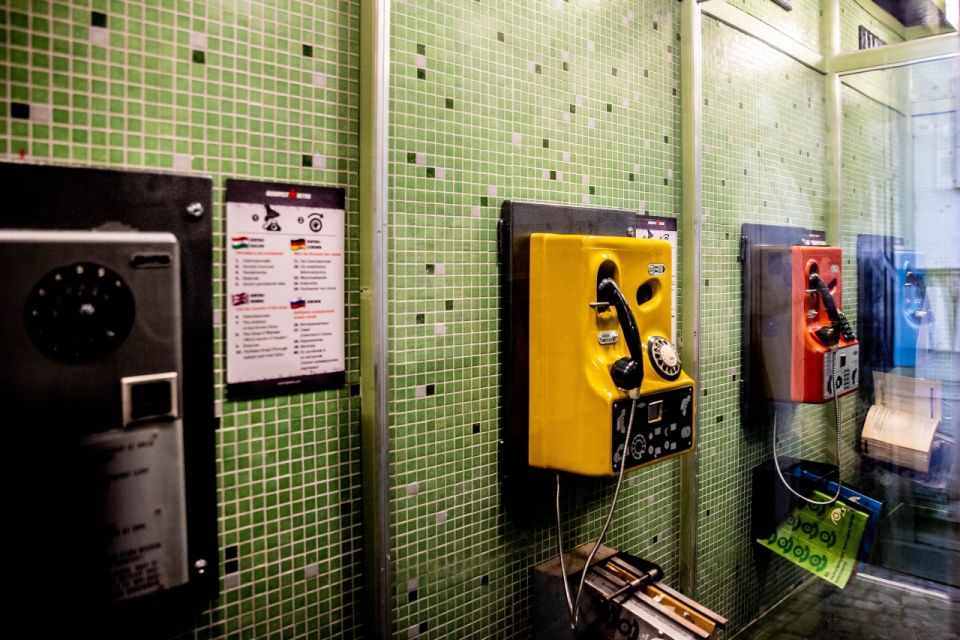
- News and entertainment throwbacks including the contemporary Híradó studio concept and phone booth cabaret/jokes
- Space-race nostalgia through what Bertalan Farkas took into space, plus related interactive bits
- Retro bistro for your break, with food and drinks available for purchase
- Photo retro card option, with your own photo (purchase available) to keep the memory
Entering a three-story communist-era time capsule
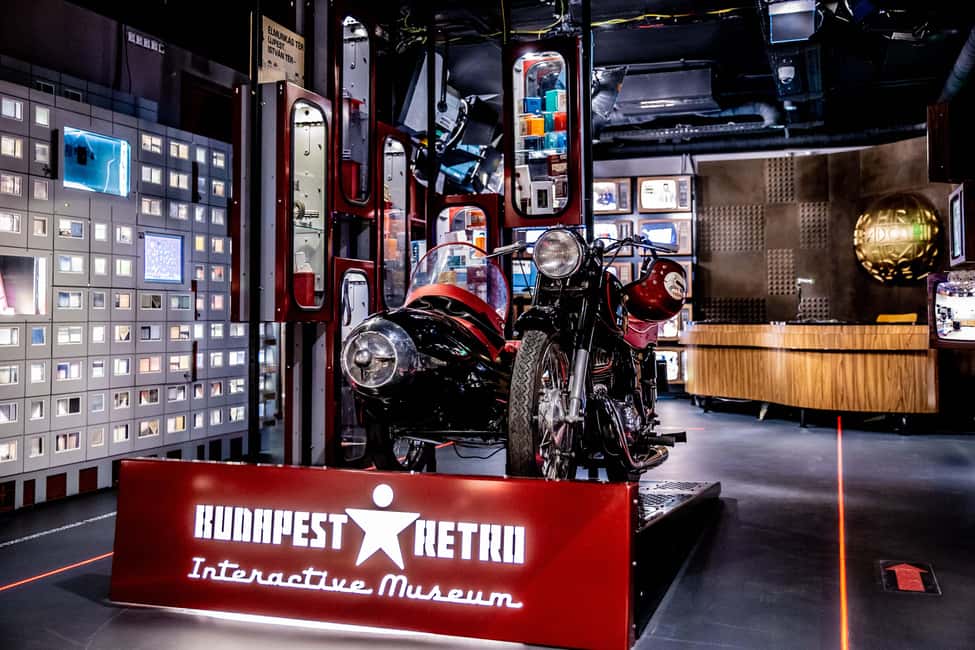
Budgeted time matters in Budapest, and this museum is designed for a short visit that still feels like a full stop. Expect a three-story exhibition that takes you through decades before the political change in Hungary, with lots of hands-on moments rather than long text walls.
The best part is how the place mixes “how things looked” with “how things felt.” You’re not just watching props behind glass. You’re moving through spaces that suggest daily routines—public communication, media, policing, and everyday entertainment—using interactive stations that help you understand the vibe quickly.
The museum is also very doable for families and first-timers because it doesn’t demand a deep knowledge of history to enjoy it. You can participate even if you only catch parts of the story. Still, keep expectations realistic: the experience leans into retro theme and interaction, and not every exhibit comes through clearly in English. If you want a perfect English narration experience, you might need to go slower and read what you can.
You can also read our reviews of more tours and experiences in Budapest


The LADA police car and 1971 jukebox: the fun anchors
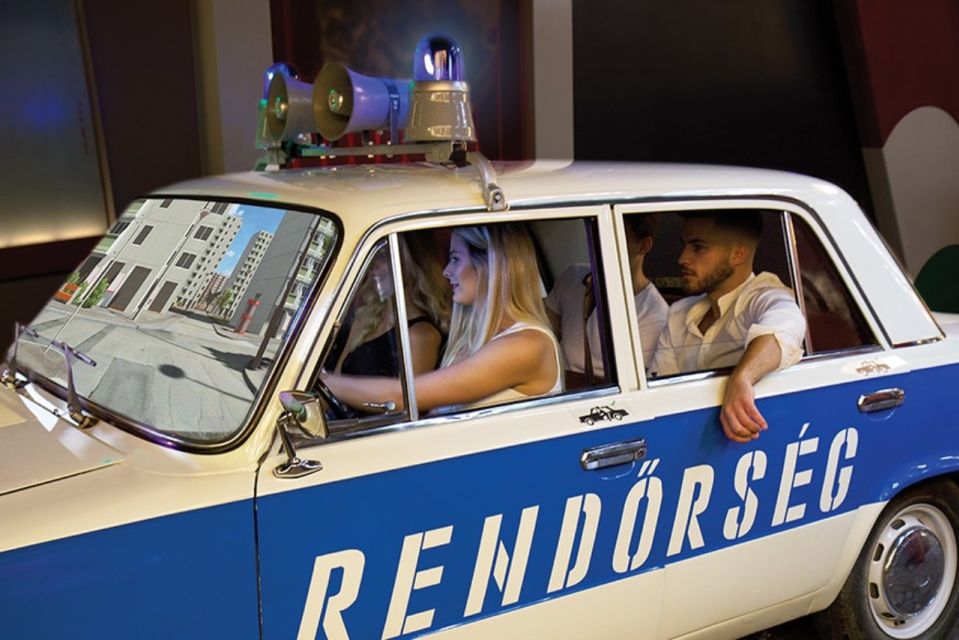
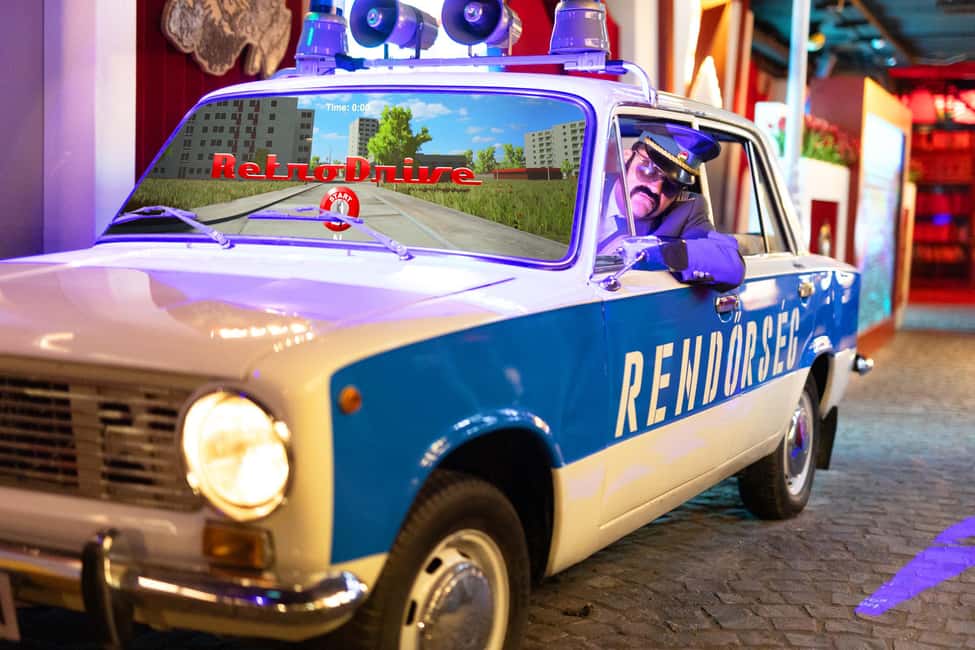
If you only have energy for a couple of stops, make them these. The museum includes a LADA police car from the eighties that you can climb into. That one detail turns history into something physical. You’re not imagining a vehicle—your body is in it, and it makes the setting feel more real.
Right nearby, you can also work a jukebox from 1971. It’s the kind of exhibit that makes the whole museum click: you get to test the sound-and-control side of the era. Instead of just looking at artifacts, you get to use an interface that belongs to that time period.
These two moments also help you “read” the rest of the museum. Once you’ve experienced the police-car realism and the jukebox playfulness, the other stations start to feel less random. They become pieces of a daily-life puzzle: authority and communication, media and music, the public spaces where people spent time.
Media, phones, and the Híradó-style news studio
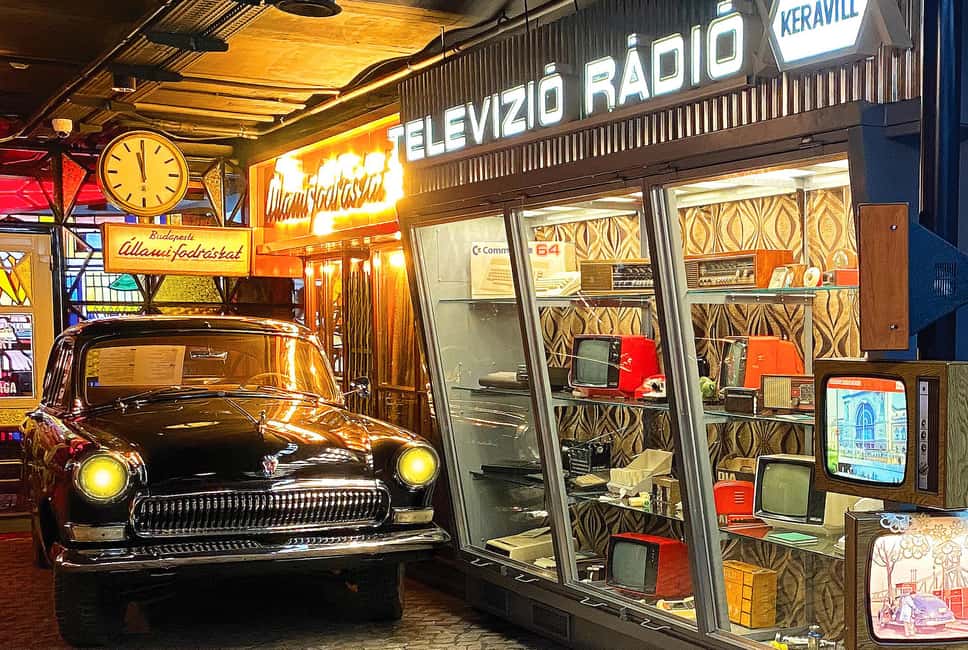
One of the most clever parts of the museum is how it brings media into the story. There’s an area where you can try being a newscaster in the studio of the contemporary Híradó concept. Even if you don’t get every word, it’s easy to understand what you’re doing: stepping into a role that mirrors how news was presented.
There are also phone booths with contemporary jokes or cabaret themes. This is a smart way to show entertainment culture without turning it into a lecture. Phones and booths feel instantly “of a specific time,” so the setting alone does half the work.
For you, this means the museum doesn’t just say what people watched or listened to. It gives you a small performance moment. You’re interacting with the idea of broadcasting rather than memorizing dates.
One practical note: these stations can create a small bottleneck during busy times. Plan a little patience—especially if you’re visiting when crowds peak—so you can actually enjoy the interactions instead of rushing past them.
Bertalan Farkas and the museum’s space-race storytelling
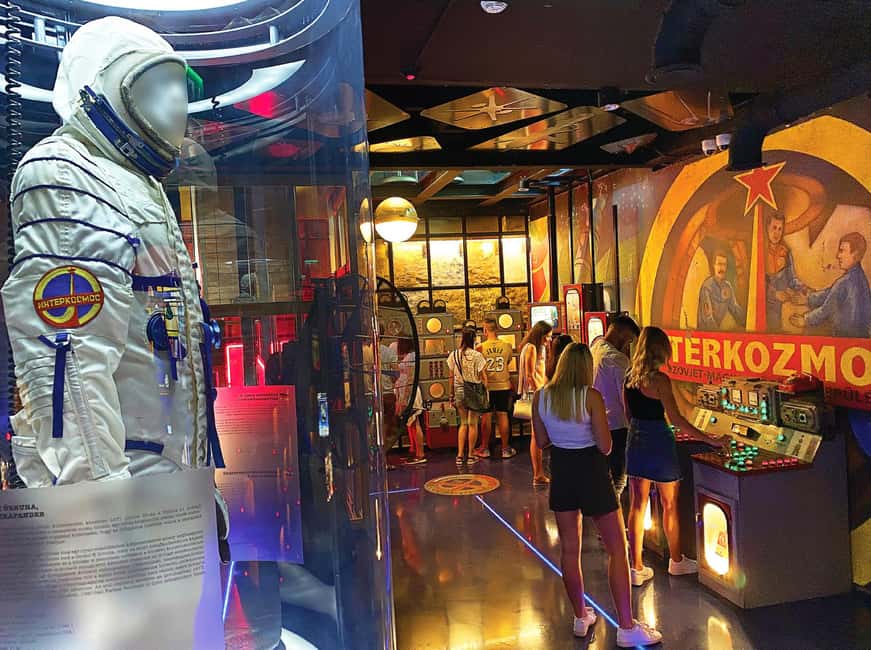
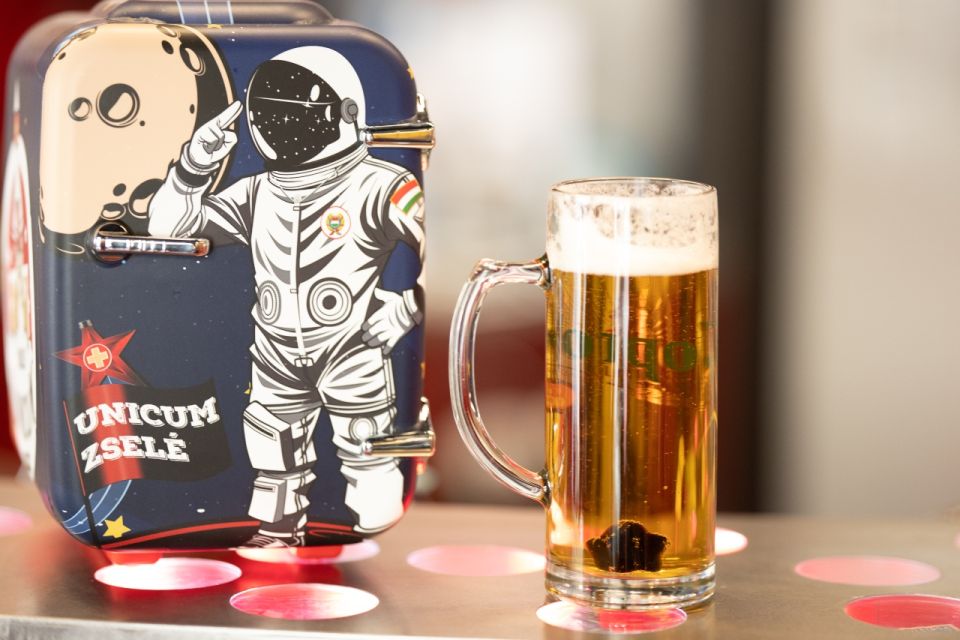
Hungary’s space connection is handled with playful, interactive touches, not just a display case. The museum references what Bertalan Farkas took with him into space, and it ties that theme into other fun items that show up around the exhibition.
This matters because it connects national pride to everyday culture. Instead of only framing history through politics, the museum reminds you that people also lived through major global moments—like space travel—while still dealing with the realities of life under the iron curtain.
You’ll also see related interactive ideas connected to the same theme, including items that are described in the museum as being part of what was brought into space. If you enjoy “small story objects” (the kind of details you’d never learn in a typical photo tour), this section is a satisfying payoff.
Retro bistro lunch break: eat the era, not just look at it
The museum bistro is one of the best “value boosters” because it lets you keep your day moving without hunting for lunch nearby. Food and drinks are available for purchase, so you’re not stuck with only snacks you brought from home. And yes, it follows the retro theme.
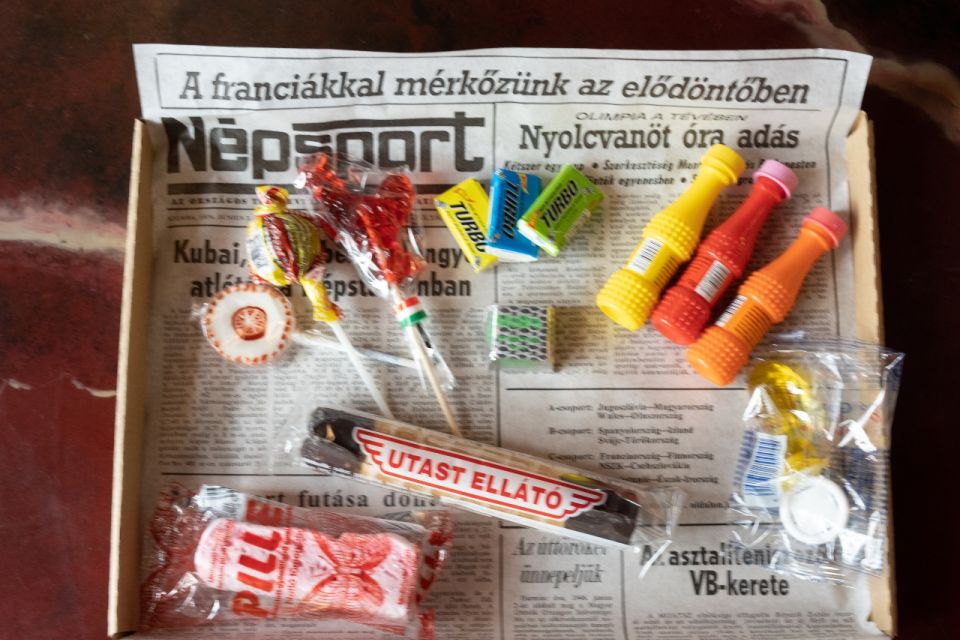
Here are some of the specific items mentioned as available:
- fried Debreceni sausage
- too-sweet punch mignon
- Márka cherry
- Kőbányai beer
- the retro summer drink Bambi
- Turbo chewing gum
- a rooster lollipop
- even an item described as alcoholic jelly related to Bertalan Farkas
You don’t have to try everything. But I like that the menu is built like a mini exhibit: it gives you a reason to linger and then compare what you tasted to what you saw.
If you’re sensitive to sweetness, start small. A few of these retro-style drinks sound famously sugary, and the museum leans into that playful exaggeration. If you’re with kids, the sweets like the chewing gum and lollipops feel like easy wins.
You can also read our reviews of more museum experiences in Budapest





The retro card photo keepsake (and why it’s worth it)
A fun optional add-on is making a retro card with your own photo. Since it’s described as available for purchase, you can treat it like a souvenir that matches the museum’s theme.
What I like about this keepsake is that it doesn’t feel random. It’s directly tied to the world you’re walking through, and it helps you remember the visit beyond the usual photos on your phone.
If you’re the type who enjoys tangible souvenirs, this is one of the more thoughtful ones on offer.
Timing and how to fit it into your Budapest day
The suggested visit time is 1–2 hours, which is exactly what you want in a city full of outdoor walking and long café stops. You can also stretch it if you pause a lot at each interactive station, especially the media areas and the car/jukebox moments.
The museum is closed on January 1st and December 24th, 25th, and 26th, so plan around Hungarian holiday dates. For normal days, expect a rotating flow where you’ll want time to wait for interactive stations and then cycle back if you missed anything.
Tickets are valid for 1 day, and starting times depend on availability, so I recommend checking what time slot fits your schedule before you commit. Also, the price may vary depending on the day of the week, so don’t assume the $15 figure always applies the same way on every day.
If you like flexibility, this is the kind of ticket that works well. It’s described with options like free cancellation up to 24 hours in advance for a full refund, plus the ability to reserve and pay later.
Crowds, language, and what to do if English is thin
This is the main practical trade-off. Some exhibits aren’t fully in English, and that can leave you stuck in the “I get the vibe, but not the details” zone.
Here’s how to handle it without killing the fun:
- Focus on the interactive elements first (car, jukebox, media/phone booths). Those usually give you enough context even when language is incomplete.
- When you hit a station that feels confusing, pause and scan for any visual explanation. The museum uses theme design to guide you.
- Keep your expectations aligned: you’re there for hands-on nostalgia and a feel for the era, not to complete a scholarly course.
One more small consideration: on hot days, you might not get the cool-down you expect inside. That’s the kind of thing that matters if you’re planning a midday museum slot. If you’re sensitive to heat, consider timing your visit for late afternoon when you’re less likely to feel overheated.
Value check: is $15 worth it?
At around $15 per person, this museum is priced like an activity, not a long-form attraction. That makes sense because your time on site is typically short, and the experience is built around interactivity.
For your money, you get:
- a multi-level exhibition route
- hands-on stations tied to major “everyday life” themes
- a real LADA police car interaction
- a playable 1971 jukebox moment
- a retro bistro you can use as a lunch stop if you want it
If you like museums where you do things—push buttons, role-play as a broadcaster, sit in a vehicle—this price feels fair. If you prefer quiet, text-heavy history with lots of English interpretation, you might feel you’re paying for atmosphere more than depth.
So the value really depends on your style. I see it as a strong “second museum stop” or a fun indoor break when Budapest weather turns.
Who should book this museum in Budapest?
This fits best if you:
- want an interactive experience that’s easy to understand quickly
- enjoy retro design, Soviet-era aesthetics, and everyday-life stories
- are traveling with kids and want activities that don’t require deep reading
- like short visits that don’t eat your entire day
It’s also a great choice if you’re already exploring other parts of Budapest and you need one indoor, hands-on stop that’s different from churches, bridges, and markets.
If you’re a history purist who expects strict academic pacing and excellent English translations throughout, you might be happier with a different museum. But if your goal is to feel the era through playful, interactive storytelling, you’re in the right place.
Should you book Budapest Retro Erlebnispark?
I’d book it if you want a memorable, fun, and practical indoor stop that doesn’t require advanced knowledge. The LADA police car, the 1971 jukebox, and the media/phone booth role-play are exactly the kind of anchors that make a short visit worthwhile. Add in the option to eat retro-style food on site, and it becomes more than just a ticket—you get an experience you can spend an afternoon on without planning a whole production.
Skip it if you want a fully English, scholarly museum experience with minimal waiting and lots of climate comfort. The museum clearly aims for retro fun first, explanation second.
If your schedule is flexible, check availability for starting times, pick a slot that matches your energy, and go in ready to participate.
FAQ
How long should I plan to spend at Budapest Retro Erlebnispark?
The suggested visit duration is 1–2 hours.
Where do I present my voucher?
Present your voucher at the Budapest Retro Élményközpont ticket counter.
Are food and drinks included with the ticket?
No. Food and drinks are available for purchase at the museum bistro.
When is the museum closed?
It is closed on January 1st and December 24th, 25th, and 26th.
Is there any special offer for seniors?
Every Wednesday, senior guests who buy a senior ticket (65+) get free coffee.
Is the ticket valid for multiple days?
No. The ticket is valid for 1 day, and you’ll need to check availability for starting times.