REVIEW · BUDAPEST
Budapest Bike Tour with Hungarian Goulash
Book on Viator →Operated by Budapest Bike Breeze · Bookable on Viator
Budapest looks great from the sidewalk. Seeing it roll past on a bike is a different game. This 4-hour loop packs major landmarks into an easy pace, with time to pause for photos and a hot break built around Hungarian goulash.
I especially like the way you cover big-ticket sights without turning the day into a marathon—Andrassy Avenue to Heroes’ Square to Parliament is a smart, efficient route. And the food stop feels like part of the experience, not an afterthought: you get a proper bowl of Hungarian goulash plus water refreshments while the ride keeps moving.
One consideration: you do need to feel confident on a bike in real city traffic. Even with bike lanes and a mostly flat route, you’ll be mixing with cars and crowds at busy points, so it’s not the day for shaky riders.
In This Review
- Key things to know before you hop on
- Why this bike-and-goulash format works in Budapest
- Price and value: what $42.93 buys you
- Meet-up day: bikes, helmets, and the pace rules
- Stop by stop: the route that makes the city make sense
- Elizabeth Square: a green start with quick orientation
- Andrassy Avenue and the State Opera: prestige boulevard from a bike lane
- Heroes’ Square and City Park: monuments with breathing room
- Vajdahunyad Castle and the park lake: the fairy-tale photo moment
- Széchenyi Baths area: thermal pools without needing a soaking session
- House of Music Hungary: a modern cultural stop in the middle of old-world scenery
- House of Terror: a serious historical moment (admission not included)
- St. Stephen’s Basilica: a grand finale feel in the city’s center
- Szabadság tér and the Soviet army memorial: noticing what’s still here
- Hungarian Parliament and the Chain Bridge panoramas: scale and symbolism from the bike route
- Castle Garden: a restored park break with terrace-and-view vibes
- Who’s this bike tour best for?
- The guide makes or breaks it
- What to eat and what the goulash stop really means
- Practical advice to make your day smoother
- Should you book Budapest Bike Tour with Hungarian Goulash?
Key things to know before you hop on
- Small group (max 12) means you’re not lost in a crowd, and the guide can keep everyone together.
- The ride favors bike lanes and mostly flat terrain, designed for a relaxed sightseeing speed.
- You’ll pass major UNESCO-area landmarks like Andrassy Avenue and the Buda Castle District from the saddle.
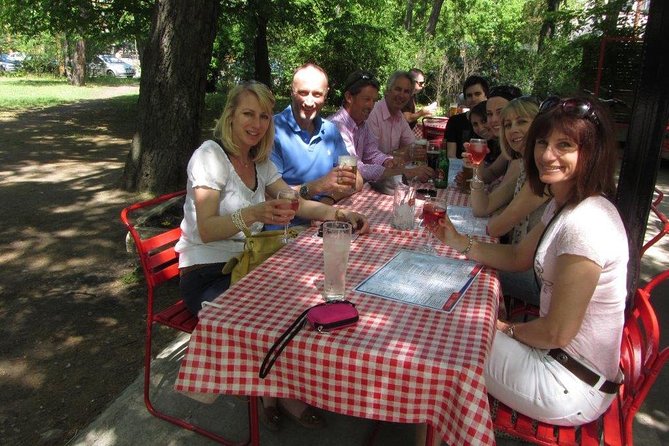
- The tour includes a warm Hungarian goulash stop at an open-air restaurant setting.
- You’ll get a quick look at Széchenyi Baths from the outside and a peek at the thermal pools.
- House of Terror is stop-and-learn, but the museum admission is not included.
Why this bike-and-goulash format works in Budapest
Budapest is one of those cities where the highlights are spread out but still close enough to string together if you plan well. This tour does that planning for you. You’re not just “biking around.” You’re cycling through the story of the city: grand monuments, bridges, and the layered politics of 20th-century Hungary—then you reset at a restaurant with a hot bowl of goulash.
What makes this style of tour valuable is the pacing. It’s long enough to feel like a real orientation, but short enough that you can still explore on your own afterward—especially since many sights are stop-and-look rather than long museum marathons. You’ll come away with a mental map and a shortlist of where you want to spend more time later.
And the goulash part matters more than you’d think. In a city that moves fast, it’s a practical reset point. You’re not just sightseeing hungry. You’re cycling, pausing, and eating while the day’s still young.
You can also read our reviews of more cycling tours in Budapest
Price and value: what $42.93 buys you
At about $42.93 per person for roughly 4 hours (including time for prep), this tour is strong value if you compare it to paying separately for bike rental plus a guided overview plus a meal.
You’re getting:
- a local guide
- a hybrid 21-speed bike
- water refreshments
- Hungarian speciality food (goulash)
- helmets are provided, and you can wear one (it’s not compulsory)
What’s not included is mainly the “optional extras” type of cost. For example, House of Terror admission isn’t included. So if you’re the type who wants to spend serious time inside, budget a little extra.
If you’re flying in with limited time, this price makes sense. It’s not a full day-ticket. It’s an efficient, guided “get your bearings fast” day with food built in.
Meet-up day: bikes, helmets, and the pace rules
You start at Budapest Bike Breeze – Bike Tours, at Rumbach Sebestyén u. 10 (1075). The start time is 10:00 am, and the tour generally ends around 2:00 pm (though real life can add time for photos and moving through busy areas).
Before you ride, you’ll pick up bikes and helmets and get a safety overview. That matters in Budapest. The city has bike lanes, but it also has traffic, turning cars, and crowded pedestrian zones near big sights. The guide’s job here is to keep the group together at an easy, pleasant speed.
From what you can expect on the ground: you’ll want to follow the group pace, keep your turns predictable, and be ready to pause quickly for photos. One of the consistent themes in the experience is that guides don’t rush the group. People ask for pictures and get them.
Also, if you’re interested in comfort or you want to make the ride even easier, e-bikes are available as an extra.
Stop by stop: the route that makes the city make sense
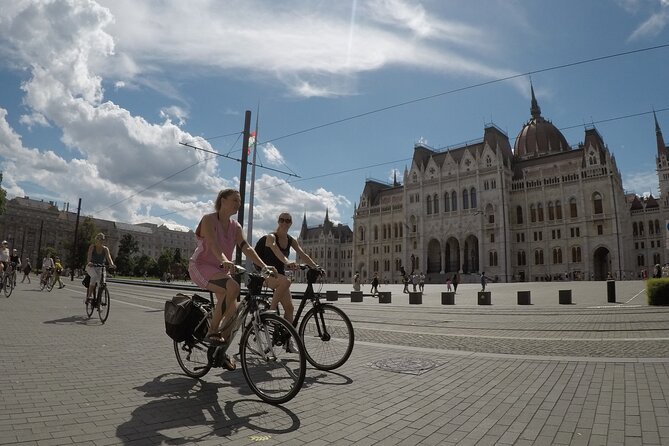
Elizabeth Square: a green start with quick orientation
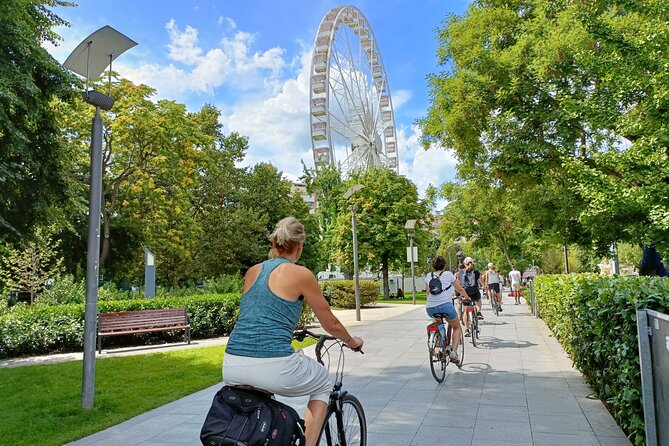
You begin with a short introduction in Elizabeth Square, a lush spot with views that help frame the Danube area. It’s a good “warm start” before you roll down the more famous boulevards. You’ll also see landmarks like the Budapest Eye Ferris wheel and the Danube Fountain, which give you useful reference points for later.
This is a short stop, so don’t expect a deep dive. Think of it as setting the geography.






Andrassy Avenue and the State Opera: prestige boulevard from a bike lane
Then comes Andrassy Avenue, one of Budapest’s most prestigious streets and a UNESCO World Heritage Site. You’ll ride here at a light pace with only a few stops, which keeps the flow of the tour smooth.
Two practical things make this section stand out from the seat:
- You get steady downhill-style energy without a strenuous climb feel, since the route is mostly flat.
- You’re riding through a corridor that looks best when you move through it, not when you’re stuck walking.
You also stop at the Hungarian State Opera House, a neo-Renaissance building known for its ornamentation and acoustics. Even if you never plan to attend an opera, seeing the exterior in motion helps you understand why this part of town is treated like a centerpiece.
Heroes’ Square and City Park: monuments with breathing room
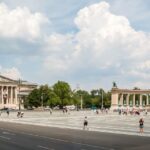
Next you hit Heroes’ Square, known for the Millennium Monument and statues of important Hungarian historical figures. From a bike perspective, this is a good stop because it gives you a dramatic backdrop without the fatigue of a long walk.
After Heroes’ Square, you roll toward City Park (Varosliget). This transition is smart. The city’s monuments are big and loud; the park makes the day feel calmer.
Vajdahunyad Castle and the park lake: the fairy-tale photo moment
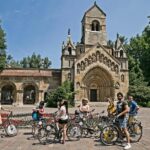
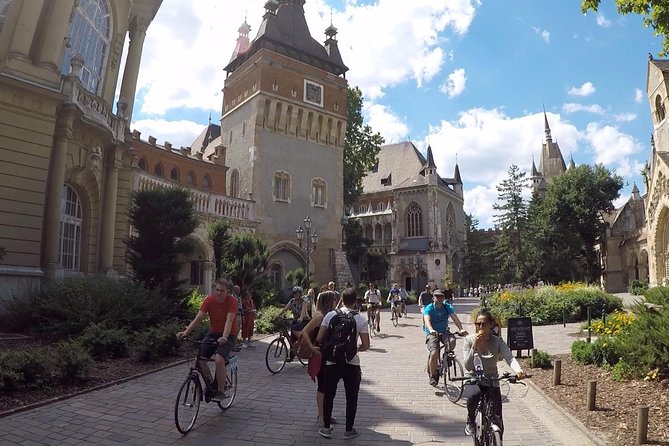
In City Park, you stop at Vajdahunyad Castle, a picturesque complex that mixes architectural styles from Hungarian history. You also get a look at the castle lake—used as a seasonal ice-rink in winter, which the guide may mention as a fun context point.
This stop is short, but it’s also visual. If you want a crisp photo, this is one of your best chances on the whole route.
Practical tip: if the light is changing or you want a few angles, ask the guide for a quick “photo pause.” The tour runs with real-life timing, and photo requests are part of the culture of this trip.
Széchenyi Baths area: thermal pools without needing a soaking session
Then you head toward the Széchenyi Baths area. You’ll see the complex’s architecture and learn about Hungarian bathing culture, with a stop that includes a peek at the thermal pools.
This is ideal if you’re curious about Budapest’s famous bath scene but don’t want your entire afternoon trapped in swim gear. You’ll leave with enough understanding to decide if you want a longer bath visit later.
House of Music Hungary: a modern cultural stop in the middle of old-world scenery
Next is House of Music Hungary, another stop in City Park. Expect a short look and a bit of context about its music-themed exhibitions. This one works well because it breaks up the older-monument rhythm without turning into a time sink.
House of Terror: a serious historical moment (admission not included)
The day turns heavier at the House of Terror Museum. This building is tied to Gestapo and Communist secret police headquarters, and you’ll see references like a piece of the Berlin Wall. The museum is powerful and focuses on victims of Hungary’s fascist and Communist regimes.
Important: you’re not necessarily walking into the full museum experience on this tour since admission is not included. But the stop is still valuable because it puts the later “why this matters” context into the trip.
If you already know you want to spend time inside, plan to add that separately. The tour gives the overview; it doesn’t replace a museum visit.
St. Stephen’s Basilica: a grand finale feel in the city’s center
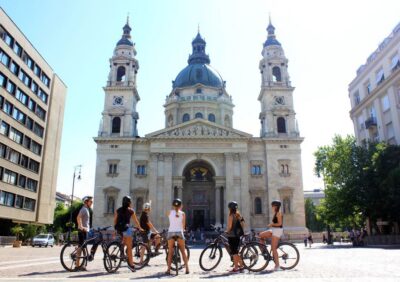
Then you roll up toward St. Stephen’s Basilica (Szent István Bazilika). This is one of Budapest’s biggest visual moments. You’ll learn about the origins and religions tied to Hungarian history and also about the holy right hand associated with the site.
This stop is time-limited, so don’t plan to climb or linger for long. But you’ll get enough to understand why it’s such a dominant landmark.
Szabadság tér and the Soviet army memorial: noticing what’s still here
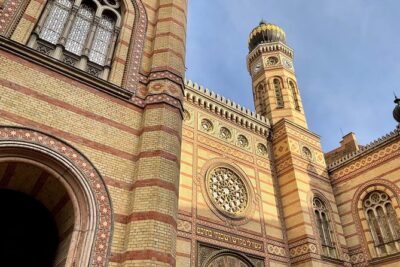
Next is Szabadság tér, where you’ll see the last standing Soviet army memorial in Budapest, surrounded by grand historic buildings. This stop tends to land well because it’s a reminder that political history isn’t only in books—it’s in the streets.
Expect a short pause, not a long lecture. Still, it helps connect the House of Terror themes to what you see on the street today.
Hungarian Parliament and the Chain Bridge panoramas: scale and symbolism from the bike route
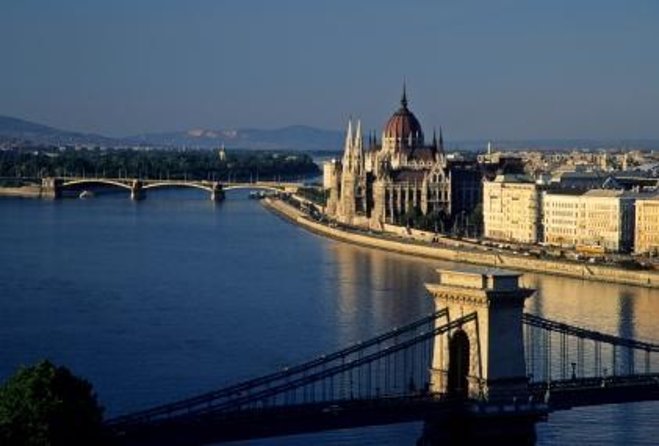
You then reach the Hungarian Parliament Building, one of the city’s icons. The stop includes context on why it’s known as the third largest parliament building in the world and the fact that it’s home to Hungary’s National Assembly and the Holy Crown.
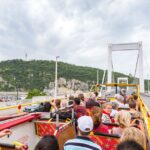
Between stops, the route crosses into panoramic views over the Danube. You’ll get a look across to Buda and along the bridge area—useful if you want to later walk around the castle district.
One tip: when you’re offered panoramas, take them seriously. Budapest’s geography is its secret weapon. Seeing Parliament from the bike route helps you plan a better walking route later.
Castle Garden: a restored park break with terrace-and-view vibes
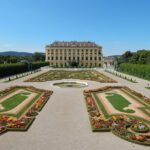
Finally, you finish with Castle Garden, a beautifully restored neo-Renaissance park space with terraces, fountains, and quieter walkways. It’s a pleasant wind-down before you head back to the starting point.
This isn’t about a checklist. It’s about giving your legs a calmer finish while you take in the Danube views and get practical suggestions for where to walk next in the Buda Castle District.
Who’s this bike tour best for?
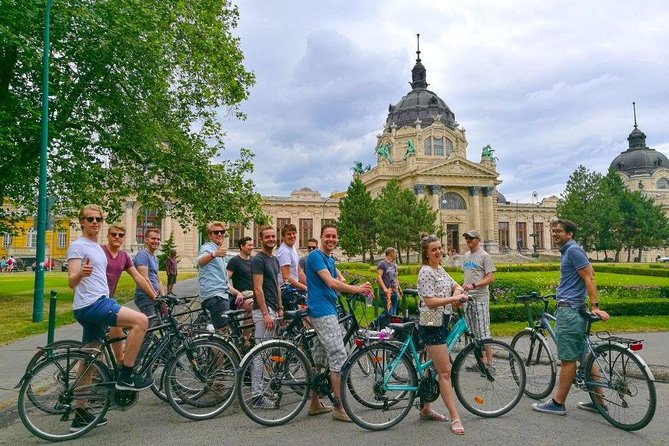
This tour is a great fit if you:
- want a guided orientation to major Budapest landmarks without spending all day on foot
- like the idea of learning city context while you ride
- enjoy Hungarian food and want goulash as part of the experience
- are comfortable biking and don’t mind occasional busy intersections
It’s less ideal if you:
- feel unsure riding in mixed traffic or crowded pedestrian zones
- want a day that’s mostly museums and long indoor time
- have children under 10 (it’s not recommended)
Also, if you’re chilly or the weather looks tricky, biking can be surprisingly good. You’re moving, you’re warm from effort, and you’re not stuck in long lines.
The guide makes or breaks it
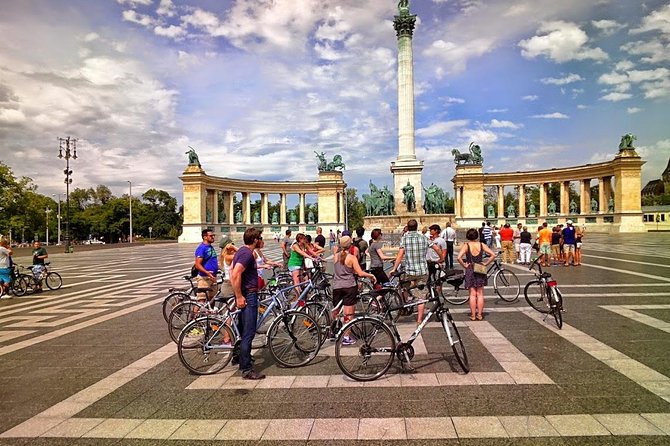
This tour is designed for small-group flow, and the guide role is huge. In the experience history, you’ll see names like Feri, Manuel, and Barbara associated with excellent pacing and helpful storytelling.
The best guides here do two things at once:
1) They keep you moving in a safe, organized way.
2) They turn landmarks into real context, so you remember more than just photos.
If you like asking questions, you’ll probably have chances. Many bike tours can feel like a one-way lecture. This one tends to leave room for photo requests and conversation.
What to eat and what the goulash stop really means
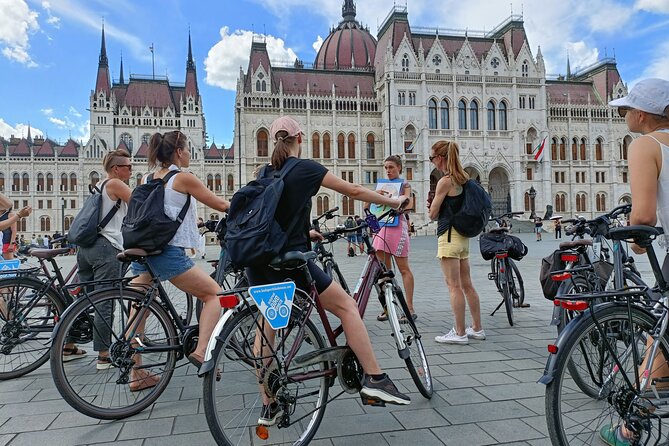
The included meal is simple but satisfying: Hungarian goulash with water refreshments. The key is that it’s timed as a reward for cycling, not a random food break.
The goulash is also a good “taste anchor.” After you eat, the places you passed start to connect. You’re not just consuming sights. You’re getting a slice of local daily life.
Vegetarian meal is available too, so you’re not stuck with a sad placeholder plate.
Practical advice to make your day smoother
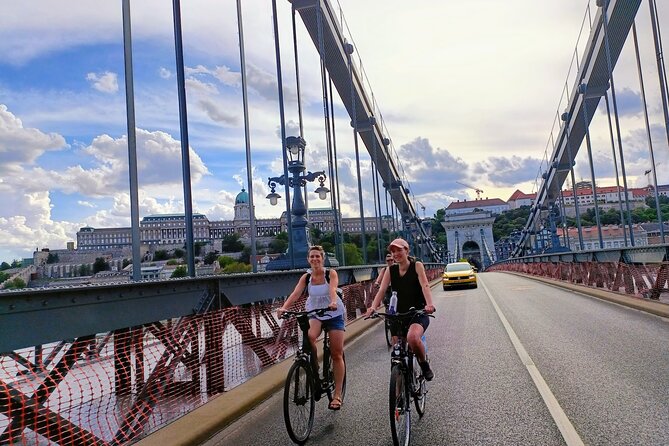
Here’s what I’d do before you go:
- Wear comfortable shoes for the short stops and occasional getting on/off the bike.
- Plan to keep an easy pace. If you drift, the group has to wait.
- If you want extra photos at big moments, ask early. Quick requests are easiest to manage.
- If you’re sensitive to history’s darker side, prepare mentally for the House of Terror stop.
And one bike-tip: if you haven’t ridden in a while, do a short warm-up ride before leaving your lodging. You don’t need to be a racer. You just need to feel steady.
Should you book Budapest Bike Tour with Hungarian Goulash?
Book it if you want the most useful first pass through Budapest: bike-friendly routes, real landmarks, a food break that’s actually included, and a small group that keeps the day from feeling hectic. It’s also a strong choice for value because you’re paying for bike + guide + meal in one.
Skip it if biking in traffic makes you nervous or if you want a museum-heavy schedule. You’ll be outside most of the time, and you’ll spend your energy on riding rather than sitting inside for hours.
If you’re a confident cyclist and you want an orientation that feels local and practical, this is one of the better ways to spend a half-day in Budapest.