REVIEW · BUDAPEST
Private Wine Tasting in Budapest
Book on Viator →Operated by Miklós Csizmadia · Bookable on Viator
Hungarian wine is a great way to learn fast. In Budapest, this private tasting (about 2 hours) with wine journalist and judge Miklós Csizmadia turns a glass of wine into a quick lesson on Hungarian grapes and winemaking stories. I love how the lineup focuses on indigenous varieties you rarely see elsewhere, from Tokaj’s base grape Furmint to the famously tricky-sounding Cserszegi fűszeres.
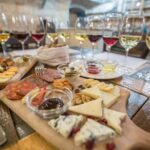
You also get a no-stress setup for the whole evening. The tapas-style snacks (ham, sausages, cheese, olives, bread) keep you comfortable while you taste reds and whites side by side. One possible drawback: the start is a bit outside the city center at Tompa u. 26, so plan to route there efficiently if you only have one short night in Budapest.
In This Review
- Key highlights worth planning around
- What You Really Taste: 6 + 1 Indigenous Hungarian Wines
- Who Guides the Night: Miklós Csizmadia at Wine the Gap
- How the 2-Hour Timing Works (and Why It Feels Right)
- Snacks That Make Wine Pairing Feel Natural
- Learning Hungarian Winemaking Without the Lecture Vibe
- Furmint, Tokaji Aszú, and Why This Flight Starts Making Sense
- Price and Value: What $60 Really Buys You in Budapest
- Where It Fits Best in Your Budapest Plans
- Who Should Book This Private Tasting?
- Should You Book This Private Wine Tasting in Budapest?
- FAQ
- How long is the private wine tasting in Budapest?
- What is the price per person?
- Is this tour offered in English?
- Is it a private group?
- Where do I meet, and where does it end?
- What wines and snacks are included?
- Do I need to eat before the tasting?
- Can I cancel for a full refund?
- Is the meeting point accessible by public transportation, and are service animals allowed?
Key highlights worth planning around
- Wine judge hosting the session: Miklós Csizmadia brings a mix of journalist storytelling and judging perspective.
- 6 + 1 indigenous Hungarian wines: Expect a focused flight of whites, plus reds, and an extra featured pour.
- Tokaj connection through Furmint: You’ll hear how Furmint links to Tokaji Aszú, not just how it tastes.
- Tapas snacks, not just bread: You’re pairing wine with ham, sausages, cheese, olives, and bread.
- Real-world prestige: The wines can be ones you’d typically find tasted or bought in Michelin-star restaurants and top Budapest hotels.
- Private format: Only your group participates, with English offered.
What You Really Taste: 6 + 1 Indigenous Hungarian Wines
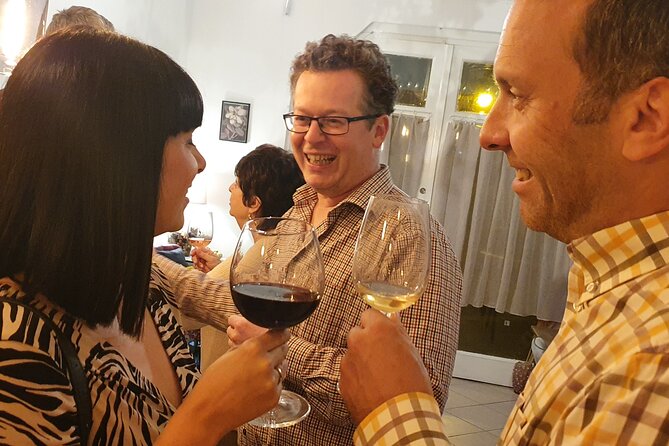
This is built around one simple idea: Hungary has wine identities that don’t need to copy the rest of Europe. You’ll taste a set described as 6 + 1 indigenous Hungarian whites, including Cserszegi fűszeres, Hárslevelű, and Furmint. For many people, Furmint is the easiest entry point because it’s the basic grape of Tokaji Aszú—so you’re learning a big Hungarian name early, not at the end.
Then you shift gears into reds: Kékfrankos, Kadarka, and Bull’s Blood. That white-to-red contrast matters. Even if you’re a casual wine drinker, it helps you notice structure—acidity in whites, fruit and spice tendencies in reds—without having to memorize a wine textbook.
What makes the flight feel special is the way the host frames the bottles. This isn’t just swishing and sipping. You’re getting context on Hungarian winemaking and what makes these varieties different, plus you’ll hear funny stories about the wines you’re tasting. That storytelling is part of why people leave feeling like they understand what they just drank.
You can also read our reviews of more food & drink experiences in Budapest

Who Guides the Night: Miklós Csizmadia at Wine the Gap
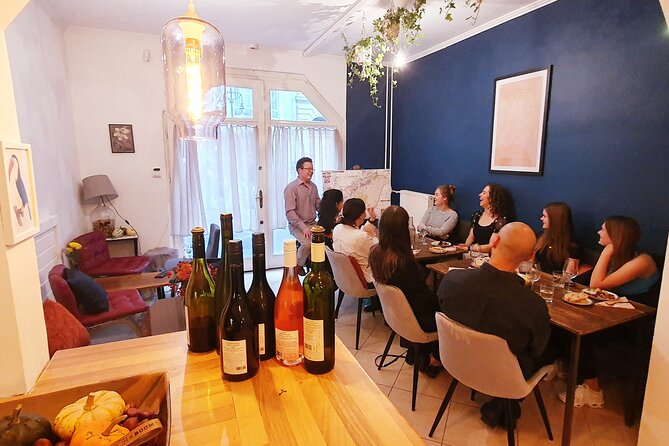
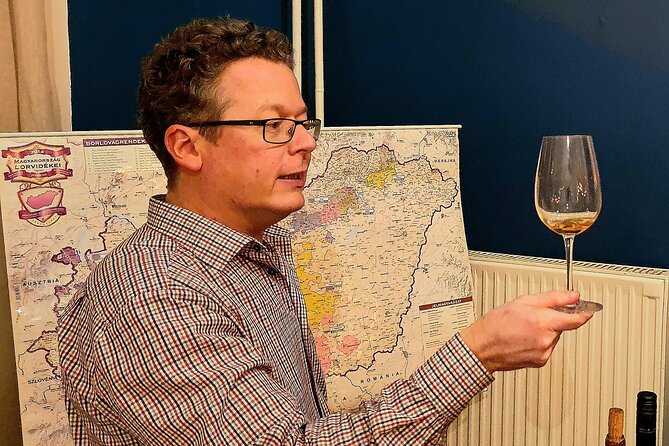
You meet at Wine the Gap Borbár és Rendezvénytér, Tompa u. 26, 1094 Hungary. The session is hosted by Miklós Csizmadia, a wine journalist and wine judge, and that credential shows in the pacing. The experience is designed to be both entertaining and structured, like someone is guiding you through a topic they genuinely care about.
Several people specifically highlight that the host mixes expertise with a lively, fun tone. That’s important for a wine tasting. Too often, tastings turn into stiff lectures. Here, the explanations are steady enough that you learn, but relaxed enough that it feels like a good evening out.
English is offered, and the private format helps you ask questions without feeling like you’re in someone else’s class. If you’re the type who likes to clarify details—why a wine tastes a certain way, or how a style fits Hungarian traditions—you’ll likely get more out of this than a crowded group tasting.
One more practical note: reviews mention the bar sits in a street with nightlife, and the place itself has a great atmosphere. So even if you’re a little out of the center, you’re not walking into an empty room. You’re heading to an actual wine bar scene.
How the 2-Hour Timing Works (and Why It Feels Right)
The tour runs about 2 hours, which is a sweet spot in Budapest. Long enough to taste multiple wines and get explanations. Short enough that you can still do dinner or a night walk after.
In a good tasting like this, the timing has to support contrast:
- You start with whites so your palate isn’t overwhelmed.
- You move into reds so you’re comparing styles while everything is fresh.
- You finish with an extra featured pour and the host’s wrap-up stories so the evening lands with a point.
Some sessions are described as including a rose and ending with a delicate dessert wine. That’s not always guaranteed from the core outline, but it matches how the host reportedly builds the final impression. Either way, the goal is the same: you should finish with a few bottles you genuinely want to remember, not just a vague sense that Hungarian wine is interesting.
Snacks That Make Wine Pairing Feel Natural
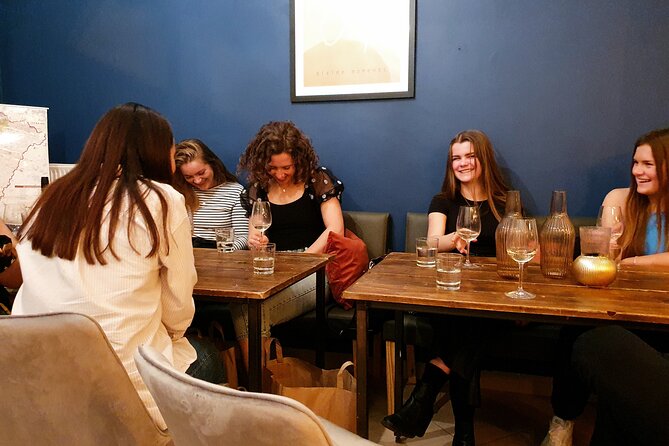
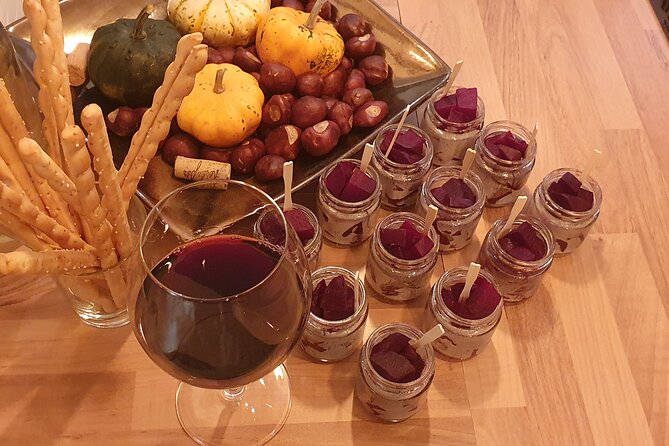
Nobody wants to do a wine tasting on an empty stomach. Here, you get tapas plates designed to keep the tasting comfortable: ham, sausages, cheese, olives, and bread.
That snack set is practical. It works across both whites and reds:
- Salty, savory bites help you keep your palate engaged.
- Cheese and cured meats let you notice how tannins and acidity behave in the glass.
- Bread and olives make it easier to sip slowly without feeling rushed.
If you care about pairings, pay attention to how the host talks about what you’re eating. Even without strict rules, pairing logic is the difference between drinking and learning. Reviews also mention items like an addictive spread (including a jar of Mangalica spread in at least one account), so the food can go beyond the basics and feel very Hungarian.
Learning Hungarian Winemaking Without the Lecture Vibe
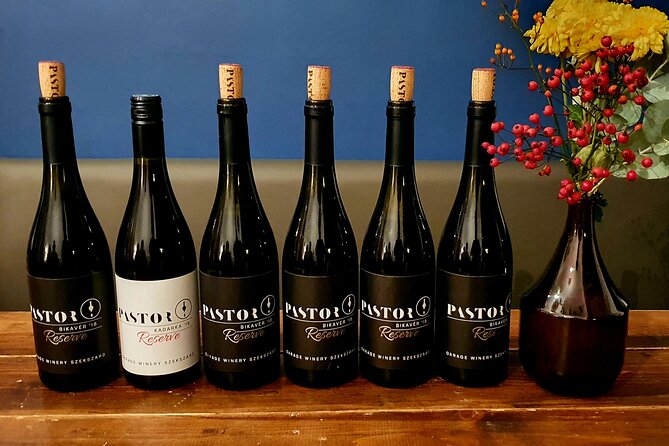
The tasting includes explanations of Hungarian wine production and the history of winemaking in Hungary. The way it’s delivered seems to matter as much as the content. People mention that the host tells history alongside what’s in your glass, not as a separate chapter you endure.
You’ll also hear about wine producers personally. The host is described as knowing wine makers, and that shows up as specific stories connected to the bottles. That matters for authenticity. When someone ties a wine to a real person and a real tradition, it stops feeling generic.
One extra detail that pops up in accounts: you may hear about fröccs, and in some cases the host makes one for the group. Even if you’ve never tried it, that kind of local inclusion makes the tasting feel like you’re tasting Hungary, not just consuming wine.
You can also read our reviews of more private tours in Budapest





Furmint, Tokaji Aszú, and Why This Flight Starts Making Sense
If you’re new to Hungarian wine, Furmint is a smart anchor. The tasting outline specifically links Furmint to Tokaji Aszú. That connection gives you a handle to remember, even when you’re tasting several different whites.
From there, Hárslevelű and Cserszegi fűszeres help you widen your sense of what Hungarian whites can feel like. In other words, you’re not only sampling one style. You’re learning the range that stays within Hungarian identity.
Then the reds come in with Kékfrankos, Kadarka, and Bull’s Blood. Kadarka is a good reminder that Hungary’s red varieties aren’t just “drier versions of what you already know.” And Bull’s Blood is one of those oddly named wines that tends to stick in your memory because it feels distinctive.
The result: you’re leaving with comparisons you can actually use later when you see these grapes on a menu.
Price and Value: What $60 Really Buys You in Budapest
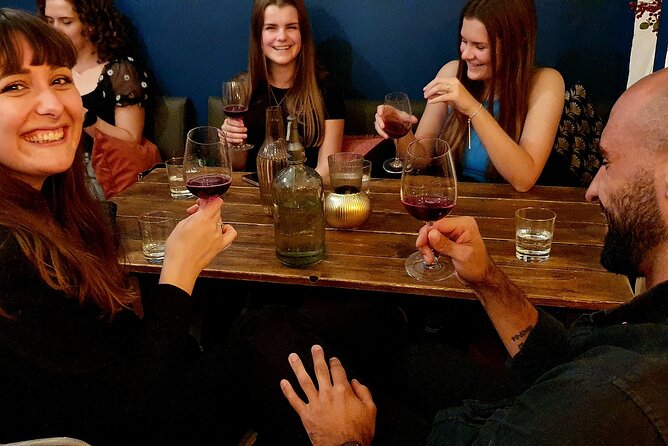
At $60 per person, you’re paying for more than six sips. You’re paying for:
- A private session (your group only)
- A wine journalist and wine judge as the host
- A curated lineup of indigenous Hungarian wines (6 + 1, plus you may get additional style variation depending on the session)
- Snacks that are meant to pair with the tasting
- English language support
- A structured learning experience that doesn’t feel like a generic store promotion
For Budapest, this price can be a fair deal if you like wine but want to learn the “why,” not just drink the “what.” If you only want casual wine with no explanations, you might feel you’re paying for someone’s time and craft knowledge. But if you’re even slightly curious—regions, grapes, production stories—this is the kind of experience that makes that curiosity pay off.
Also, the wines described here are ones that often appear only in Michelin-star restaurants and top hotels. That adds real value if you’re not planning to hunt down these specific bottles on your own.
Where It Fits Best in Your Budapest Plans
This is ideal when you want one smart, local night that isn’t built around a long commute or a museum schedule. You’re also not locked into a full day. It’s about two hours, then you’re free.
Because it starts at Tompa u. 26, 1094, it’s easiest if:
- You’ll be staying somewhere with straightforward public transit access
- You’re okay with being a bit away from the main tourist crush
- You want a grounded local experience in a wine bar setting
This also fits well if you’re traveling with someone who drinks wine differently. The flight includes both whites and reds, so you’re not forcing one person to suffer through the “other side” of wine preferences.
Who Should Book This Private Tasting?
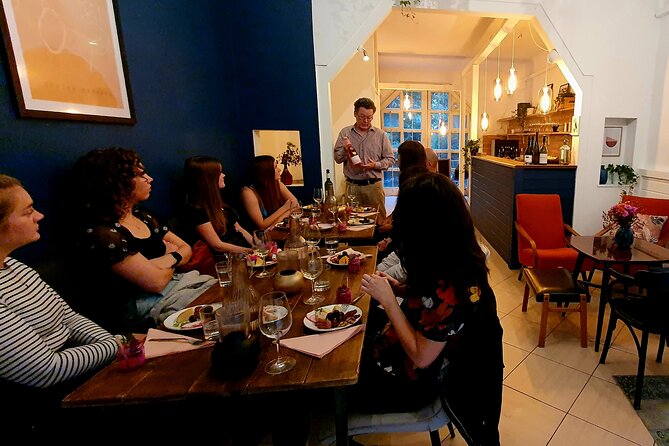
Book it if you want:
- Hungarian wine rather than generic European varietals
- A guided experience where you can ask questions in English
- A private setting that feels relaxed and personal
- A clear snack pairing instead of just crackers
- A host with both storytelling and judging background
Consider skipping it if you only want a quick drink in a casual place. This is designed as a learning-focused evening, with humor and stories, not just an open bar.
Should You Book This Private Wine Tasting in Budapest?
Yes—if your trip includes even a little space for wine learning. The big win is the host’s ability to connect Hungarian grapes to Hungarian winemaking, while keeping the mood light. The lineup is built around indigenous varieties like Furmint, Cserszegi fűszeres, and Hárslevelű, plus reds such as Kékfrankos and Kadarka, and the snack setup makes it easy to enjoy all of it without rushing.
If you’re picky about location, don’t ignore that Tompa u. 26 is a bit out from the center. But the trade-off is you get a real wine bar atmosphere and a private session that’s hard to replicate on your own.
FAQ
How long is the private wine tasting in Budapest?
It lasts about 2 hours.
What is the price per person?
The price is $60 per person.
Is this tour offered in English?
Yes, English is offered.
Is it a private group?
Yes. Only your group participates.
Where do I meet, and where does it end?
You start at Wine the Gap Borbár és Rendezvénytér, Tompa u. 26, 1094 Hungary. It ends back at the same meeting point.
What wines and snacks are included?
The tasting includes a selection of Hungarian whites and reds, described as 6 + 1 indigenous Hungarian white wines and several Hungarian reds (including Cserszegi fűszeres, Hárslevelű, Furmint, Kékfrankos, Kadarka, and Bull’s Blood). Snacks are provided, including tapas plates such as ham, sausages, cheese, olives, and bread.
Do I need to eat before the tasting?
No. Snacks are included to accompany the wines, so you won’t be doing the session entirely on an empty stomach.
Can I cancel for a full refund?
Free cancellation is available. You can cancel up to 24 hours in advance for a full refund. Canceling less than 24 hours before the start time isn’t refunded.
Is the meeting point accessible by public transportation, and are service animals allowed?
It’s near public transportation, and service animals are allowed. Most travelers can participate.