Castle Hill can look like a fairy tale. This walk strings together the landmarks you’ll actually remember, from Fisherman’s Bastion views to a few offbeat corners that most people miss.
I like that it’s built for real, walkable sightseeing: short stops, clear context, and plenty of photo time. I also like the focus on street-level details—church exteriors, statues you can touch for good luck, and pastry history at Ruszwurm.
One drawback to plan for: it’s a hills-and-steps route. If it’s scorching hot or raining hard, your pace may slow, and the full itinerary can feel like a lot for anyone who tires quickly.
In This Review
- Key highlights worth timing your day for
- Why this Buda Castle walk feels different from a typical checklist
- Route flow: 2 hours, max 10 people, and how the pace works
- Matthias Church stop: stunning exterior viewing, but tickets aren’t included
- Fisherman’s Bastion panoramas and Trinity Square monuments
- Ruszwurm Confectionery: a sweet break with real staying power
- Hadik Statue tradition and the calm edges of Buda Hill
- Hospital in the Rock and the Castle labyrinth: stories without the extra ticket
- Royal, religious, and political stops: Sandor Palace, Carmelite Monastery, and more
- Buda Hill Funicular and Matthias Fountain: classic viewpoints and timing tricks
- Ending at Buda Castle: museums on-site, plus smart after-walk options
- Price and value: what $3.63 buys you in the real world
- Who should book this Buda Castle Tour
- Guides and what they bring: humor, good pacing, and local tips
- Should you book this tour?
- FAQ
- What’s the tour duration?
- What does the tour cost?
- Is it offered in English?
- What’s included in the tour price?
- Are any attractions included with admission fees?
- Where does the tour start and end?
- How many people are in a group?
- Is a mobile ticket provided?
- Can I cancel for a full refund?
- Are service animals allowed?
Key highlights worth timing your day for
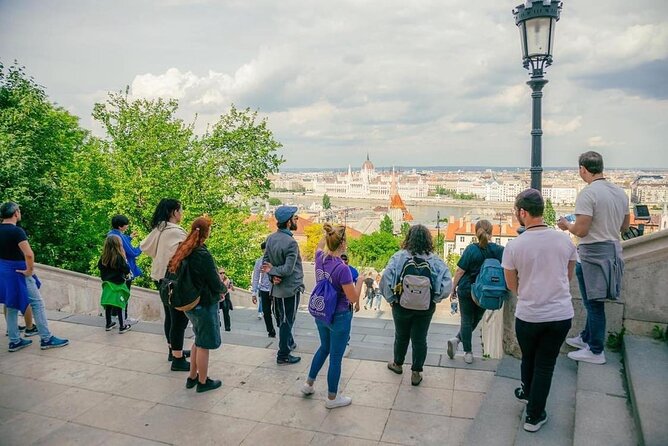
- Fisherman’s Bastion panoramas over the Danube and Budapest skyline, with photo-friendly pauses
- Matthias Church area viewing (photos outside) with the important note that admission isn’t included
- Ruszwurm Confectionery stop tied to classic Hungarian cakes like Dobos torta and krémes
- The Hadik Statue lucky touch tradition tied to András Hadik’s legend
- A mix of royal, religious, and political sites around Castle District
- Small groups (max 10) plus English-speaking professional guides and local recommendations
Why this Buda Castle walk feels different from a typical checklist
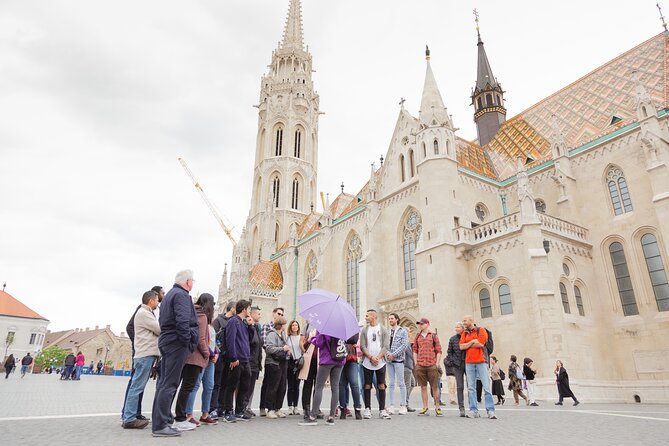
Buda Castle District is famous, but it’s also easy to wander around and miss what connects everything. This tour helps you get your bearings fast by putting the major sights into a simple story line: rulers, religious power, local traditions, and the big “Budapest from above” moments.
What makes it enjoyable is that you’re not stuck on one spot. You move from church land to viewpoints to squares and promenades, and you learn what you’re actually looking at as you go.
And yes, you’ll spend plenty of time on foot. If you like walking tours that feel like a guided stroll with meaning—not a lecture—this one fits that vibe.
You can also read our reviews of more tours and experiences in Budapest.



Route flow: 2 hours, max 10 people, and how the pace works
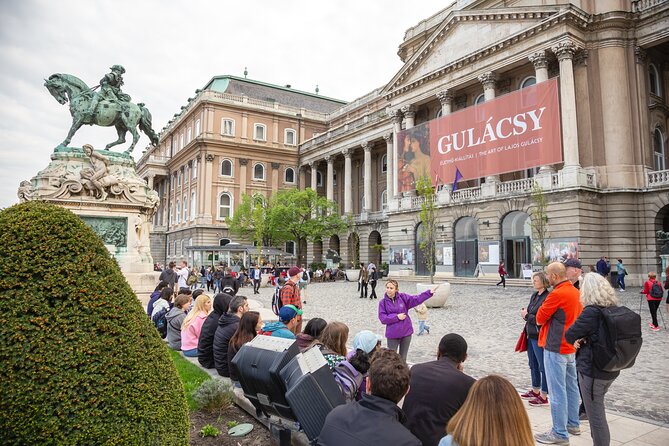
You’ll start at Szentháromság tér (1014 Hungary) and end around Buda Castle at Szent György tér (with the tour ending at the National Gallery entrance). It’s an approx. 2-hour experience, and the group size is capped at 10 travelers, which matters on crowded Castle Hill.
The tour uses a mobile ticket, and it’s offered in English. Service animals are allowed, and it’s listed as suitable for most travelers, but I’d still plan for uneven ground, stairs, and steep streets.
This kind of pace is ideal if you want to cover a lot without spending your entire day in museums. It’s also a good “first visit” option, because once you understand the geography, you’ll enjoy every return walk afterward.
Matthias Church stop: stunning exterior viewing, but tickets aren’t included
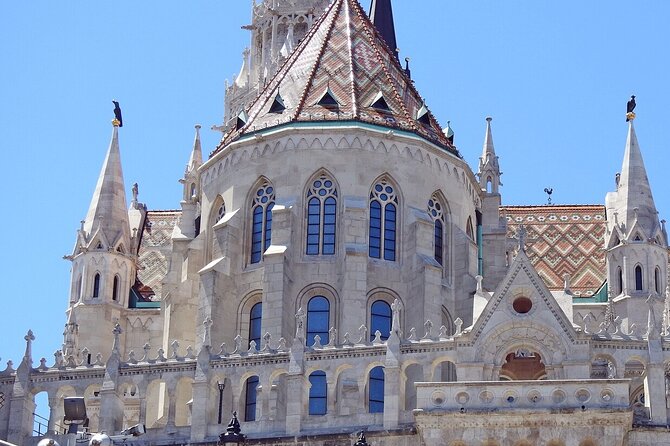
Matthias Church is a Gothic Revival landmark with a tiled roof and dramatic spires, and the tour gives you time to take photos outside. That’s a smart move on a limited-time visit: you get the visual impact without turning the whole morning into a ticket line.
Important detail: the church’s admission ticket is not included. So if you want to go inside, you’ll need to plan for that separately.
Even with an exterior-only stop, the guide’s talk about royal-era storytelling and the artwork you’d notice in person makes the building feel less like a postcard and more like a chapter of Budapest.
Fisherman’s Bastion panoramas and Trinity Square monuments
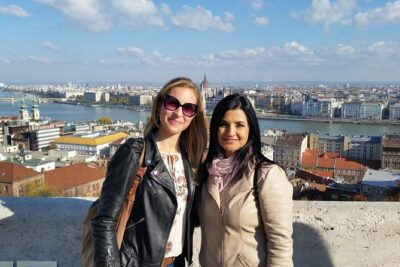
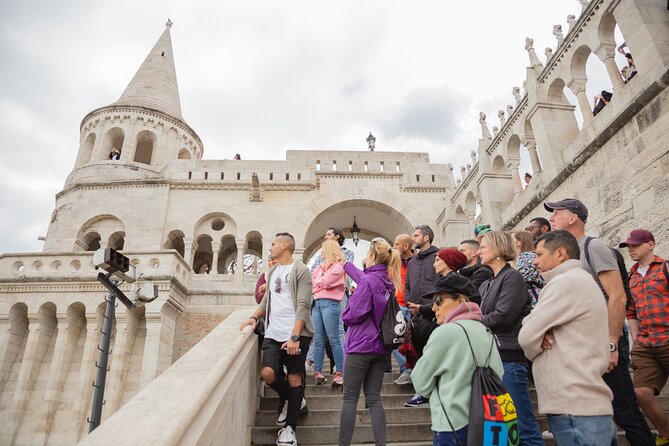
Fisherman’s Bastion is the kind of place where you stop walking and just look. Expect fairy-tale terraces with neo-Gothic and neo-Romanesque details—turrets, arches, and paths that feel built for photos.
This stop is listed as free, and you get about 15 minutes. That’s usually enough time to find a good angle and soak up the view of the Danube and the city skyline without feeling rushed.
From there, you’ll pass by the Holy Trinity Column in the Castle District, tied to the end of the 18th-century plague. It’s one of those monuments that’s easy to overlook if you’re not told what it commemorates. The guide’s explanation helps it click immediately, especially because it’s right in the area around Trinity Square.
Ruszwurm Confectionery: a sweet break with real staying power
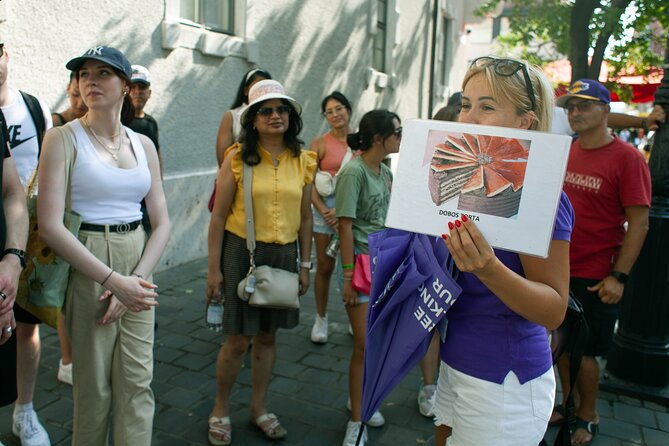
The tour includes a stop at Ruszwurm Confectionery, a pastry shop in the Castle District that’s been delighting people since 1827. This is one of the best “value add” moments because it turns sightseeing into something you can taste.
It’s a 10-minute stop, listed as free, and the idea is to help you try traditional Hungarian favorites. The tour highlights cakes like Dobos torta and krémes, which are exactly the kind of desserts that make a Budapest trip feel specific rather than generic.
You’re not forced into a purchase during the guided time block, but if you’re anything like me, once you step into a historic shop in the shadow of Castle Hill, you’ll feel tempted to order something small and shareable. Even if you skip sweets, the guide’s framing makes the place worth a quick visit.



Hadik Statue tradition and the calm edges of Buda Hill
You’ll also stop at the Statue of Mounted András Hadik. András Hadik is described as a legendary Hungarian soldier and Maria Theresa’s favorite general, known for daring victories. That’s your history lesson in bronze and stone.
Then comes the quirky part: the statue has a superstition where touching the horse’s shiny bronze is said to bring good luck. You’ll know what people mean as soon as you see how worn the surface is from repeat touches.
Next up is Arpad Toth Promenade (Setany), a residential stretch of Buda Castle Hill. This isn’t a “big ticket” sight, but it’s useful. It gives your legs a brief change of scenery and helps you understand that the Castle District isn’t only for tourists—it’s also lived-in, day-to-day Budapest.
Hospital in the Rock and the Castle labyrinth: stories without the extra ticket
A unique feature here is that you’ll hear about Hospital in the Rock, but the tour does not enter the site. Instead, you pass by as part of the story.
That can be perfect if you want context now and you might decide later if you want a separate museum-style visit. If you’re tight on time, skipping entry keeps the tour moving while still giving you something memorable to connect with later.
There’s also mention of a labyrinth-style hidden corner of Buda Castle. You’ll get the feel of these winding Castle Hill details without needing to plan a separate detour. Even if you’ve seen photos online, the way the area bends and funnels you through small spaces is part of the fun.
Royal, religious, and political stops: Sandor Palace, Carmelite Monastery, and more
This tour doesn’t treat the Castle District like a museum hall. It treats it like a working city that has layers.
You’ll pass Sandor Palace, described as the official residence of Hungary’s President. The tour notes it was named after Count Sándor Móricz, a famed horseman known as the Devil’s Rider for his daring equestrian stunts. That gives you an angle to interpret the place beyond “important building.”
Then there’s the Karmelita Kolostor (Carmelite Monastery), which has been repurposed over time—monastery to theater and concert hall, and today it houses the Hungarian Prime Minister’s Office. That “transformed over centuries” framing matters because you’re seeing a building still used in modern governance.
You’ll also get a stop at Kiralyi Lovarda, the Riding Hall in Buda Castle. It’s described as a beautifully restored structure that originally served as a royal equestrian facility. When you’re on foot, these smaller “function” buildings can be surprisingly interesting because they explain what power looked like day-to-day, not only how it appeared on monuments.
Buda Hill Funicular and Matthias Fountain: classic viewpoints and timing tricks
Buda Hill Funicular is one of those historic shortcuts that doubles as sightseeing. The tour highlights it as operating since 1870, connecting the Chain Bridge to the Castle District. Even if you don’t ride it, getting near it helps you understand how locals and visitors have navigated the hill for generations.
This stop is listed as free, and it’s a practical relief valve. The views toward the Danube and the city skyline are the kind you’ll want in your camera memory.
After that, you’ll reach Matthias Fountain, a Baroque-style monument dedicated to King Matthias Corvinus. It features a central sculpture of the king riding a horse, symbolizing power and the flourishing of his reign in the 15th century. Baroque fountains can feel like background noise if you don’t know what to look for, but here you’ll have the story angle while you’re standing in front of it.
Ending at Buda Castle: museums on-site, plus smart after-walk options
The tour ends at Buda Castle, the Royal Palace area home to several museums. The tour framing is practical: you can explore options like the Hungarian National Gallery, the Budapest History Museum, and the National Library.
You also get tailor-made recommendations for what to do next, including museum suggestions and where to go for restaurants and bars. That’s valuable because Castle Hill can be overwhelming after a first walk. A guide’s suggestion helps you choose one or two next steps instead of wandering until your energy is gone.
Price and value: what $3.63 buys you in the real world
At $3.63 per person, the headline price sounds almost too low, but the real value is in what’s included for that time window.
You get professional guides plus experienced management. You also get tailor-made recommendations for restaurants, bars, and museums. That matters because the Castle District is easy to overpay in, and it’s easy to miss small places worth your time.
Most admissions are listed as free for the stops included, but remember: Matthias Church admission ticket is not included. Ruszwurm, Fisherman’s Bastion area viewing, statues, monuments, and the listed promenades and buildings are part of the walk without an extra paid entry in the tour structure.
Also, tips aren’t included. If you’re trying to keep your budget tight, you can still enjoy the tour without spending on entries for most stops, and you can decide separately if you want to upgrade with Matthias Church interior access.
Who should book this Buda Castle Tour
This tour fits best if you want:
- a high-impact 2-hour introduction to Castle Hill without getting stuck in one museum
- a guided route that connects views, monuments, and local traditions into one story
- a small group pace that feels friendly rather than chaotic
It’s especially good for first-timers who want the big sights like Fisherman’s Bastion, but also care about the little details—why a statue got a lucky ritual, why a building changed uses, and what you’re looking at when the hill opens into a panorama.
One thing to consider: if you’re very sensitive to heat, steep stairs, or heavy rain, plan extra time and pack accordingly. The route is built around walking stops on a hill, so comfort matters as much as history.
Guides and what they bring: humor, good pacing, and local tips
The tour is run by guides who tend to be both fun and effective. Names that come up in guide feedback include Sou, Bayler, Nacho, Ignacio, and Sophie, and the common thread is delivery: clear explanations, humor, and a habit of engaging people instead of talking over them.
A big part of why this works is pacing through the sights. Even when weather changes the plan, a strong guide keeps it moving and keeps safety and comfort in mind. And the local recommendations are not generic. You’ll get suggestions for what to do after you finish this walk, so you don’t spend the rest of your day guessing.
Should you book this tour?
Book it if you want a guided, small-group Buda Castle Hill orientation with major views, a sweet food stop, and enough context to make the whole area feel real. The price is low enough that the tour itself is a no-stress way to start your day, and most of the major stops don’t require paid entry during the tour block.
Skip it only if you’re looking for a fully indoor, ticket-heavy museum route. This is built as a walking experience with photo stops and passing views, plus optional ideas for what to do next.
If your goal is to leave Budapest knowing where things are and why they matter, this is a smart way to do it.
FAQ
What’s the tour duration?
It’s listed as approximately 2 hours.
What does the tour cost?
The price is $3.63 per person.
Is it offered in English?
Yes, the tour is offered in English.
What’s included in the tour price?
You’ll get professional guides and experienced management, plus tailor-made recommendations for restaurants, bars, and museums.
Are any attractions included with admission fees?
Matthias Church admission is not included. Fisherman’s Bastion and several other stops are listed as free within the tour.
Where does the tour start and end?
It starts at Budapest, Szentháromság tér (1014 Hungary) and ends at Buda Castle area near Szent György tér (1014 Hungary), at the entrance of the National Gallery.
How many people are in a group?
The tour has a maximum of 10 travelers.
Is a mobile ticket provided?
Yes, the tour includes a mobile ticket.
Can I cancel for a full refund?
You can cancel up to 24 hours in advance for a full refund. If you cancel less than 24 hours before the start time, the amount paid is not refunded.
Are service animals allowed?
Yes, service animals are allowed.