REVIEW · BUDAPEST
Budapest’s TOP Sights Evening Cruise & Welcome Drink
Book on Viator →Operated by Explore Budapest by Boat! · Bookable on Viator
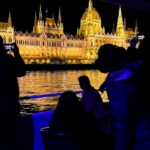
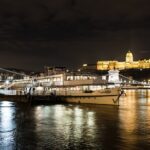
Budapest at night hits different. This Danube evening cruise strings together the city’s biggest landmarks in about an hour, with a guided audio feel and an included drink to take the chill off. You start and finish at Shoes on the Danube Bank, so you’re right where the action begins.
I really like the easy meeting point and the “see a lot fast” format. I also like that you get both photo time (including the Panorama Terrace) and onboard essentials like WiFi, a restroom, and background music. It’s built for people who want the highlights without planning a full day of hopping between neighborhoods.
One thing to consider: the cruise is only about an hour, and timing matters. If you’re on an earlier departure or the lights aren’t fully on yet, reflections and bright surroundings can make photos a little harder.
In This Review
- Key Things You’ll Notice on This Budapest Cruise
- Danube Evening Cruise From Shoes on the Danube Bank: What You Get in About 60 Minutes
- Welcome Drink, WiFi, and the Panorama Terrace Photo Moment
- Hungarian Parliament Building and Margaret Bridge: The River’s Icon Pair
- Matthias Church and Buda Castle: Gothic, Tile Roofs, and UNESCO Views
- Gellért Hill, Citadella, and the Liberty Statue: The View That Explains Budapest
- Gellért Spa, BME University, and the Green Liberty Bridge
- Museum of Contemporary Arts and the National Theatre: A Modern Pair on the River
- How to Time It for Best Night-Lights Photos (and Fewer Reflection Woes)
- Value Check: Is $23.11 for a 1-Hour Danube Cruise a Smart Buy?
- A Few Real-World Logistics Notes That Can Save Your Evening
- Should You Book This Budapest Evening Cruise?
- FAQ
- How long is the Budapest evening cruise?
- Where do I meet for the cruise?
- Are drinks included?
- Is there WiFi and a restroom onboard?
- Is there a photo spot on the boat?
- How many people are on the tour?
- What should I do if I can’t hear the audio commentary well?
Key Things You’ll Notice on This Budapest Cruise
- Shoes on the Danube Bank is the anchor point, and the cruise is set up as a roundtrip.
- Panorama Terrace is built for photos when Budapest lights up.
- Included options include coffee/tea and soft drinks, plus alcoholic beverages via drink choices.
- Audio commentary is GPS-synced, but you may want to ask the crew to turn it up if it’s hard to hear.
- The route covers Parliament, Buda Castle, Matthias Church, bridges, and more in one pass.
- Boat capacity is capped at 150 travelers, so crowding can vary by departure.
Danube Evening Cruise From Shoes on the Danube Bank: What You Get in About 60 Minutes
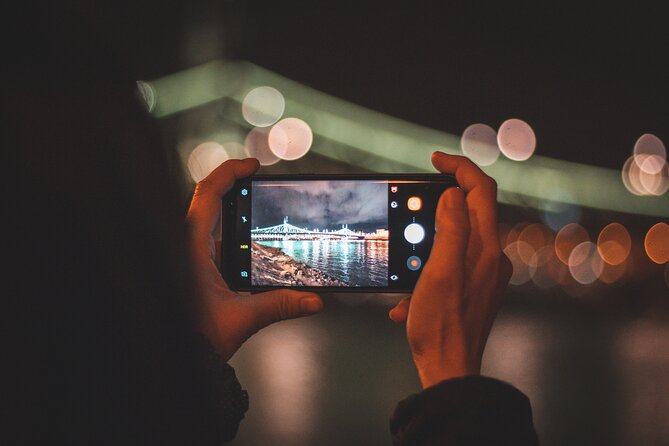
The biggest win here is the shortcut. In roughly one hour, you get a long “greatest hits” view of Budapest from the water, with the river doing the connecting work for you. It’s a practical choice if you only have a limited evening or you want something scenic that doesn’t eat up your whole day.
The meeting point is Shoes on the Danube Bank, and the cruise returns to the same pontoon at the end. That makes life simple: you don’t need to figure out transit across town to start a new segment, and you can roll straight into dinner or a night walk afterward.
Because it’s a group tour with a maximum of 150 people, the vibe is friendly but not private. If you hate crowds, go for earlier seating and be ready to share deck space while you point your camera at the landmark you just spotted.
You can also read our reviews of more boat tours in Budapest

Welcome Drink, WiFi, and the Panorama Terrace Photo Moment
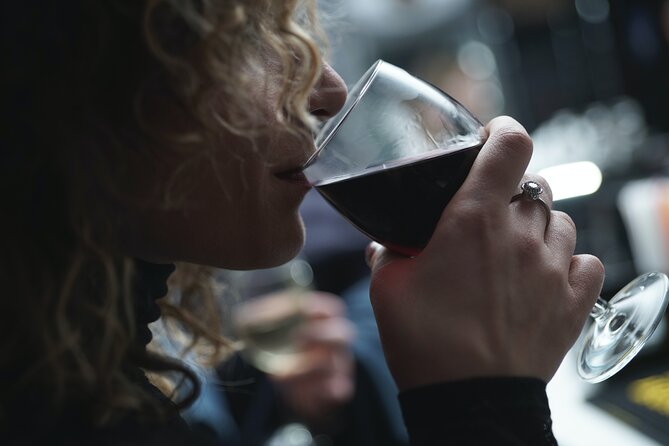
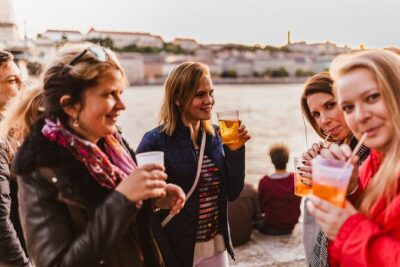
You’re not just staring at buildings for an hour. The tour includes a welcome drink, with options listed as soda/pop and coffee and/or tea, and alcoholic beverages are also listed as included. Reviews suggest drink choices can include soft drinks, beer, and wine/sparkling wine depending on what’s available at the bar.
The boat also has practical comforts that make the cruise feel easier in real life: WiFi on board, a restroom, and music in the background. In colder months, reviews also mention the boat being warm, which matters when you’re standing up or moving around for photos.
For photos, the highlight is the Panorama Terrace. This is where you’ll want to position yourself when the lighting turns dramatic and the river turns into a moving postcard. I’d treat the terrace like your “photo station” and spend the rest of the time rotating around the boat when views open up.
Also: there are bars onboard, so if you want to keep the party going, you can purchase extra drinks. Just note that included drink handling can depend on check-in timing—more on that below.
Hungarian Parliament Building and Margaret Bridge: The River’s Icon Pair
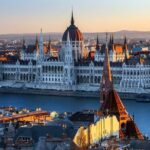
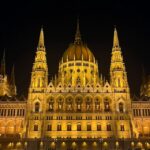
Right after you set off, the Hungarian Parliament Building is the kind of landmark that makes your brain slow down. The building was completed in 1904 and sits right on the Danube’s edge, topped by a 96-meter red dome. Architecturally, it blends Gothic Revival and Renaissance Revival styles, so it looks ornate without feeling random.
From the water, it’s not just the dome. You get a wide-angle sense of scale, and that’s a big part of why people love this spot. It’s also described as the largest building in Hungary and one of the largest parliament buildings in the world, so from the cruise you can actually “feel” that size.
Then you pass Margaret Bridge, completed in 1876. It’s the second oldest public bridge in Budapest and connects Buda and Pest across the Danube. The bridge is named after Princess Margaret of Hungary, who lived on the nearby Margaret Island in the 13th century.
Margaret Bridge also carries World War II scars. It was heavily damaged by Allied bombing and later rebuilt in a simplified design. That detail gives the bridge extra meaning when you’re looking at it in silhouette at night—history isn’t just in museums here.
Practical tip: if you’re trying to photograph the Parliament dome, keep your camera steady for a few minutes as you drift into a cleaner angle. Reflections can be intense, and you’ll get better results if you wait for the boat to line up rather than firing off shots the second you hear the audio cue.
Matthias Church and Buda Castle: Gothic, Tile Roofs, and UNESCO Views
Next up is Matthias Church (Church of Our Lady). This is the kind of building you recognize even if you don’t know the details: it has a signature tile roof pattern and colorful stained glass. The church’s story stretches back to the 13th century, starting in Romanesque form in the early 1200s, then rebuilt in Gothic style in the 14th century.
What I find most satisfying from the river is how the church’s layers show up together—Gothic, Renaissance, and Baroque elements all coming through in one exterior view. Matthias Church also matters culturally because it was the site of royal weddings and coronations.
If you want a “name to remember,” the church restoration is linked to Frigyes Schulek, who helped restore it to earlier glory. Even if you don’t stop to tour inside, seeing the building from the cruise lets you appreciate why it became a symbol.
After that, you’ll cruise by Buda Castle, officially described as a historic complex and former royal seat. The castle traces back to the 14th century, but it was destroyed and rebuilt multiple times over the centuries. That’s part of its charm: it doesn’t look like a single moment in time.
Today, Buda Castle is a UNESCO World Heritage Site and includes museums like the Hungarian National Gallery and the Budapest History Museum. From the Danube, you mostly experience the castle as a skyline moment—big terraces, strong geometry, and that “power from above” feel.
Possible drawback: you’re viewing these landmarks from the river, not at close range. If you want interior details, this cruise is still worth it, but you’ll likely add a separate visit later for closer looks and museum time.
Gellért Hill, Citadella, and the Liberty Statue: The View That Explains Budapest

Budapest’s river is only half the story. Gellért Hill adds the altitude. It’s 235 meters high on the Buda side, named after Saint Gellért, a bishop martyred in Hungary in the 11th century.
From the cruise, the hill works like a visual anchor. You can usually pick out key features, including Citadella and the Liberty Statue. The Citadella fortress was built by the Habsburgs in the mid-19th century and was used as a military barracks and prison before becoming a tourist attraction.
The Liberty Statue is smaller in height than the hill, but it’s big in meaning. It’s a 14-meter statue erected in 1947 to commemorate Soviet liberation of Hungary from Nazi occupation during World War II.
If you love context, this stop is where the cruise starts to feel more than sightseeing. You’re seeing how geography and politics overlap: a hill above the river that shaped control, movement, and memory.
You can also read our reviews of more evening experiences in Budapest




Gellért Spa, BME University, and the Green Liberty Bridge
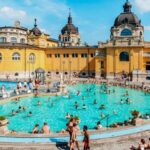
The cruise also passes major everyday landmarks, not just postcard monuments. Gellért Spa is one example. It’s a historic thermal bath built in Art Nouveau style in 1918, known for mosaics and stained glass windows plus thermal pools described as having healing properties.
Even if you’re not getting in the water on this cruise, it’s a useful visual reminder that Budapest isn’t only about sightseeing. It’s also about routines—bathing culture is part of how locals reset.
You also pass the Budapest University of Technology and Economics (BME), identified as Hungary’s oldest and largest technical university. It began in 1782 as the Institutum Geometrico-Hydrotechnicum and grew into a major institution covering engineering, computer science, natural sciences, economics, and management.
BME is also tied to notable names like Nobel Prize-winning physicist Albert Szent-Györgyi and politician Viktor Orbán. Again, you’re not touring campus here, but you do get a sense of the city’s brainpower on the move.
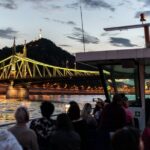
Then there’s the Liberty Bridge (Szabadság híd). It’s a suspension bridge built between 1894 and 1896 and originally named for Emperor Franz Joseph I. It’s known for its distinctive green color, added during a renovation in the 1980s.
World War II damage also shows up in the story: it was damaged by retreating German forces, rebuilt afterward, and renamed in 1945 as part of Hungary’s liberation. From the Danube, Liberty Bridge is a strong “current” line across the water, especially at night when the edges look sharper.
Museum of Contemporary Arts and the National Theatre: A Modern Pair on the River
Not every stop here is medieval or royal. The route includes views of the Museum of Contemporary Arts and the National Theatre of Hungary. You won’t get a museum-style rundown during a one-hour cruise, but these buildings add a modern layer to the river picture.
Why this matters: it prevents Budapest from feeling like a frozen set of old stones. Even from the water, you can sense that the city is still creating culture now, not only preserving it.
If you’re the type who gets bored when a tour becomes only “pretty buildings,” this modern pair helps break up the mood.
How to Time It for Best Night-Lights Photos (and Fewer Reflection Woes)
This cruise is marketed as an evening experience, but real life is about timing. Some departures may be just before Budapest’s lights fully pop, and you can end up with a brighter sky that makes photos harder. Reflections from the boat surface can also spoil shots if you’re trying to photograph through glare.
Here’s what I’d do to improve your odds:
- Pick a slot that’s late enough for the city lights to feel on.
- Use the Panorama Terrace as your photo target, not the window line.
- Wait for cleaner angles; don’t shoot nonstop the whole time.
One more practical photo note: you can sometimes move around more easily if the boat isn’t at full capacity. On days when the cruise isn’t packed, you’ll likely find better spots to shoot from both sides.
And if audio is part of your plan, remember that it’s GPS-synced. If you can’t clearly understand which building is being referenced—or the sound is too low—ask the crew to adjust volume. One captain and crew member named Captain Barney comes up in reviews as a standout, and that’s your sign that staff tends to be engaged when you speak up.
Value Check: Is $23.11 for a 1-Hour Danube Cruise a Smart Buy?
At $23.11 per person, the value is mostly about convenience and coverage. You’re paying for a one-hour loop that strings together major landmarks like Parliament, Matthias Church, Buda Castle, bridges, and hill views—without needing to navigate between multiple points on foot.
The included drink component matters for real cost. The cruise includes coffee and/or tea and soda/pop, and it also lists alcoholic beverages as included. In practice, included drink tokens and choices can reduce the “extra spending” sting that many budget cruises hit you with.
Also look at the comfort value: WiFi, restroom access, and background music mean you’re not just outside freezing while trying to enjoy the night.
Possible downside for value: the experience is one hour. If you’re the type who wants time to linger at each stop, you’ll need to plan a follow-up. This cruise is a sampler, not a replacement for a detailed tour of the buildings.
A Few Real-World Logistics Notes That Can Save Your Evening
A small but important one: drink tokens often depend on check-in. Some guests said the promised drink tokens didn’t show up until they requested them at the bar, and the operator response emphasized checking in before the program so the drink tokens get issued.
Safety instructions are required on ships on the Danube, and they should be visible—so don’t be shy about asking where they are if you can’t find them quickly.
Finally, don’t stress if you see other boats at the pier. One review noted that multiple boats were tied together at the end, which made the final exit feel crowded for a moment. That’s less about the cruise itself and more about how busy certain nights can be at river docks.
Should You Book This Budapest Evening Cruise?
Book it if you want an efficient way to see the big night icons of Budapest from one moving viewpoint, especially if you’re short on time. The combination of major landmarks, included beverages, and onboard basics like WiFi and a restroom makes it a straightforward “no planning stress” choice.
Consider skipping or pairing it with a second activity if you’re a serious photographer who needs dark skies and glare-free windows, or if you’re hoping for deep architectural explanations. The audio and sight pass are helpful, but the format is still a quick loop.
If you’re the type who likes to get your bearings fast—Parliament to Buda Castle to bridges to hill views—this is a solid pick for your first or second night in the city.
FAQ
How long is the Budapest evening cruise?
It runs for about 1 hour.
Where do I meet for the cruise?
You start at Shoes on the Danube Bank in Budapest and the cruise ends at the same pontoon for a roundtrip.
Are drinks included?
Coffee and/or tea and soda/pop are included, and alcoholic beverages are also listed as included. You may receive drink tokens or a coupon that you redeem at the bar.
Is there WiFi and a restroom onboard?
Yes. The tour includes WiFi on board and a restroom on board.
Is there a photo spot on the boat?
Yes. The itinerary highlights a Panorama Terrace for photos of Budapest lit up at night.
How many people are on the tour?
The maximum group size is 150 travelers.
What should I do if I can’t hear the audio commentary well?
The commentary is GPS-synchronized, and if it’s hard to understand or the volume is too low, ask the crew to turn it up.