Film meets Budapest on a walk. This analog photo trip strings together big-name sights and the kind of quick history stops you can actually remember, guided by Emese Tárnok. I especially like the hands-on camera instruction and the payoff of physical photos you take home. The main catch: the timing is tight, with several stops around 15 minutes (and one closer to 5), so you’ll need to move with the group.
You start at 5:00 pm and finish at Fisherman’s Bastion, so the whole route naturally pulls you through the areas you’ll want to explore later. It’s built for small groups (max 12), and you’ll use a mobile ticket, with the tour operating in English.
Even if you’re not a “photo person,” the structure helps. You get a short setup, a viewpoint, then a bit of context for what you’re looking at—so your photos feel like more than snapshots.
In This Review
- Key highlights not to miss
- Why an analog photo tour works in Budapest
- The route you’ll follow: Basilica to Fisherman’s Bastion
- Stop 1: St. Stephen’s Basilica for quick history + instant photo inspiration
- Stop 2: Széchenyi Lánchíd for Chain Bridge views and Tram 2 timing
- Stop 3: Hungarian Parliament Building and Kossuth Lajos Square context
- Stop 4: Margaret Bridge for a shifting perspective
- Stop 5: Matthias Church for a fast Gothic photo hit
- Stop 6: Fisherman’s Bastion to finish in the Castle District
- Price and value: what $142.97 includes
- Who this tour suits best (and who should rethink it)
- Your guide: Emese Tárnok’s role in making analog feel easy
- Practical tips so your photos (and the tour) go smoothly
- Should you book the Analog Photo Trip?
- FAQ
- How long is the Analog Photo Trip in Budapest?
- What time does the tour start?
- Where do I meet the tour?
- Where does the tour end?
- Is the tour offered in English?
- How big is the group?
- Are admission tickets included?
- Do I get a mobile ticket?
- What if the weather is bad?
- Are service animals allowed?
Key highlights not to miss
- Analog cameras + real instruction so you’re not stuck fumbling mid-walk
- Small group size (max 12) for clearer help at each stop
- Big Budapest views on a practical route from St. Stephen’s Basilica to the Castle District
- Quick history moments tied directly to the sights you’re photographing
- Tram 2 timing around Széchenyi Lánchíd so you catch the Chain Bridge moment
- Physical photos as souvenirs instead of just phone images
Why an analog photo tour works in Budapest
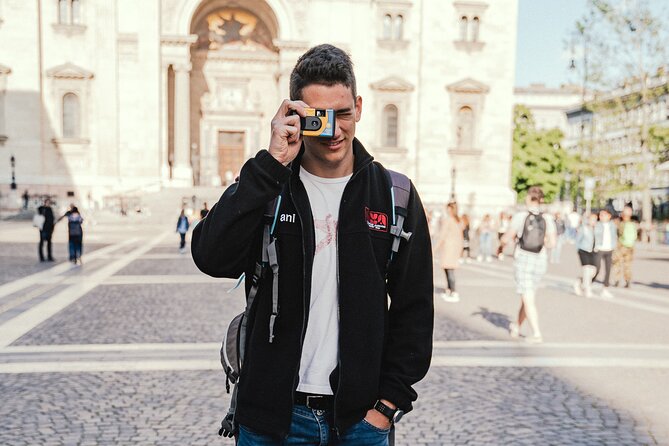
Budapest is the kind of city that rewards slowing down. That’s exactly what analog forces you to do: you think before you press the shutter, you frame with intention, and you accept that you won’t shoot a hundred takes.
What makes this tour especially good value is the combination of photo practice and site context. Many tours show you sights; this one gives you reasons to look—history and setting at each stop—then turns that looking into something you physically keep.
Also, analog is a social equalizer. You don’t need to be a confident photographer. With a small group, the guide can help you get it working, which keeps the pace friendly instead of chaotic.
You can also read our reviews of more tours and experiences in Budapest.
The route you’ll follow: Basilica to Fisherman’s Bastion
This is a 3-hour 30-minute walk-and-view route that starts at CBI CompareBudapest, Anker köz 2-4, 1061 Hungary and ends at Fisherman’s Bastion, Budapest, 1014 Hungary. The tour starts at 5:00 pm, which matters because you’ll be photographing as the city shifts out of the daytime rush.
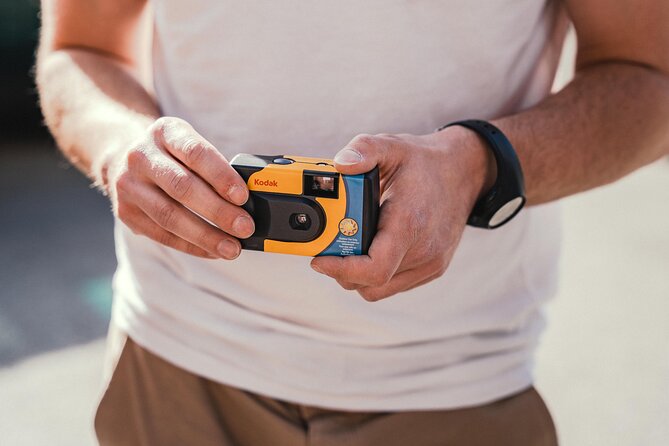
The itinerary is built like a sequence of “photo windows.” Each major stop is timed to keep you moving, but not so rushed that you miss the point of the place. You’ll also get a brief introduction to the analog cameras, then use the tour itself as your training ground.
One practical note: the end point at Fisherman’s Bastion is a smart finish. It drops you in a district you’ll likely want to linger in after the tour wraps.
Stop 1: St. Stephen’s Basilica for quick history + instant photo inspiration
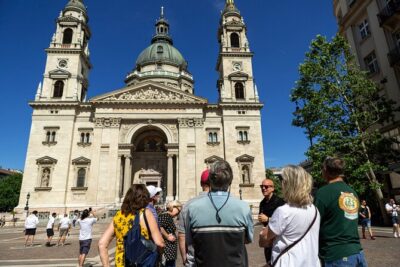
You begin at St. Stephen’s Basilica (Szent Istvan Bazilika) for a short look and an overview of Hungary’s most important church. The stop is about 15 minutes, and the ticket is free for this part of the experience.
This first stop works well because it doesn’t demand technical confidence. You can focus on learning the camera basics while also getting your bearings in Budapest. If you’re brand new to analog, this is a good place to make your first attempts because the atmosphere is “see, learn, shoot,” not “race, rush, repeat.”
What I like about this opening is that it sets a theme. You’re not just collecting images; you’re collecting meaning. That makes the photos feel more personal later when you’re holding the prints.
Stop 2: Széchenyi Lánchíd for Chain Bridge views and Tram 2 timing
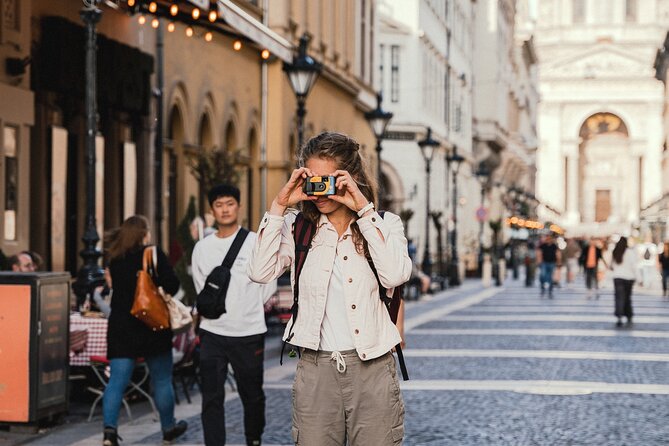
Next up is Szechenyi Lanchid, where the tour uses the moment strategically. Before getting on Tram 2, you pause to capture the view of the Chain Bridge, with the Buda Castle in the background.
This is the kind of viewpoint that’s worth arriving ready to work. You’ll get about 15 minutes here, and the goal is to use that time to nail your composition—then move on. If you’re the type who spends ages trying to perfect framing on a phone, analog will feel refreshing. You’ll naturally commit.
A small caution: because the stop is short and the view is the point, you’ll want to keep your camera prep tight. Don’t let your learning slow the group’s rhythm too much.
Stop 3: Hungarian Parliament Building and Kossuth Lajos Square context
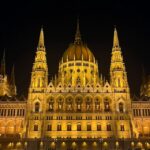
Then you head to the Hungarian Parliament Building, with the surrounding Kossuth Lajos square area as the backdrop. You’ll have about 15 minutes and free admission for this stop, along with a history-focused look at the area.
This stop is valuable because it gives your eyes something to look for. Instead of photographing a landmark just because it’s famous, you learn the story of the place you’re seeing. That helps you take better pictures, even if you think you’re “not good at photography.”
Also, the Parliament area is ideal for teaching. It gives lots of strong shapes and viewpoints, so your guide can help you adjust without you getting lost in complicated explanations.

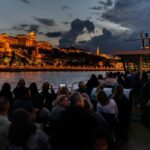

Stop 4: Margaret Bridge for a shifting perspective
From Margaret Bridge, you get a unique angle on where you’ve been and where you’re headed next. It’s another 15-minute stop, with free admission.
Why this moment matters: it breaks the pattern. Earlier you’re mostly working one direction—toward key landmarks. Here, you’re photographing the connection between the stops, almost like a visual timeline. That makes your set of photos feel like a journey, not six unrelated images.
If you like photos with context, this is the place to slow down. You’ll get the “before and after” feeling in one frame.
Stop 5: Matthias Church for a fast Gothic photo hit
The tour then moves to Matthias Church, with a quick stop of about 5 minutes. The emphasis here is on the church’s Gothic beauty, and again admission is free.
Short stop, clear goal. This isn’t the time to wander. Plan to find a simple vantage point, take your shot, and be ready to move when the group does.
If you’re sensitive to time pressure, this is the stop to approach calmly. Treat it like a photo mission: pick one direction to frame, capture, then reset.
Stop 6: Fisherman’s Bastion to finish in the Castle District
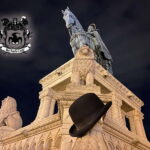
You end at Fisherman’s Bastion after arriving in the Castle District. This is where you’ll look around the bastion, inspired by the early medieval architectural style. You’ll have about 15 minutes and free admission.
This finish is strong for two reasons. First, it’s a natural place to keep exploring even after the tour ends. Second, the “early medieval-inspired” theme gives you something distinct to photograph, especially if the earlier stops were more modern-feeling or monumental.
If your souvenir goal is simple—take home photos you’ll actually want to keep—ending here is smart. The view and style give your analog pictures a sense of place that’s easy to remember.
Price and value: what $142.97 includes
At $142.97 per person for roughly 3 hours 30 minutes, the value comes from what’s covered and what isn’t.
You’re getting:
- A guided route through major Budapest highlights and the kind of smaller stops that give you different angles
- A brief instruction session on the analog cameras, plus guidance while you shoot
- A route where admission tickets are free at each listed stop
- A small-group setting (max 12) where you can actually ask for help
The price also makes sense if you think about the souvenir angle. One of the best parts of the experience is that you leave with physical photos—not just digital images that get forgotten in a camera roll.
If you hate paying for tours that feel like “see it, move on,” this one is built to justify itself. You aren’t paying only for access. You’re paying for the structured photo time, the teaching, and the history moments that help you frame better.
Who this tour suits best (and who should rethink it)
This experience fits best if you want more than a standard sightseeing walk. If you like learning while you move, and you enjoy the challenge of analog photography, you’ll probably feel right at home.
It’s also a good match for couples or small groups of friends. The tour cap of 12 means the guide can keep communication clear and help you troubleshoot without turning the walk into a constant regrouping exercise.
If you’re the kind of person who needs long stops at each monument, you might find the pacing too tight—especially at Matthias Church (5 minutes). This is a highlight-focused route with short photo windows, not a slow museum-style visit.
Your guide: Emese Tárnok’s role in making analog feel easy
The success of this tour is closely tied to the guide. Emese Tárnok leads in English and is specifically praised for smooth communication before, during, and after the tour.
What you’ll feel in practice is a calm teaching style. You get brief analog camera instruction up front, then you’re supported while you try again at each stop. That matters because analog can be intimidating the first time—yet the tour format keeps it manageable.
If you’re traveling as a slower-moving pair, this structure still works. The group moves, but the guide approach is described as patient and kind, so you’re less likely to feel rushed or left behind.
Practical tips so your photos (and the tour) go smoothly
You’ll have the best time if you prepare for the pace and the camera learning curve.
First, plan footwear like you’re doing a guided city walk. The route moves through multiple stops, and you’ll be on the move between viewpoints.
Second, keep your questions simple. There are several photo moments with short time windows, so focus on what you need right now: how to load, how to shoot, or how to handle the moment you’re standing in front of.
Third, embrace imperfect photos. Analog doesn’t give instant feedback the way phones do. That’s part of the fun. If you treat it like a process, you’ll likely enjoy it more and end up with photos that feel like souvenirs instead of chores.
Finally, remember the tour requires good weather. If weather is poor, the experience may be canceled and you’ll be offered a different date or a full refund. If your schedule is flexible, that helps.
Should you book the Analog Photo Trip?
I think you should book if you want a smart mix of Budapest highlights, quick history context, and a hands-on souvenir you can hold later. The small-group size, the practical teaching, and the focus on analog photography make this more than a normal walking tour.
Skip it (or at least consider it carefully) if you hate short stops. This is built for several fast viewpoints, including a 5-minute Matthias Church stop, so you’ll want to be comfortable moving along with the group.
If you’re on the fence, use this rule: if you want photos with a story, this trip is a strong fit. If you want lots of time at each site, you may prefer a slower, more open-ended Budapest plan.
FAQ
How long is the Analog Photo Trip in Budapest?
It runs for about 3 hours 30 minutes.
What time does the tour start?
The start time is 5:00 pm.
Where do I meet the tour?
You meet at CBI CompareBudapest, Anker köz 2-4, 1061 Hungary.
Where does the tour end?
The tour ends at Fisherman’s Bastion, Budapest, 1014 Hungary.
Is the tour offered in English?
Yes, it is offered in English.
How big is the group?
The tour has a maximum of 12 travelers.
Are admission tickets included?
The tour lists free admission tickets for the stops included in the itinerary.
Do I get a mobile ticket?
Yes, the tour uses a mobile ticket.
What if the weather is bad?
This experience requires good weather. If it’s canceled due to poor weather, you’ll be offered a different date or a full refund.
Are service animals allowed?
Yes, service animals are allowed.