REVIEW · BUDAPEST
Memento Park Entrance Ticket
Book on Viator →Operated by Memento Park · Bookable on Viator
Cold symbols, big scale, and zero small talk. This entrance ticket gets you into Memento Park, where you’ll see 42 Communist-era artworks from 1945 to 1989. I also like the mobile ticket convenience, since it cuts down on fuss before you even step onto the grounds. The main drawback is that the imagery is overtly political, so it can feel heavy if you’d rather keep your museum days neutral.
What makes this visit interesting is how directly it shows propaganda in stone—allegorical monuments, labor movement figures, and giant Red Army themes, all set outdoors for you to walk through at your own pace. With entry included, you’re not paying extra once you arrive, and the visit usually lands in that flexible 45 minutes to 2 hours 30 minutes window depending on how closely you look. Plan your timing well, because the park closes at 4:00 PM.
In This Review
- Key things I’d plan around
- Memento Park: what this ticket really gets you
- Price and value: is $11.41 a good deal?
- Getting to the park from Budapest without stress
- Planning your visit: how long you’ll need
- What you’ll see first: the Communist-era collection in one flow
- The big highlight: Liberation Army Soldier and the 6-meter effect
- Other major figures: Lenin, Marx, Engels, and friends
- Why this visit feels valuable even without a guided tour
- Who should book this ticket
- Practical tips that matter on-site
- Should you book this Memento Park entrance ticket?
- FAQ
- How much is the Memento Park entrance ticket?
- How long does the visit take?
- What can I see at Memento Park with this ticket?
- Is admission included?
- Do I get a paper ticket or a mobile ticket?
- What are the opening hours?
- Is the park easy to reach without a car?
- What is the cancellation policy?
Key things I’d plan around
- 42 pieces from 1945 to 1989: You’re seeing a full arc of the Communist era represented in sculpture.
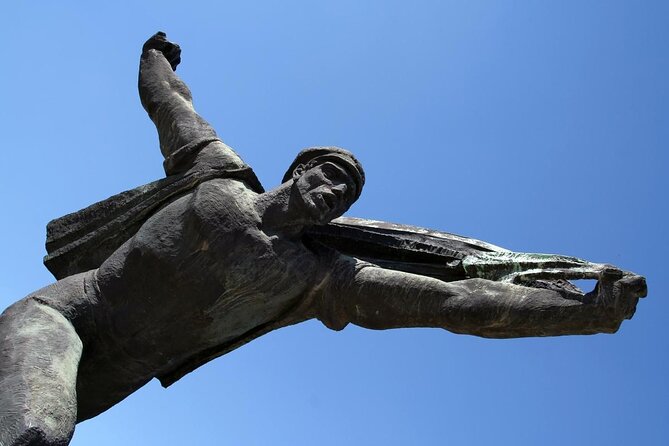
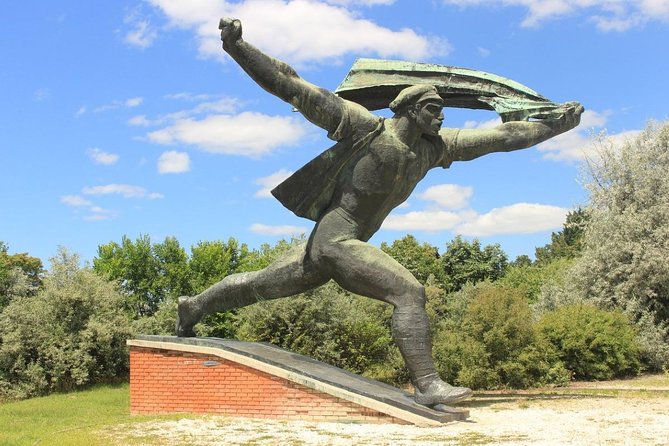
- Liberation Army Soldier: A 6-meter giant with a hammer-and-sickle flag and a cartridge-disc machine pistol.
- Big familiar names: Lenin, Marx, Engels, Béla Kun, and others appear at monumental scale.
- Allegorical monuments: Themes like Hungarian-Soviet Friendship and Liberation are part of the lineup.
- About 20 minutes outside Budapest: Easy to tack onto a day trip with local transit nearby.
- Mobile entry: You get an electronic ticket, and confirmation is sent at booking.
Memento Park: what this ticket really gets you
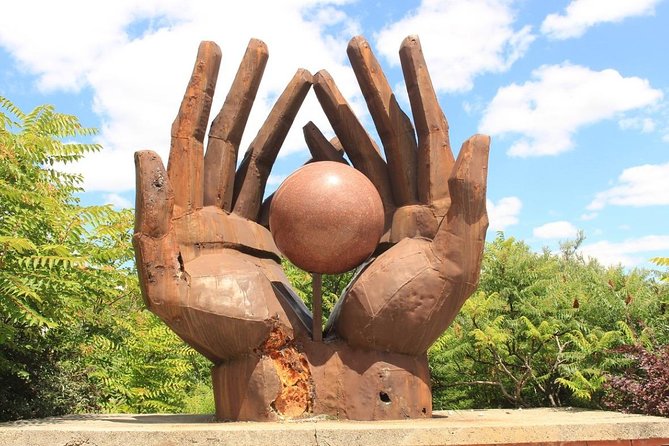
Memento Park is a sculpture park built around one clear idea: Communist-era symbolism, preserved in public view. The collection includes 42 pieces of art created for a specific political worldview between 1945 and 1989. Instead of museum-style rooms, you get an outdoor setting where scale matters, and where the statues dominate the space as they were meant to.
You’ll see allegorical monuments tied to Hungarian-Soviet Friendship and Liberation, along with statues linked to the labor movement and Red Army presence. The list of famous names is part of the point, too—Lenin, Marx, Engels, Dimitrov, Captain Ostapenko, Béla Kun, and other so-called heroes from the communist world are all in the mix.
This isn’t “soft history.” It’s propaganda-in-form, presented as art you can walk around and study. If you like learning how regimes used images to shape public behavior, this is the kind of place that teaches fast.
You can also read our reviews of more tours and experiences in Budapest



Price and value: is $11.41 a good deal?
At about $11.41 per person, this entrance ticket is priced for a straightforward visit. You’re paying for admission, and the fact that it’s an entry ticket included experience means you’re not likely to face surprise extras once you’re on-site.
Value here isn’t just the low price. It’s the density of what you get for the time: 42 distinct sculptures, many of them massive. If you’ve only got a few hours in the city, this is one of those “see a lot without wandering all day” options.
It also helps that demand looks steady—this sort of ticket is commonly booked around a few weeks ahead (on average, 24 days in advance). If your schedule is fixed, grabbing it earlier is a smart move.
Getting to the park from Budapest without stress
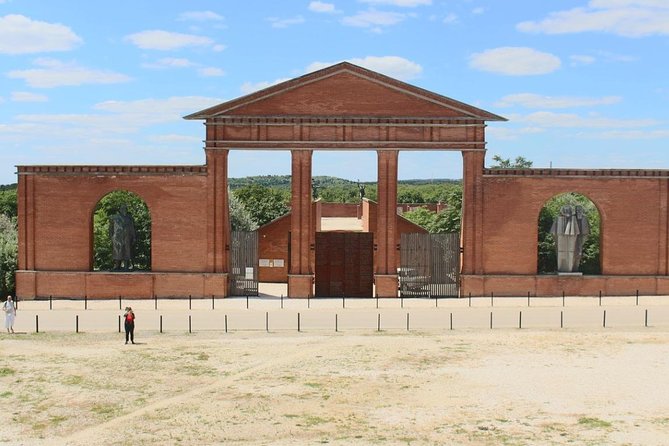
Memento Park sits outside Budapest, roughly 20 minutes by drive according to a common visitor takeaway. That makes it realistic as a half-day stop without turning the day into a travel slog.
The practical upside is that it’s near public transportation, so you’re not locked into hiring a private ride. I’d still treat it like a day-trip commitment: pick a time early enough that you’re not rushing when the park closes.
Opening hours are 10:00 AM to 4:00 PM, Monday through Sunday. The park is open throughout the week, but the end time is firm, so build in buffer time for the walk from transit and time spent around the largest pieces.
Planning your visit: how long you’ll need
The visit window is listed as 45 minutes to 2 hours 30 minutes. That range is honest, because your pace depends on what you’re trying to get from the park.
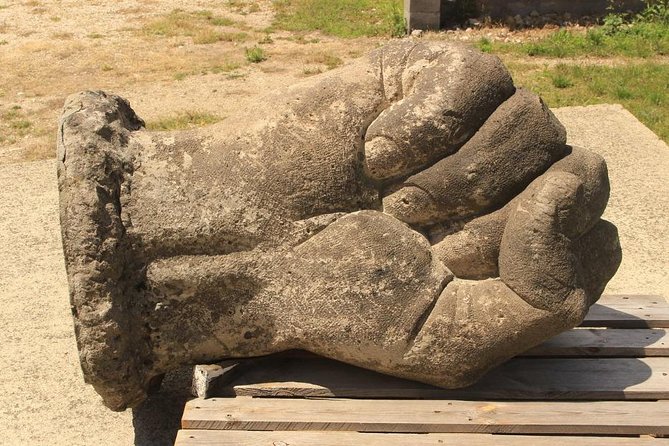
If you want a quick scan, start with the most visually dominant statues first, then circle back if you feel like reading more closely around the rest. If you prefer slow looking, plan closer to the longer end so you can compare themes: labor movement figures versus Red Army motifs versus allegorical monuments like Hungarian-Soviet Friendship and Liberation.
Because the sculptures are spread across an outdoor park, it’s easy to underestimate the walking time. I like to think of it as a “go see” place, not a “drop in for five minutes” place.
What you’ll see first: the Communist-era collection in one flow
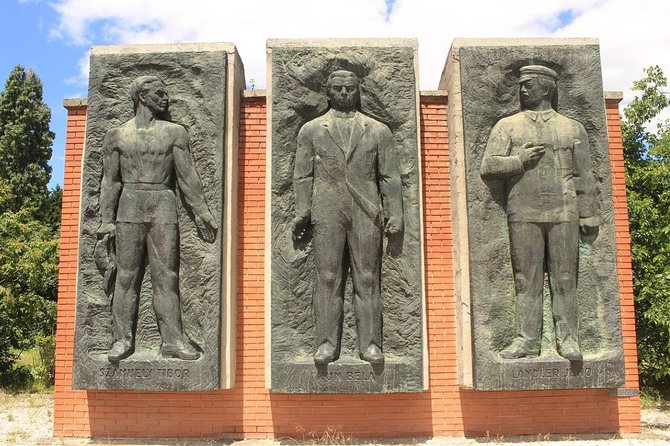
The park displays Communist-era works dated between 1945 and 1989, and the collection is built so you feel the era’s messaging as a set. You’re not just viewing one statue; you’re watching a system of symbols repeat at different scales and with different faces.
You’ll encounter gigantic pieces linked to the communist world, including major ideological leaders and movement figures. The lineup includes Lenin, Marx, Engels, Dimitrov, Captain Ostapenko, and Béla Kun. Even if you don’t know the political background in detail, the sheer size makes the intention obvious: these figures weren’t meant to be subtle.
You’ll also see “friendship” and “liberation” themes presented through allegory. For me, that’s the most revealing part. The park doesn’t just show who held power. It shows how that power tried to justify itself using words and images that felt moral, heroic, and inevitable.






The big highlight: Liberation Army Soldier and the 6-meter effect
The most famous stop in the park is often the Liberation Army Soldier, a 6-meter tall statue meant to be seen from a distance. The details on this one are striking: the figure holds a hammer-and-sickle flag in its hand, and a cartridge-disc machine pistol hangs from its neck.
That combination is the point. The statue blends political identity (hammer-and-sickle) with militarized power (the pistol-like component), creating a single visual message that reads quickly even if you only glance for a moment. It’s the kind of sculpture that makes you aware of how propaganda works on the body as much as the mind.
There’s also an extra layer of meaning to this specific figure. The overview notes that this Soviet soldier once stood on top of Gellért Hill in central Budapest, well seen from every direction. Seeing the soldier here lets you compare what a symbol looks like in “the middle of attention” versus “in a park setting.”
Other major figures: Lenin, Marx, Engels, and friends
If Liberation Army Soldier is the park’s headline, the “supporting cast” is equally important for understanding the full messaging. You’ll see Lenin, Marx, and Engels, along with other prominent names like Dimitrov, Captain Ostapenko, and Béla Kun.
Scale is everything with these sculptures. These figures aren’t presented as historical footnotes; they’re made to feel permanent and unavoidable. Even when you don’t agree with the ideology, the forms show how regimes used stature, material, and positioning to create emotional weight.
You’ll also spot monuments tied to Hungarian-Soviet Friendship and Liberation. Those titles matter because they frame the relationship as benevolent and justified. The park’s layout lets you move from one theme to the next, so you can feel how the messaging stays consistent even as the symbols change.
Why this visit feels valuable even without a guided tour
This ticket is an entrance admission, so you’re not relying on a guided explanation to make sense of what you’re seeing. That can be an advantage. You get to control your pacing and decide which figures you want to sit with longer.
The value is in pattern recognition. Look at the pairing of ideological leaders with militarized or movement-oriented imagery. Notice how “friendship” and “liberation” themes show up alongside names connected to labor movements and Soviet presence. That’s where the park becomes more than a collection—it becomes a study in how political messaging is built.
It’s also one of the rarer experiences you can do from Budapest that’s very specific. Instead of generic sightseeing, you get a focused, high-contrast snapshot of an era’s public visual language.
Who should book this ticket
This fits best if you’re the type of person who likes history that you can see and measure. If you’re curious about political art, public monuments, or how ideology becomes physical form, you’ll likely enjoy the directness of the experience.
It also suits people who want flexibility. The visit duration ranges widely, so you can tailor it to your day. And the park is described as being near public transportation, which makes it easier for many schedules.
A possible “don’t” is simple: if the Communist-era imagery is too intense for your taste, this park won’t soften it. The statues include militarized symbolism and recognizable political figures, so go in with awareness and expectations.
Practical tips that matter on-site
Here’s how I’d set yourself up to get the most from your time.
First, match your arrival to the hours: the park is open 10:00 AM to 4:00 PM. If you’re arriving by transit, give yourself buffer time so you’re not racing the closing bell.
Second, keep your mobile ticket handy on your phone. Since the ticket is delivered as a mobile option and confirmation is received at booking, you’ll want access to that confirmation when you arrive.
Finally, plan for outdoor walking across the grounds. The statues are the show, so your time is mainly spent moving between them and looking closely at the details that distinguish one theme from another.
Should you book this Memento Park entrance ticket?
Book it if you want a clear, low-cost outing outside central Budapest that’s focused on one subject and delivers a lot to see in one go. At around $11.41 with admission included and a mobile ticket, it’s a practical add-on for anyone interested in how ideology becomes public art.
Skip it if you dislike political imagery or you prefer lighter, more general attractions. And if your day is tight, aim for the shorter end of the visit range and target the largest and most iconic figures first, so you still get value without feeling rushed.
FAQ
How much is the Memento Park entrance ticket?
The price is $11.41 per person.
How long does the visit take?
Plan for about 45 minutes to 2 hours 30 minutes.
What can I see at Memento Park with this ticket?
The park displays 42 pieces of Communist-era art from 1945 to 1989, including allegorical monuments of Hungarian-Soviet Friendship and Liberation, statues of labor movement figures, Red Army soldiers, and large sculptures such as Lenin, Marx, Engels, Dimitrov, Captain Ostapenko, Béla Kun, and the Liberation Army Soldier.
Is admission included?
Yes. The admission ticket is included.
Do I get a paper ticket or a mobile ticket?
This experience uses a mobile ticket.
What are the opening hours?
Monday through Sunday, 10:00 AM to 4:00 PM.
Is the park easy to reach without a car?
It’s near public transportation. It’s also about 20 minutes drive outside Budapest.
What is the cancellation policy?
Free cancellation is available. You can cancel up to 24 hours in advance for a full refund, and changes made within 24 hours are not accepted. If you cancel less than 24 hours before the start time, the amount paid is not refunded.