REVIEW · BUDAPEST
Jewish Heritage in Hungary with a Historian
Book on Viator →Operated by Budapest Explorers · Bookable on Viator
Jewish Budapest reads best on foot. This 2.5-hour historian-led walk connects Erzsébet tér to the synagogue streets, in a small group capped at 10. You get context you would miss if you just hop from landmark to landmark.
I love the mix of solemn and everyday stops. You pass the streets tied to Jewish life, then move to places like Szimpla Kert and a proper taste stop for Flódni. It makes the story feel human, not locked behind plaques.
One possible drawback: admissions for the Kazinczy Street and Great/Central Synagogues are not included, and you do not visit the Great Synagogue inside. You are learning mostly from the street-level perspective and what you can see outside.
In This Review
- Key highlights to look for
- Why this Jewish heritage walk fits real life in Budapest
- From Kempinski Corvinus to Erzsébet tér: where Pest’s medieval map meets Jewish streets
- Raoul Wallenberg’s statue: using one name to teach a bigger story
- Szimpla Kert and Gozsdu Udvar: the Jewish Quarter beyond the tragedy markers
- Kazinczy Street Synagogue: Orthodox community context without rushing inside
- Great/Central Synagogue (Nagy Zsinagóga): big exterior learning, no interior visit
- Solinfo Café and Flódni: the taste stop that turns history into something you remember
- How the price adds up (and where it might not)
- Guides matter: what you can expect from the historian-led style
- Logistics that make the tour easy to fit
- Should you book this Jewish Heritage in Hungary with a Historian?
- FAQ
- What is the duration of the tour?
- What time does the tour start?
- Is this tour offered in English?
- How large is the group?
- Is a mobile ticket provided?
- Which food is included?
- Are synagogue tickets included?
Key highlights to look for
- Historian narration that links centuries, not just the 1940s
- Small-group feel (max 10) for questions and slower pacing
- Synagogue street passes in the Jewish Quarter area, including Dohány Street views at the end
- Ruins-barculture stop at Szimpla Kert, the famous ruin bar that kicked off the trend
- A built-in food moment with the Jewish cake Flódni at Solinfo Café
Why this Jewish heritage walk fits real life in Budapest
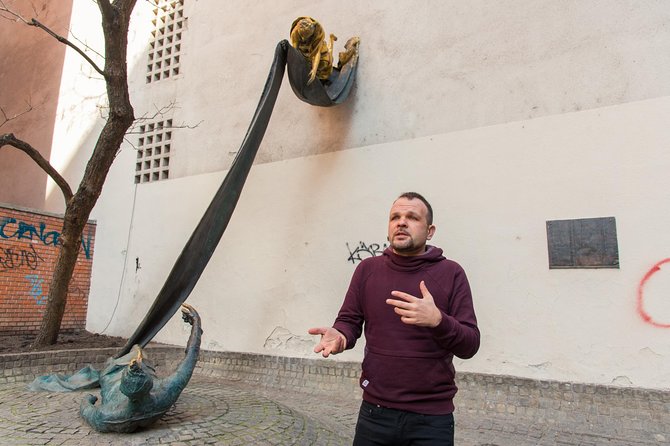
Budapest can feel big and fast. This tour is timed to work with that. In about 2 hours 30 minutes, you cover a compact slice of the Jewish Quarter and the surrounding Pest streets, while still getting enough explanation to understand what you’re looking at.
The strongest pull here is the format: a historian guide in an intimate group. When you’re only with up to 10 people, you can actually ask follow-ups. I like that the tour is not trying to “speed-run” Jewish history. It moves at a pace that lets names, streets, and events snap into place.
Another practical win: the tour includes a local food stop. You try Flódni at Solinfo Café, and you get it as part of the walk rather than as a random restaurant decision later. That small planning effort is real value when you’re traveling.
If you’re the type who likes to understand context before you photograph, this tour will click fast.
You can also read our reviews of more historical tours in Budapest


From Kempinski Corvinus to Erzsébet tér: where Pest’s medieval map meets Jewish streets
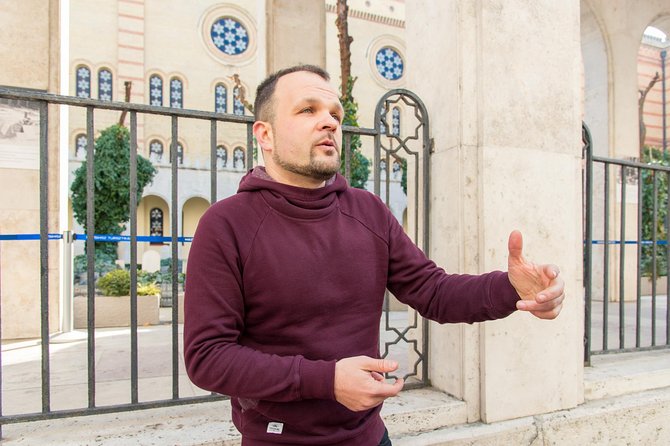
You start at Kempinski Hotel Corvinus Budapest, right by Erzsébet tér. It’s a solid meeting spot because it’s easy to find, and it’s near public transportation. The tour starts at 10:00 am, which is great if you want to get your history in before the afternoon crowds kick up.
The first stop is Erzsébet tér, a medieval market square that’s now one of Pest’s main squares. Standing there, you can see how Budapest grew layer by layer. Then the guide bridges from the present-day square into the Jewish story tied to these streets.
This opening matters. If you jump straight to religious buildings, you miss the “why here?” behind the neighborhood. Starting at a major square helps you build your mental map before you head deeper into the Jewish Quarter area.
You won’t lose time hunting for directions. You’re walking with an informed guide, so you can focus on noticing the urban layout—street angles, building spacing, and how neighborhoods connect.
Raoul Wallenberg’s statue: using one name to teach a bigger story
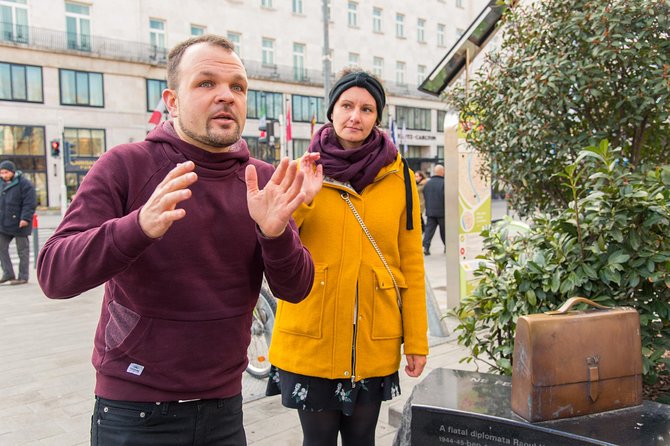
Next up is Raoul Wallenberg’s Statue. This stop is short, but it carries a lot of weight: the guide focuses on Wallenberg as a key diplomat associated with saving Jewish lives.
I appreciate how this works. Instead of treating Wallenberg like a single memorial item, the guide frames him within the broader pattern of rescue, risk, and moral choices made in extreme times. Even with limited time, it gives your brain a handle on what you’ll hear later.
You also get a chance to look at the street scene around the statue. In Budapest, monuments aren’t isolated. They sit inside a city that keeps moving. That contrast helps you remember that history happened to people who still had to walk to work, buy food, and make decisions.
If you’re trying to understand how the Jewish story intersects with Hungarian and European politics, this is a good pivot point.
Szimpla Kert and Gozsdu Udvar: the Jewish Quarter beyond the tragedy markers
Then the tour shifts gears in a smart way. You head to Szimpla Kert, described here as the first ruin bar in Budapest—and the first of its kind in the world.
This stop is not there to distract you. It’s there to show a different kind of survival: repurposing, reclaiming space, and building community out of old structures. You’re learning how cultural life returned and changed the neighborhood’s identity over time.
From there you pass through Gozsdu Udvar, an international-style street setting. This part helps you understand that the Jewish Quarter isn’t only a memory zone. It’s also a living area where different cultures mix, where people shop, walk, and socialize.
One thing I liked about this portion is the balance. You get solemn moments tied to Jewish life and then you also see how everyday Budapest turned former hardship into something social and modern. It makes the whole experience feel grounded.
Kazinczy Street Synagogue: Orthodox community context without rushing inside
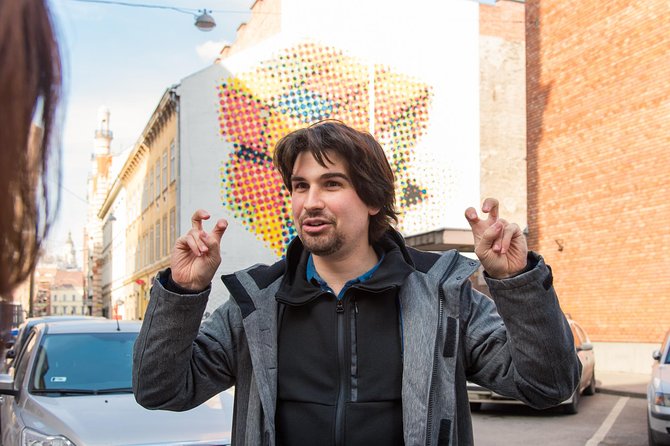
At Kazinczy Street Synagogue, you learn about the Orthodox Jewish community. The tour time here is about 20 minutes, which is enough to absorb the basic story and ask a question or two.
One practical note: admission is not included for this stop. That means you may need extra planning (and possibly extra cost) if you want to enter. The tour setting here still supports viewing and learning, but if you want inside access, check your options ahead of time.
Why this synagogue stop matters: Orthodox communities help explain how Jewish life continues through tradition. You’re not only hearing about historical shocks. You’re getting a sense of religious structure and daily identity.
If you care about how communities maintained continuity across difficult periods, Kazinczy is a key piece of the puzzle.






Great/Central Synagogue (Nagy Zsinagóga): big exterior learning, no interior visit
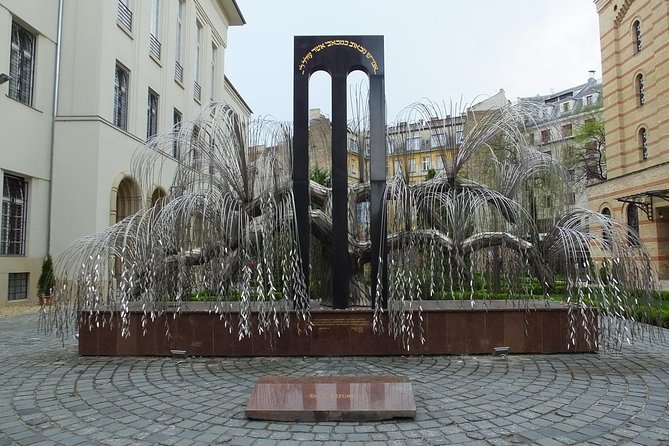
Next comes the Great/Central Synagogue (Nagy Zsinagóga). This is a huge landmark—Europe’s largest synagogue in size—and it carries historical weight across roughly the last 200 years.
The tour makes an important boundary clear: you do not visit the Great Synagogue inside. So your learning here focuses on the exterior and the historical meaning tied to the building and its era.
Also, again, ticket admission is not included for this stop. If your goal is to see inside, you’ll need to plan that separately.
Is that a drawback? It depends on what you want from the experience. If you’re mainly seeking street-level context and connections between locations—Rumbach Street, Kazinczy Street, and the area near Dohány Street—then the exterior approach can work well. You still get the story, and you’re not stuck waiting for an interior schedule.
But if you specifically want the full inside-visit experience, budget time and add-on costs beyond this tour.
Solinfo Café and Flódni: the taste stop that turns history into something you remember
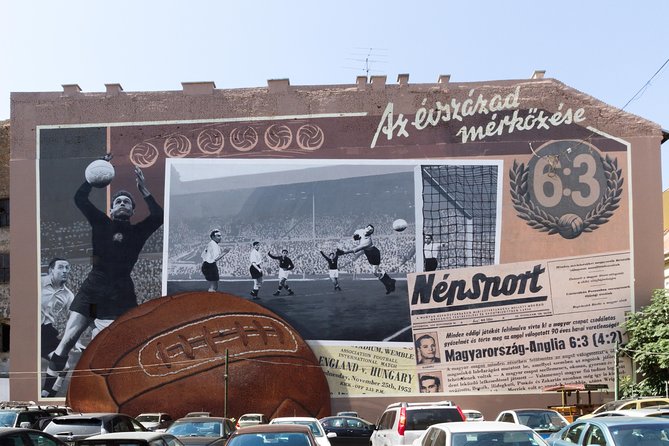
The tour ends with a food moment at Solinfo Café, where you try Flódni, a Jewish cake that’s a favorite for both Jews and non-Jews in Hungary.
A lesson you might take from this stop: food travels well. Even when politics and borders break lives apart, recipes can survive in pockets of households and local bakeries. Flódni becomes a shortcut to cultural memory.
Here’s the practical upside: admission/food is included for this stop. So you’re not doing math mid-tour wondering what costs extra. You just sit, try the cake, and keep talking to your guide while it’s fresh.
Also, it’s a nice emotional shift. After synagogues and memorial context, eating something local feels like reclaiming the normal human rhythm of the day.
How the price adds up (and where it might not)
The price is listed as $64.71 per person for about 2 hours 30 minutes with a historian guide in a group of up to 10. On paper, that can look like a lot for a city walk. In practice, you’re buying a few specific things:
- Expert storytelling tied to the exact streets you’re walking
- A small group that supports real questions rather than a bus-style lecture
- A included food stop (Flódni at Solinfo Café)
- A mobile ticket, which helps you show up cleanly without paper handling
What’s not fully included: synagogue admissions for Kazinczy Street and the Great/Central Synagogue. Since you don’t visit the Great Synagogue inside, it’s especially worth planning if you want interior access.
To me, this tour feels like good value if you want context, not just photos. If you only want landmark entry tickets and you don’t care about the narrative, you might feel the money is going to explanations instead of rooms.
But if you like understanding what you see—especially in the Jewish Quarter—this is a fair trade.
Guides matter: what you can expect from the historian-led style
What stands out in the guide feedback is how personal and careful the guiding feels. Different guides have led this tour—names like Andrea, Gábor (Gabor), Barbi, Noémi (Noemi), and András (Andras) show up in the experience stories—and the common thread is pacing and responsiveness.
I like tours where the guide can handle both the heavy and the hopeful parts without making either feel like an afterthought. Here, the story isn’t only about the 1940s. You also get centuries of Jewish presence and community life—then you land on the tragic periods with real context.
Sensitivity also comes through in how questions are handled. In a small group, that matters. You’re not forced to ask fast or accept a one-size-fits-all script.
Logistics that make the tour easy to fit
This is offered in English, and you’ll receive a mobile ticket. Confirmation is provided at booking time. The tour is near public transportation, which is helpful in Budapest where walking distances can vary depending on where you stay.
You should expect about 2.5 hours on foot. I’d bring comfortable shoes and plan to stand and look closely at street-facing sites for stretches of the tour.
The tour ends outside Dohány Street Synagogue at Wesselényi utca 1. That ending is handy because it gives you a natural launch point if you want to explore the area on your own afterward.
Should you book this Jewish Heritage in Hungary with a Historian?
Book it if you want:
- A street-level Jewish Quarter experience with a historian telling you what the places mean
- A small-group format that lets you ask questions
- A good balance of sorrow and everyday cultural life, including Szimpla Kert and Flódni
- A route that ends near Dohány Street Synagogue, so you can keep exploring
Skip it or rethink it if:
- You mainly want inside synagogue access, since key synagogue admissions are not included and the Great Synagogue is not visited inside
- You dislike paying extra for entrance tickets beyond the tour price
If you’re on a first trip to Budapest and you want to understand the Jewish story in a way that connects streets, names, and community life, this is one of the best ways to do it without turning your day into a checklist.
FAQ
What is the duration of the tour?
The tour lasts about 2 hours 30 minutes.
What time does the tour start?
The start time is 10:00 am.
Is this tour offered in English?
Yes, the tour is offered in English.
How large is the group?
The group size is limited to a maximum of 10 travelers.
Is a mobile ticket provided?
Yes, you receive a mobile ticket.
Which food is included?
The tour includes tasting Flódni at Solinfo Café.
Are synagogue tickets included?
Admission is not included for the Kazinczy Street Synagogue and the Great/Central Synagogue (Nagy Zsinagóga). Other listed stops have free admission.