REVIEW · BUDAPEST
Hungary today: a no-taboo conversation
Book on Viator →Operated by Budapest Explorers · Bookable on Viator
Politics has a way of getting personal. That’s the point of this 90-minute, small-group conversation in Budapest. You meet at Bambi Café, a cult spot with a look that has barely changed since the 1970s, and you get a direct talk about Hungary’s recent past and present.
I like that the host doesn’t hide behind slogans: this is honesty plus Q&A, built around facts from the last 30 years and the host’s own opinions. I also like the structure. The first part focuses on historical, economic, and political themes, and the second part turns into your chance to ask anything you’ve been wondering about Hungary.
The main thing to consider is simple: this is not a casual sightseeing stroll or a “facts-only” walking tour. If you only want light entertainment, politics might feel like too much over coffee.
In This Review
- Why This Hungary Conversation Starts at Bambi Café
- What You’ll Appreciate Most: Facts, Opinions, and Your Questions
- Key Highlights You Should Expect
- 90 Minutes of Conversation Value (and Who It’s For)
- The Conversation Style: Honest Context, Not a Script
- Hungary’s Last 30 Years: What You’ll Be Talking Through
- Stop 1: Bambi Café and Why It’s a Good “Politics Room”
- The Most Important Practical Detail: Small Group Size
- Timing and Meeting Point: Don’t Overthink It
- What to Ask (So You Leave With Real Answers)
- Who Should Book This (and Who Might Skip It)
- Accessibility, Transportation, and Comfort Notes
- How the Host Experience Shows Up in the Feedback
- Should You Book Hungary Today: a No-Taboo Conversation?
- FAQ
- What is the meeting point?
- What time does the experience start?
- How long is the experience?
- How many people are allowed in a group?
- Do I need to use a mobile ticket?
- Is there an admission fee to the café stop?
- What is the cancellation policy?
Why This Hungary Conversation Starts at Bambi Café

Budapest has plenty of guided history walks, but this experience works differently. Instead of racing through sights, you slow down and talk about how Hungary got from communism to democracy—and how the country has been describing itself in recent years, including the idea of illiberal democracy.
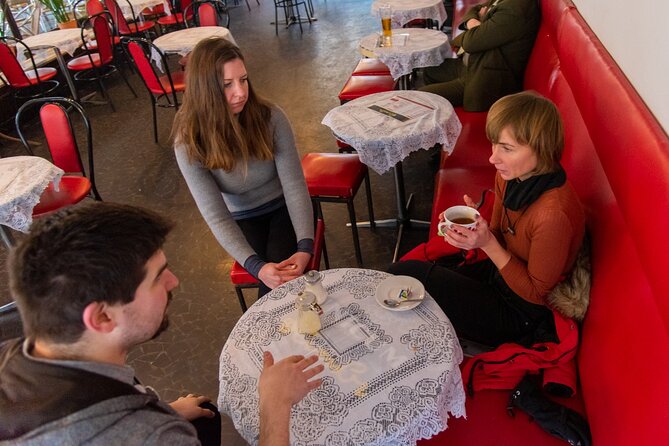
The meeting point matters because it sets a tone: Bambi Café is described as a cult café that has changed close to none since the 1970s. That kind of time-warp environment helps the conversation feel less like a lecture and more like a real discussion about real life.
What You’ll Appreciate Most: Facts, Opinions, and Your Questions
The best part is that the format is explicitly made for a “no-taboo” chat. You can ask about controversial politics, a turbulent past, an uncertain future, the economy, and even ideas for change. And you’re not stuck with a scripted program.
If you’ve already visited Budapest once, this will still make sense. It’s designed for people with some background who want to understand what’s going on now, not just what happened decades ago.
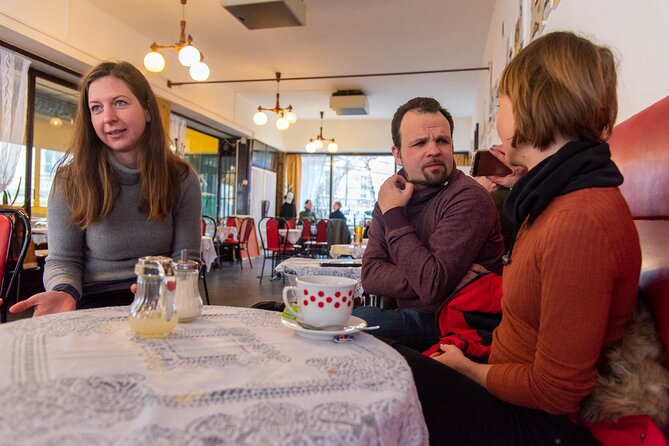
One more practical plus: the group is capped at 6 travelers. That size turns questions into conversation instead of a public lecture you whisper to yourself.
You can also read our reviews of more tours and experiences in Budapest.



Key Highlights You Should Expect
- No-taboo Q&A format focused on modern Hungary, not just surface history
- Bambi Café as the setting, with a long-lived 1970s feel
- Two-stage flow: context first, then your questions take over
- Hungary-focused politics + economy with room for personal viewpoints
- Small group of max 6, so it stays interactive
90 Minutes of Conversation Value (and Who It’s For)
At $40.52 per person, this isn’t priced like a typical museum tour with timed entry and lots of stops. You’re paying for something more specific: a controlled conversation with a local host, built around the last 30 years and the big debates shaping the country.
So ask yourself this: do you want to spend your Budapest time reading plaques, or do you want answers to the messy questions you carry in your head? If you like to understand how politics shows up in daily thinking—especially after regime change—this price can feel fair fast.
Also, mobile ticket means you’re not juggling paper. For a short, focused experience, that matters. You can keep your day moving and still get something substantial.
The Conversation Style: Honest Context, Not a Script
This tour is built around a specific promise: the host shares facts and opinions about Hungary’s recent past and present, and they aim to answer questions. That “facts plus viewpoint” mix is what makes it more than just history storytelling.
Here’s how it’s intended to flow:
1) A starting introduction that concentrates on the last 30 years
2) A more open discussion where you set the direction with your questions
That means if your biggest curiosity is political, you can steer it there. If your curiosity is economic—jobs, cost pressures, how ordinary people read policy—you can steer that way. If you want to challenge the host, the format is designed for back-and-forth.
One caution: because it’s a discussion, it won’t feel like a rigid itinerary. You’ll get value if you show up with at least a couple of questions, even if they’re rough. If you arrive with nothing in mind, the host’s intro should still give you plenty to think about—but the experience is most satisfying when you participate.
Hungary’s Last 30 Years: What You’ll Be Talking Through
The experience is organized around changing systems and competing ideas. The description is clear: you’ll cover Hungary’s shift from Communism to democracy, and you’ll also address how the country has been describing its political model in recent years, including the idea of illiberal democracy.
It also mentions the lens: historical, economic, and political aspects in the early part of the conversation. That matters because it’s easy to talk about elections and parties without talking about what people feel day to day. This format is meant to connect the political story to the economic one, so you leave with a more grounded picture of why debates land the way they do.
If you’re the kind of traveler who reads headlines and then wonders what the arguments sound like from inside the country, you’ll like this. The goal isn’t neutrality as a performance. It’s clarity: what happened, what people think, and why it’s still contested.



Stop 1: Bambi Café and Why It’s a Good “Politics Room”
Bambi Café is the entire stop, and that’s not an accident. A single-location conversation keeps the focus on people and ideas. You aren’t mentally multitasking between transit, architecture, and crowd control.
The café’s identity is also part of the value. It’s described as a cult café that has changed close to none since the 1970s. That “nearly unchanged” detail gives you a real sense of continuity—like you’re discussing modern politics inside a space that has seen earlier eras too.
Practical note: since the experience ends back at the meeting point, you don’t need to worry about navigating a second location or chasing a schedule late in the day. It’s a clean plan with an easy finish.
The Most Important Practical Detail: Small Group Size
This experience maxes out at 6 travelers. That’s a big deal for a sensitive topic. In smaller groups, you’re more likely to get direct answers instead of generalized statements. You also get a better chance to ask follow-ups.
And because the host says they’ll try to answer questions, the small number helps them actually do it. With a larger group, hosts often time-box everything. Here, the design pushes you toward a real conversation.
If you like the kind of travel where you can hear different angles, this format can be great. You’ll also get more from it if your group includes people who are comfortable discussing politics in a respectful way.
Timing and Meeting Point: Don’t Overthink It
Start time is 2:00 pm, and the meeting point is Bambi Café, Frankel Leó út 2-4, 1027 Hungary. The experience runs about 1 hour 30 minutes, then you wrap back at the same spot.
That timing works well if you want something meaningful after a morning of sightseeing. It can also work nicely as a break from walking—especially in a city where you can easily stack too many “big” activities.
If you’re planning your day, keep the day flexible enough to stay in conversation mode. This isn’t a fast photo stop. Wear or bring what helps you sit comfortably for 90 minutes.
What to Ask (So You Leave With Real Answers)
If you want to maximize value, show up with a few question targets. You don’t need to write them down, but it helps to have direction. The experience is built for questions on:
- controversial politics
- Hungary’s turbulent past
- an uncertain future
- the economy
- ideas for change
- the host’s personal opinions
Here’s a simple trick: ask one question that’s factual, then one that’s interpretive. For example, start with a “what’s the main issue?” style question, then follow with “how do people think about that?” That pairing usually turns a short answer into a real conversation.
Also, if you’re unsure whether your question is too political, good. The whole point here is that the host is trying to answer.
Who Should Book This (and Who Might Skip It)
This tour fits best if you want to understand modern Hungary through discussion, not just through sights. It’s ideal for you if:
- you’ve already seen major Budapest highlights
- you know a little about modern history and want the contemporary picture
- you like political and economic context
- you enjoy asking questions and hearing a local viewpoint
You might skip it if:
- you want only light sightseeing with minimal discussion
- you’re uncomfortable with controversial topics in a small-group setting
- you prefer strict, lecture-style facts with no room for opinion
Accessibility, Transportation, and Comfort Notes
The experience lists that service animals are allowed and that it’s near public transportation. It also notes that most travelers can participate. Since this is a café-based conversation with a set start and end, it should feel fairly straightforward to plan around.
Because your main activity is sitting and talking, it’s worth thinking about comfort. If you get cold easily, bring something light. If you’re going on a hot day, dress for sitting indoors. Small details matter when the whole experience is conversation.
How the Host Experience Shows Up in the Feedback
The strongest praise centers on how rare it is to get a deep, informed conversation with someone from inside Hungary’s current reality. One highlight from the feedback is that the host’s knowledge covered not only Hungary but also how those issues connect to the world.
There’s also a clear theme: this experience works even if you’ve already spent time in Budapest. People who want the contemporary situation explained in plain language tend to love the format. Another repeated note: the hosting style feels friendly and genuinely interested in continuing the discussion.
Should You Book Hungary Today: a No-Taboo Conversation?
Book it if you want a real answer to real questions about Hungary’s present, not just a timeline. At $40.52 for about 1.5 hours in a small group, it’s good value if you’re the kind of traveler who enjoys politics, the economy, and how people make sense of change.
Skip it if you’re tired of talking and you want only sightseeing. This is a conversation first. Your reward is understanding—plus the satisfaction of asking your own questions in a setting designed for them.
FAQ
What is the meeting point?
The meeting point is Bambi Café, Frankel Leó út 2-4, 1027 Hungary.
What time does the experience start?
It starts at 2:00 pm.
How long is the experience?
It lasts about 1 hour 30 minutes.
How many people are allowed in a group?
The maximum group size is 6 travelers.
Do I need to use a mobile ticket?
Yes, this experience uses a mobile ticket.
Is there an admission fee to the café stop?
The admission ticket for the stop is listed as free.
What is the cancellation policy?
You can cancel for a full refund up to 24 hours before the experience’s start time. If you cancel less than 24 hours before, the amount paid is not refunded.