REVIEW · BUDAPEST
Buda Castle’s Secrets with a Historian
Book on Viator →Operated by Budapest Explorers · Bookable on Viator
Budapest’s Castle District tells its story up close. This historian-led walk threads together royal palaces, Habsburg power, and even WWII scars—plus you get real viewpoints, not just photos. I especially love the small group size and the fact that your guide explains what you’re seeing, not just what it is. One thing to consider: it’s a lot of walking on uneven, cobbled streets, so you’ll want moderate fitness and good shoes.
You’ll spend about 2 hours 30 minutes moving through key sites at a smart pace, from Holy Trinity Column to the Fountain of King Matthias. The highlight for many people is the inside visit to Matthias Church (ticket included), where stories and legends get tied to the building itself. Expect a tour in English with a mobile ticket, and plan for a few stops where entry is not included.
Key highlights to look forward to
- Matthias Church inside visit with the entrance ticket included
- Castle District views that actually frame the city from multiple angles
- Historian guide context that connects Hungarian rulers to everyday landmarks
- Small-group feel (listed up to 10, with a stated cap of 15)
- WWII marks you can still see when you pass major historic buildings
- Easy-to-follow route with a finish at the Fountain of King Matthias
In This Review
- Where the Tour Starts: Holy Trinity Column and Budapest’s big picture
- Fisherman’s Bastion: the famous postcard, explained for real
- Matthias Church Inside: the ticketed stop history lovers mark on their map
- The National Archives Pass-By: WWII marks on a grand facade
- Sándor Palace and the Presidential Office: power in plain sight
- The Buda Hill Funicular: a short ride to reset your eyes
- Prince Eugene of Savoy Statue: Habsburg-Hungary explained in 10 minutes
- Royal Palace Terrace Time: Buda Castle views that frame the whole city
- Fountain of King Matthias: the legend-fueled ending
- How this tour feels on the day: pacing, group size, and what to expect
- Price and value: why $65.31 can make sense here
- Who should book this tour (and who might not)
- Should you book Buda Castle’s Secrets with a Historian?
- FAQ
- What is the tour duration?
- What does the tour cost?
- Is the tour in English?
- Is Matthias Church included in the ticket price?
- Are other attractions included, like Fisherman’s Bastion, Buda Castle, or the funicular?
- How big is the group?
- Where does the tour start and end?
- Is it free to cancel?
- Is the walking suitable for everyone?
Where the Tour Starts: Holy Trinity Column and Budapest’s big picture
Your tour kicks off at the Holy Trinity Column area (Szentháromság u., 1014). This is a good starting point because it sets the tone: Budapest isn’t one single story—it’s layered. Your historian guide uses the surrounding architecture to help you understand how the city grew into the capital of a changing kingdom.
I like this first stretch because it gives you orientation fast. Even before you’re deep in the Castle District, you start noticing symbols, styles, and what each era seemed to value. It’s also a smooth opener: about half an hour here, with no ticket required.
If you’re coming straight from the river or from Pest, it’s also the kind of beginning that helps you avoid that common problem: arriving in the Castle District and feeling like you’re only looking at buildings, not history.
Fisherman’s Bastion: the famous postcard, explained for real
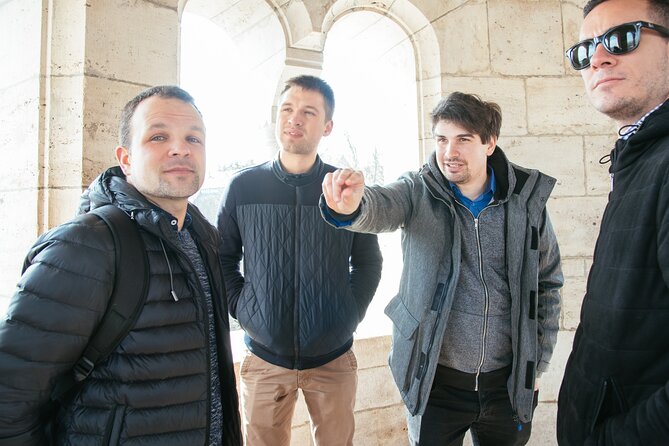
Next you head toward Fisherman’s Bastion, one of those places people recognize instantly—before they even know what they’re looking at. You’ll spend around 20 minutes here, and the key difference is that your guide explains the story and the true purpose of the spot, not just its views.
Here’s why I think this stop is worth doing with a historian: Fisherman’s Bastion is often treated like pure decoration. But you’ll hear how it functions in the broader story of the Castle District—how people used monumental settings to shape national identity. The views are absolutely part of the reward, but the “why it’s here” is what makes the time feel efficient.
One practical note: entry is not included for this stop, so budget for it separately if you plan to go inside wherever applicable. Even if you stick to the outdoor areas, the photos will be strong because you’re perched above the city.
You can also read our reviews of more tours and experiences in Budapest.



Matthias Church Inside: the ticketed stop history lovers mark on their map
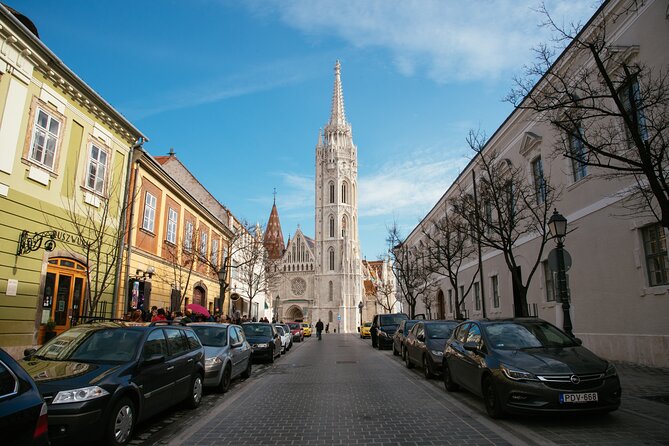
Matthias Church is the moment where the tour turns from “nice walk” to “wow, this is why people care.” You’ll go inside for about 30 minutes, and the entrance ticket is included.
This is the stop where your guide’s storytelling matters most. You’ll hear legends and explanations tied to the church’s details—so you’re not just admiring stained glass or stonework. You’re learning how symbols, design choices, and local beliefs connect to Hungary’s past.
If you’ve ever walked into an impressive church and thought, I don’t know what I’m looking at—this is the fix. The group spends enough time to actually read the room, not sprint through it. And yes, the architecture lives up to its reputation.
A bonus: some guides have been praised for going a step further with small culture moments, and there’s at least one instance where a live organist played during a visit (not something to count on, but it shows what kind of atmosphere you might catch if the timing lines up).
Practical tip: dress for a comfortable indoor visit. Churches are often cooler than outside, and your group time moves quickly.
The National Archives Pass-By: WWII marks on a grand facade
As you move through the Castle District area, you’ll pass the National Archives—an impressive building with visible marks from WWII, including bullet holes. This isn’t a “sit and stare” stop, but it lands hard because it brings the timeline closer to modern memory.
I like this part because it keeps the tour balanced. It’s not only kings, palaces, and legends. It’s also the more recent shocks that shaped Hungary’s national life, and it adds weight to everything else you saw earlier.
Even if you don’t pause for long, it’s a useful reminder: history isn’t only in museum objects. Sometimes it’s written right into the facade.
Sándor Palace and the Presidential Office: power in plain sight
Then you head toward Sándor Palace and the Office of the Hungarian President. You’ll spend around 20 minutes strolling along the cobbled streets and lanes of the Castle District complex before you reach it.
This stop works well for two reasons. First, it helps you understand how today’s state functions occupy spaces with deep historical meaning. Second, it gives you a slower, “feel-the-place” segment where the setting matters as much as the facts.
One consideration: since it’s not a ticketed museum stop, your experience here depends on what’s visible and accessible at the time. The tour focuses on the historic street environment and what that setting implies about authority, not a structured interior visit.
Still, it’s a good chapter break before the views and the final palace-area time.
The Buda Hill Funicular: a short ride to reset your eyes
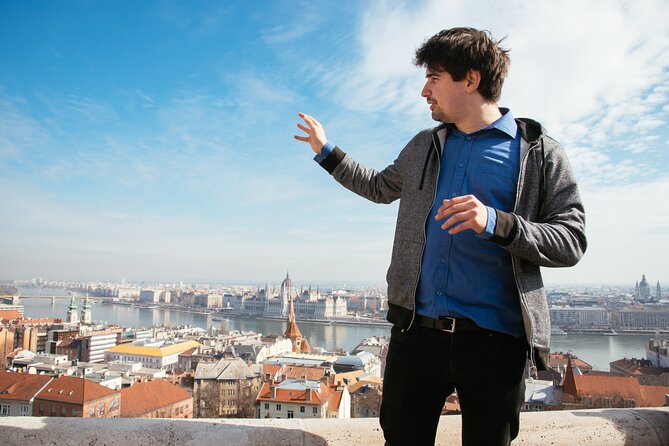
A quick lift helps break up the walk. You’ll use the Buda Hill Funicular for about 10 minutes, then enjoy panoramic views from the top station—looking toward Parliament and the Pest side of Budapest.
This is one of those “small time, big payoff” moments. The funicular isn’t just transportation; it’s a built-in viewpoint that changes how you read the city. From up high, you see how the Danube and the bridges connect the two halves of Budapest.
No ticket is included for this portion, so factor that into your on-the-day budget. But if you want the best angles without turning the tour into a marathon, this stop helps a lot.
Pro tip: if it’s windy or cold, keep your layers simple and easy to remove. Views are fast, and you’ll want to stay comfortable.



Prince Eugene of Savoy Statue: Habsburg-Hungary explained in 10 minutes
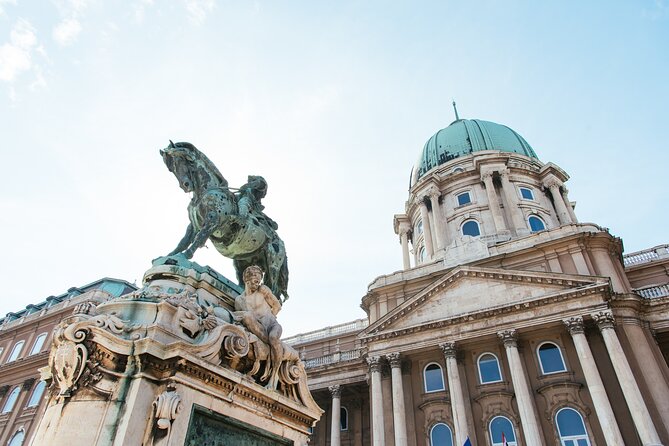
Next is the equestrian statue of Prince Eugene of Savoy. You’ll spend about 10 minutes there, and it’s a free stop.
This part is short, but it matters. Your guide links a decisive military campaign to European history for centuries—and explains how the Habsburgs fit into their relationship with Hungary. In other words, you’re not just looking at a statue. You’re learning why this kind of monument appears in the first place.
I like that this stop gives you a “thread” across time. It helps connect the earlier royal and church stories to political and military realities that shaped what Hungary became.
Royal Palace Terrace Time: Buda Castle views that frame the whole city
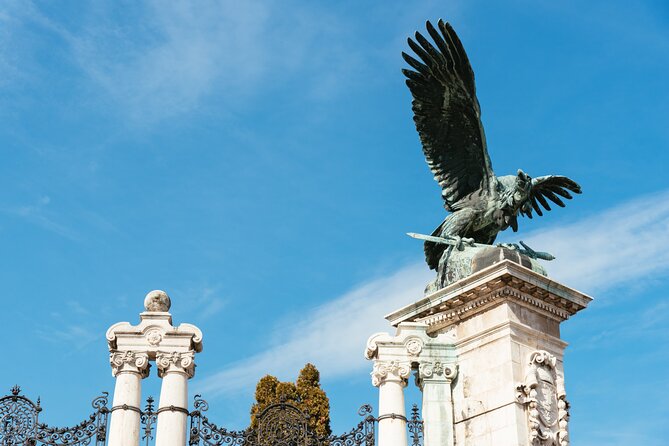
You’ll finish with time at Buda Castle itself, spending about 20 minutes here. The Royal Palace of Buda was the seat of kings and emperors, and the setting makes that past feel immediate—even if you’re only there briefly.
The real reason most people care about this stop is the panorama from the terrace. You’re looking out toward Margaret’s Island, Parliament, the Chain Bridge, St. Stephan’s Basilica, the Budapest Eye, and Elizabeth bridge. That’s a lot of landmarks packed into one sight line.
Admission to the palace area is not included, so you may want to check what you personally plan to access inside vs. stick to terrace views. The tour is designed so you don’t feel trapped into paying for everything; you get the “big picture” even if your entry choices are limited.
A practical thought: terraces get crowded. Aim to be flexible with your photo timing. Your guide’s pacing helps you get the facts first and photos second, which usually leads to better results.
Fountain of King Matthias: the legend-fueled ending
Your tour finishes at the Fountain of King Matthias (Szent György u., 1013), around 10 minutes total. It’s a fitting wrap because it’s another place where legend and identity connect. You’ll learn why King Matthias is a favorite figure among many Hungarians and how his image became part of the cultural story.
I like endings like this because you leave with a “theme memory.” After seeing palaces, churches, and wartime marks, ending on a legendary king gives your brain a clean final thread.
How this tour feels on the day: pacing, group size, and what to expect
This experience runs about 2.5 hours and is built for a relaxed walking pace rather than a hard sprint. You’ll move site to site, with short segments that keep the attention sharp—especially in places like Matthias Church where the guide’s commentary really changes how you look.
Group size is described as intimate, with up to 10 people, and there’s also a stated maximum of 15 travelers. Either way, it usually means you can ask questions without feeling like your guide has a megaphone and 40 people are all shouting at once.
Your itinerary includes a mix of free stops and ticketed ones. The most important included ticket is for Matthias Church. Everything else (like Fisherman’s Bastion and Buda Castle/palace area where applicable, plus the funicular) may require separate payment. That’s normal for a tour like this, but it’s worth planning ahead so you’re not surprised mid-hill.
Price and value: why $65.31 can make sense here
At about $65.31 per person for roughly 2 hours 30 minutes, this doesn’t compete with the cheapest “walk and go” tours. But it does have a clear value case.
You’re paying for:
- A historian-style guided explanation that adds meaning to the architecture you’re already seeing
- Small-group attention
- An included entrance ticket to Matthias Church (a big cost item when you’re counting total spend)
You’re also getting a route designed to hit the Castle District highlights in a logical order, without you needing to piece it together alone while navigating stairs, crowds, and opening times.
If you like history but don’t want to turn the day into homework, this price can feel fair fast.
Who should book this tour (and who might not)
This tour is a great match if you:
- Want context for Hungary’s rulers, architecture, and public monuments
- Enjoy walking in the Castle District but don’t want to manage every “why is this here?” question yourself
- Appreciate inside access to Matthias Church rather than only seeing it from outside
You might choose something else if you:
- Prefer a very short, mostly flat route (this area includes uneven surfaces)
- Want a lot of free time to roam independently rather than guided pacing
Should you book Buda Castle’s Secrets with a Historian?
I’d book it if this is your first visit to the Castle District or if you’ve visited before but felt like you only skimmed the surface. The included Matthias Church visit plus the historian framing of monuments like Fisherman’s Bastion and the Prince Eugene statue make the tour feel purposeful.
Do keep in mind the one real practical tradeoff: you’ll be walking on cobblestones and moving through a busy hill area. Bring good shoes, dress for weather, and expect crowds at the major photo points.
If you want a day that turns “beautiful buildings” into “I understand what these buildings meant,” this tour is a strong pick.
FAQ
What is the tour duration?
The tour lasts about 2 hours 30 minutes.
What does the tour cost?
The price is $65.31 per person.
Is the tour in English?
Yes, it’s offered in English.
Is Matthias Church included in the ticket price?
Yes. Entrance to Matthias Church is included.
Are other attractions included, like Fisherman’s Bastion, Buda Castle, or the funicular?
No. Fisherman’s Bastion, Sándor Palace, Buda Hill Funicular, and the Buda Castle/royal palace area are listed as not included for admission.
How big is the group?
The tour is described as an intimate small group (up to 10 people), with a maximum of 15 travelers.
Where does the tour start and end?
It starts at Holy Trinity Statue (Szentháromság u., 1014) and usually ends at the Fountain of King Matthias (Szent György u., 1013).
Is it free to cancel?
Yes, you can cancel for a full refund if you cancel at least 24 hours in advance.
Is the walking suitable for everyone?
It’s listed as suitable for travelers with moderate physical fitness. Service animals are allowed, and children must be accompanied by an adult.